13th Party Central Committee's report on documents sent to 14th Party Congress

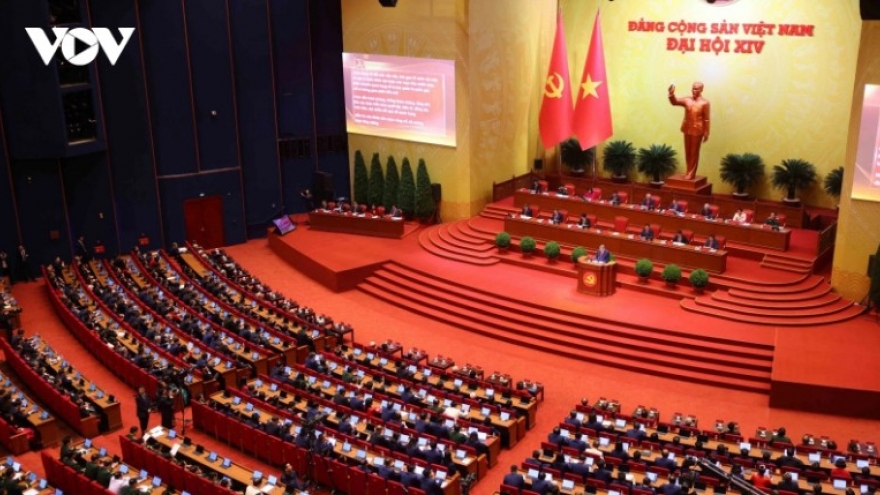
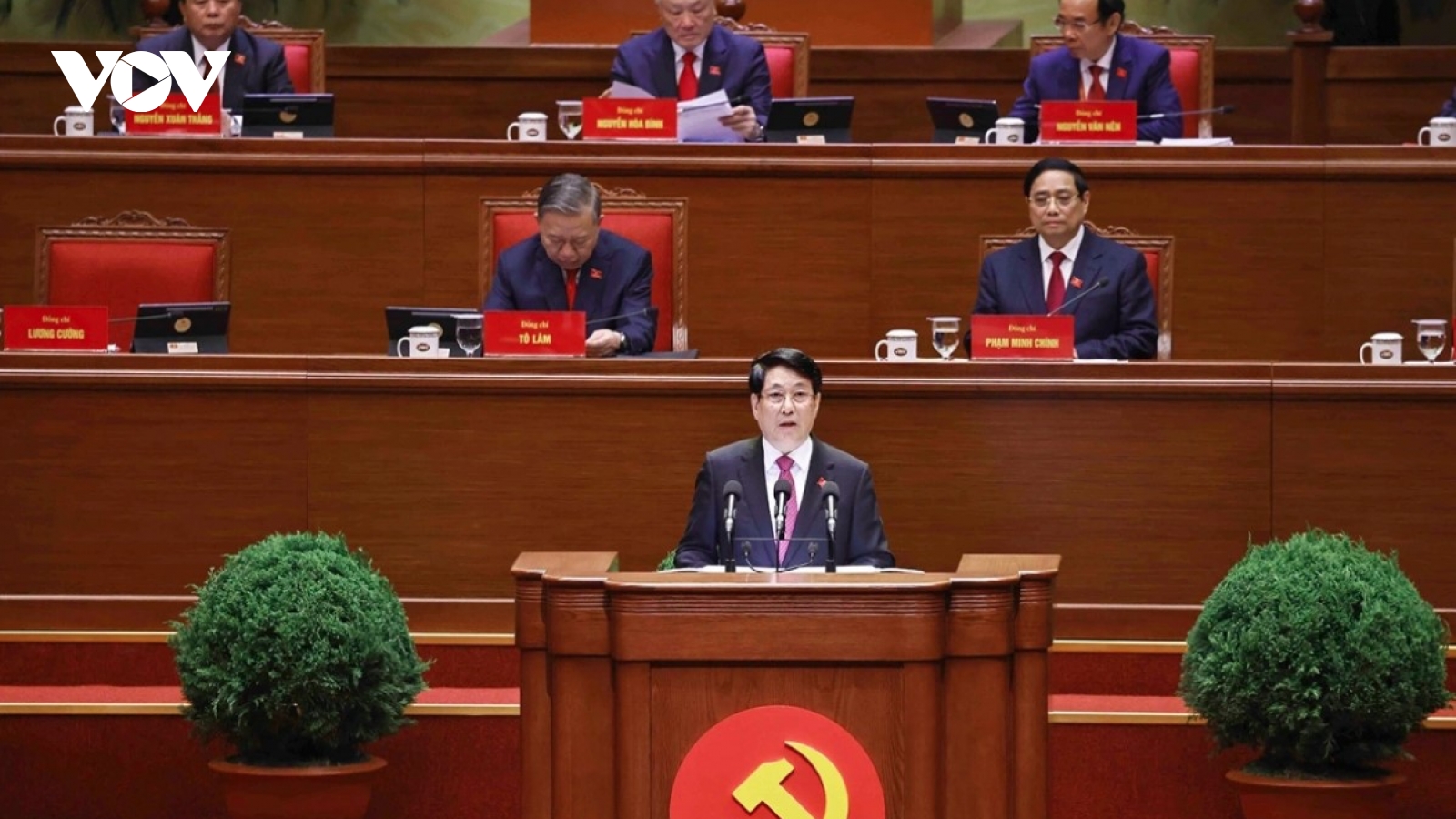
The 14th National Congress of the Communist Party of Vietnam (CPV) solemnly opened at the National Convention Centre in Hanoi on January 20.
The Congress has the theme: Under the glorious flag of the Party, uniting in strength and determination to successfully achieve national development goals by 2030; strategic self-reliance, self-strengthening and confidence, advancing strongly in the era of the nation’s rise, for peace, independence, democracy, prosperity, affluence, civilisation and happiness, steadfastly moving toward socialism.
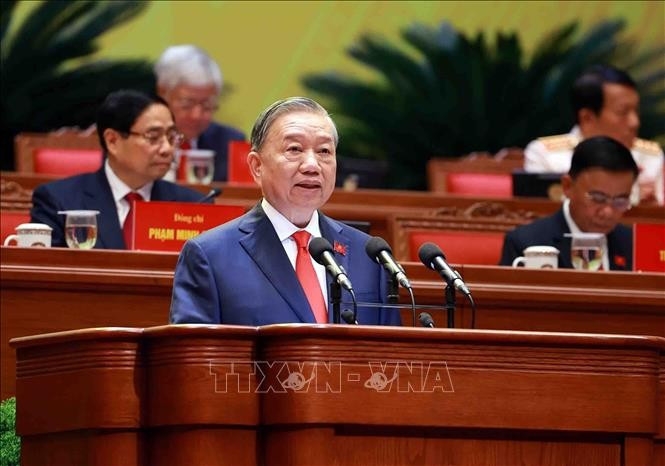
At the opening session, on behalf of the 13th Party Central Committee, General Secretary To Lam, Head of the Document Subcommittee, presented the 13th Party Central Committee’s Report on the documents submitted to the 14th Party National Congress, emphasising some key contents and new points of the draft documents for the Congress to consider, discuss and decide upon.
The Vietnam News Agency (VNA) respectfully introduces a translation of the report.
REPORT ON DOCUMENTS SUBMITTED TO THE 14TH NATIONAL CONGRESS OF THE COMMUNIST PARTY OF VIETNAM
Distinguished members of the Presidium of the Congress,
Distinguished guests,
Delegates to the Congress,
The 14th National Congress of the Communist Party of Vietnam is a political event of exceptional significance of our entire Party, people, and army; a milestone opening a new stage of the nation’s development amid a new context, complexion and objectives; and a Congress that embodies the will for strategic autonomy, self-reliance and self-strengthening, national pride, the aspiration to rise, and steadfast confidence in the path chosen by our Party, Uncle Ho, and people.
The 14th National Party Congress is taking place at a moment of profound historical significance: our entire Party, people and army stay united, unanimous and determined in advancing towards two strategic goals: 100 years of the country under the leadership of the Communist Party of Vietnam (1930 – 2030), and 100 years since the founding of the Democratic Republic of Vietnam, now the Socialist Republic of Vietnam (1945 - 2045). This context sets clear imperatives: to face reality squarely and assess the situation accurately; to resolutely renew mindset, improve institutions, enhance national governance capacity; and to act with strength, determination, breakthroughs and effectiveness, for a peaceful, independent, democratic, strong, prosperous, civilised and happy Vietnam, firmly advancing towards socialism.
The draft Documents submitted to the Congress comprise: the Draft Political Report of the 13th Party Central Committee; the Draft Report reviewing a number of theoretical and practical issues of the socialist-oriented renewal process over the past 40 years in Vietnam; and the Draft Report reviewing 15 years of implementation of the Party Statutes (2011 – 2025), and proposals and orientations for amendments and supplements to the Party Statutes. Among these, the Draft Political Report synchronously integrates three reports (the Political Report, the Socio-Economic Report, and the Report reviewing Party building work) into a unified and comprehensive report with a clear focus and major points, which is concise, and easy to understand, remember, and implement.
The action programme to implement the Congress’s Resolution represents a “breakthrough” compared with the previous congresses, clearly identifying the “subject, roadmap, resources and ultimate goals” for carrying out the Resolution of the 14th National Party Congress.
Authorised by the 15th Meeting of the 13th Party Central Committee, the Politburo proposes that the Congress gives ideas to the policy of summarising 100 years of the leadership of the Communist Party of Vietnam (1930 - 2030) in the Vietnamese revolution, and outlining the development orientation of the country for the next 100 years (2030 - 2130); and summarising 40 years of implementing the Platform for national construction during the transitional period to socialism.
The preparation of the Documents was conducted with great care and seriousness, and in a rigorous, scientific and modern manner; built on the legacy of the previous congresses, remained steadfast in principled viewpoints, while clearly demonstrating a strong renewal of development mindset that is closely adhered to reality and respectful of objective rules; every assessment, every objective and every solution was drawn from realities. Notably, the documents set out action-oriented requirements: matching words with deeds; clearly defining objectives, tasks and solutions; linking responsibility with outcomes; aligning breakthroughs with sustainability; and tying implementation discipline to the People’s satisfaction.
In the process of finalising the Documents, the Party Central Committee, the Politburo and the Secretariat attached particular importance to harnessing collective wisdom, expanding democracy, and attentively listening to the voices of Party members, the People, and communities of intellectuals, scientists, entrepreneurs, artists, officers and soldiers of the armed forces, as well as our compatriots at home and abroad. The draft Documents were discussed extensively throughout the Party and made public through the mass media, while comments were collected from National Assembly deputies, the Vietnam Fatherland Front, socio-political organisations, and all strata of the people through a wide range of forms.
In just one month, nearly 5 million cadres, Party members, people contributed 14 million opinions to the Document Subcommittees. These opinions were carefully distilled and earnestly taken on board, helping to produce a Political Report that represents the crystallisation of the People’s intellect and strength, a fusion of the Party’s will with the People’s aspirations, and truly serves as a “guiding torch” and a “handbook for action” for our entire Party, people and army.
The full texts of the Reports were distributed to all delegates. On behalf of the 13th Party Central Committee, I would like to report and emphasise some key contents and new points of the draft documents for the Congress to consider, discuss, and decide upon.
I- HALLMARKS OF THE TERM OF THE 13TH NATIONAL PARTY CONGRESS: CAPACITY, METTLE, STEADFASTNESS, FIRMNESS
The term of the 13th National Party Congress took place under exceptional circumstances, with intertwined difficulties and overlapping challenges. They included natural disasters, storms and floods, epidemics; traditional and non-traditional security risks; intense strategic competition; volatility and disruptions in supply chains, energy and food supplies; together with internal issues accumulated over years. In this context where “fire tests gold, hardship tests strength,” our Party has demonstrated its mettle, leadership and governing capacity, combat strength, and spirit of unity and unanimity; as well as will and aspiration for development and future building, renewed mindset and drastic action; our entire Party, people and army have joined forces and reached consensus to successfully implement the Resolution of the 13th National Party Congress, achieving many extremely important, comprehensive and groundbreaking results, with numerous bright spots, and basically accomplishing the main objectives set out.
Our economy has overcome numerous difficulties and challenges, maintained macroeconomic stability, and sustained a relatively strong growth momentum; its potential, resilience and adaptability have been enhanced, creating an important foundation and space for a phase of faster and more sustainable development.
Many groundbreaking strategic decisions were implemented drastically. Notably, the revolution to reform, reorganise and streamline the organisational apparatus and administrative units achieved its strategic objectives, marking an important shift in national governance mindset and opening up new development space for the country’s long-term future. The fight against corruption, wastefulness and negative phenomena has been carried out drastically, persistently, synchronously and comprehensively, yielding many extremely important results, helping to consolidate the People’s trust and enhance discipline. Human, culture and social development recorded notable progress; the People’s material and spiritual lives continued to improve and rise steadily; the strength of the People and the great national unity bloc was brought into full play; and social consensus was further consolidated and strengthened.
The country’s independence, sovereignty, unity and territorial integrity, and peaceful environment have been firmly safeguarded; political and social stability has been maintained; national defence and security, social order and safety have been ensured; and external relations and international integration have been expanded, elevated and deepened. Vietnam’s position and prestige on the international arena have been enhanced. Vietnam is increasingly seen as a bright spot, highly evaluated by the international community for its social safety and stability; as well as for breakthroughs in mindset and vision, and innovations in leadership and development governance.
The comprehensive outcomes of the term of the 13th National Party Congress have continued to affirm the Party’s increasingly growing leadership role and prestige, with the People’s trust in the Party, the State and the regime steadily reinforced, creating an important premise for the country to enter a new phase of development with new momentum, determination and aspirations.
The fortune, potential, position and international prestige that the country enjoys today are the convergence and crystallisation of millennia-old cultural traditions of national contruction and defence; the fruits of 96 years of national construction and development under the Party’s leadership; the results of 40 years of renewal; and a continuous process of renewing leadership mindset grounded in Marxism–Leninism and Ho Chi Minh’s Thought; reflect the selfless sacrifices of generations of veteran revolutionary soldiers, communist party members, compatriots and comrades who devoted themselves to production, fought bravely and laid down their lives for the Fatherland’s independence and freedom, for the People’s happiness and for socialism; the strength of the great national unity bloc; and a vivid demonstration of the Vietnamese people’s enduring will, creative spirit and deep patriotism throughout the process of development. The term of the 13th National Party Congress has further affirmed a major lesson: amid “rough seas and strong winds”, and even“storms,” what proves decisive is the firm and steadfast political mettle, unity of will, the strength of great national unity, methods of implementation, discipline and order, and the flesh-and-blood bond between the Party and the People.
We have every right to be excited and proud of the significant and outstanding results we have achieved. Yet pride must translate into greater responsibility and renewed motivation for further efforts; and we must absolutely not “rest on our laurels.” We have frankly pointed out the shortcomings, weaknesses and bottlenecks that require focused attention and resolution: from inadequacies in institutions, resources and infrastructure; and limitations in implementation, discipline and order; to the fact that a segment of cadres has yet to meet requirements; as well as pressing social, environmental and livelihood issues. Correct identification is essential to devise the right solutions and take the right actions. The most critical task at present is to make a decisive shift towards action, effectively addressing shortcomings, bottlenecks and obstacles, and unlocking all resources for national development.
Looking back on 40 years of renewal, marked by great achievements of historical significance, including the notable contributions of the term of the 13th National Party Congress, we have full grounds to affirm that the Party’s renewal policy is entirely correct, fully aligned with Vietnam’s realities and the development trends of the times. Our renewal policy clearly identifies the People as the centre and the subject of the revolutionary cause; remains steadfast in the goal of national independence linked with socialism; and consistently advances the building and refinement of three foundational pillars: a socialist-oriented market economy, a socialist rule-of-law state, and socialist democracy.
From the reality of leading the revolution over the four decades of renewal, we have drawn five valuable lessons:
First, remaining steadfast in, and creatively applying and developing Marxism–Leninism and Ho Chi Minh’s Thought; persisting with the goal of national independence linked with socialism, the Party’s renewal policy, and the Party’s organisational and operational principles; pursuing development to ensure stability and maintaining stability to secure sustainable development; continuously working to improve the people’s living standards; placing the highest priority on national interests; firmly safeguarding independence, sovereignty, unity and territorial integrity, and protecting the Fatherland early and from afar; proactively and actively pursuing intensive and extensive integration into global politics, the international economy and human civilisation, while combining the strength of the nation with that of the times.
Second, firmly upholding and strengthening the Party’s leadership, governing role and combat strength is the decisive factor in all victories. Building and rectifying the Party and the political system, making it pure and strong; ensuring a streamlined, efficient, effective and capable apparatus; resolutely and persistently preventing and combating corruption, wastefulness and negative phenomena; and building a contingent of cadres, especially those at the strategic level, with sufficient qualifications, competence and prestige, commensurate with their tasks, as well as grassroots-level cadres who stay close to the people, serve the people and are fully capable of fulfilling their duties. Underscoring the responsibility and exemplary role of cadres and Party members, especially heads of agencies.
Third, thoroughly grasping and fully practising the viewpoint that “the people are the roots,” bringing into full play the People’s role as the subject and their central position. Strengthening, consolidating and harnessing the power of the People and the great national unity bloc. Genuinely trusting, respecting and promoting the People’s right to mastery; and practising the principle that “the people know, the people discuss, the people act, the people inspect, the people supervise, and the people benefit.”
Fourth, closely adhering to reality and making accurate forecasts of the situation; adopting proactive, flexible, timely and appropriate policy responses; exercising decisive, focused and prioritised leadership, direction, administration and implementation; clearly defining roles, responsibilities, authority, timelines, and expected results; conducting rigorous inspections and supervision; improving the quality of institutions; removing bottlenecks, unlocking and effectively utilising all resources for national construction, development, and defence.
Fifth, continuously renewing the mindset, especially strategic mindset; remaining consistent and steadfast in strategy while being flexible and adaptive in tactics; respecting objective rules; and preventing and combating subjectivism, voluntarism, dogmatism, opportunism and conservatism.
II- THE CORE PRINCIPLES IN DRAFTING THE DOCUMENTS: OPEN-MINDED, SCIENTIFIC, AND ACTION-ORIENTED SPIRIT
First: Remaining absolutely loyal to the Party’s guideline and Platform, creatively applying and developing Marxism–Leninism and Ho Chi Minh’s Thought; inheriting and promoting the nation’s thousand-year-old cultural traditions, as well as the achievements and collective wisdom of our entire Party, people and army in the cause of national construction and development and the defence of the socialist Vietnamese Fatherland.
Second: The Documents have been drafted in accordance with the guiding principle of closely adhering to reality, respecting objective rules, crystallising collective wisdom, and faithfully reflecting the aspirations and expectations of the People. Every assessment, objective and solution has been thoroughly studied and distilled from practice, with effectiveness and feasibility regarded as the key criteria.
Third: The Documents clearly reflect a strong renewal of development mindset: identifying science, technology, innovation and digital transformation as the central drivers; modern institutions and high-quality human resources as the foundations; green, sustainable and efficient development, circular economy and climate change adaptation as mandatory requirements; and the efficiency of resource use and increased labour productivity as the measure for the quality of growth.
Fourth: The Documents place particular emphasis on implementation. Many sound policies and decisions will still “remain on paper” if the enforcement is delayed, ineffective, or “derailed”. Therefore, the Documents focus on designing action programmes and mechanisms for inspection, supervision and results-based evaluation; while treating data, indicators and public feedback as key bases for policy adjustments and accountability.
Fifth: The Documents underscore the exemplary spirit by cadres and Party members, especially heads of agencies; emphasise the need to uphold the Party’s discipline and the rule of law; and persistently combat corruption, wastefulness and other negative phenomena; at the same time, build an environment that encourages innovation and development, protects those who dare to think, dare to act, and dare to take responsibility for the common good, building a disciplined, healthy, civilised, secure, safe, and developed society.
III- DEVELOPMENT GOALS FOR 2026 – 2030 AND VISION TO 2045: GREAT ASPIRATIONS, STEADY STEPS.
The Congress’s slogan, “Solidarity – Democracy – Discipline – Breakthrough – Development,” is both a rallying call and a command of responsibility before history. Under the Party’s glorious flag, our entire Party, people and army join forces, reach consensus, resolutely renovate and drastically act for a peaceful, independent, democratic, strong, prosperous, civilised and happy Vietnam that is steadily advancing towards socialism. The theme of the 14th National Party Congress requires us to be more united, disciplined and innovative; while also remaining humble and open-minded to learning and listening, and willing to correct ourselves in order to continuously improve and progress. The 14th National Party Congress bears a historic responsibility to set out decisions that serve as a “launching pad” for the successful realisation of the country’s two centennial strategic goals.
The overarching objective is to safeguard a peaceful and stable environment; rapidly and sustainably develop the country; comprehensively improve and raise people’s living standards; enhance strategic self-reliance, self-strengthening and confidence, and strongly advance into a new era of the nation; successfully realise the goal of becoming a developing country with modern industry and upper-middle income by 2030; and fulfill the vision of becoming a developed country with high income by 2045 and a peaceful, independent, democratic, strong, prosperous, civilised and happy socialist Vietnam. Efforts will be made to achieve an average annual gross domestic product (GDP) growth rate of 10% or higher during the 2026 – 2030 period, with GDP per capita reaching around US$8,500 by 2030.
To realise the country’s development objectives in the coming period, we have identified five major guiding principles:
First: Remaining steadfast in the system of principled guiding viewpoints on the Party’s leadership, Marxism–Leninism, Ho Chi Minh’s Thought and the renewal policy, while continuously refining and improving these stances in line with reality; promoting strategic self-reliance, renewing the development model, pursuing development to maintain stability and maintaining stability to drive rapid and sustainable development, improving the People’s living standards and happiness, and firmly safeguarding the socialist Vietnamese Fatherland.
Second: Early identifying and seizing all favourable conditions and opportunities, while overcoming all difficulties and challenges; closely and synchronously integrating tasks: socio-economic development and environmental protection as the focus; Party building as the key task; cultural and human development as the foundation; and strengthening national defence and security, together with stepping up foreign affairs and international integration, as an essential and regular mission.
Third: Strongly galvanising the tradition of patriotism, the aspiration for development, the spirit of solidarity, and the will for autonomy, confidence, self-reliance, self-strengthening, and national pride; harnessing the power of culture and people as endogenous resources and drivers of development. Comprehensively improving institutions for rapid and sustainable development; removing bottlenecks; unlocking and liberating productive forces and all resources. Establishing a new growth model; synchronously stepping up digital transformation, green transition and energy transition; improving the quality of human resources; attracting and utilising talents; and developing new productive forces.
Fourth: Upholding the strength, mettle and intellect of the Vietnamese people, the great national unity bloc and the people’s heart-and-mind posture; combining the strength of the nation with that of the times; proactively, resolutely and persistently safeguarding independence, sovereignty, unity and territorial integrity; and protecting the Fatherland early and from afar. Closely and harmoniously integrating economic, cultural, social and environmental development with the consolidation of national defence and security, while enhancing the effectiveness of foreign affairs and international integration. Ensuring and safeguarding national interests to the highest degree, on the basis of international law and the United Nations Charter.
Fifth: Enhancing Party and political system building and rectification, making it pure and strong in all aspects; maintaining unity and cohesion; ensuring the smooth, concerted and effective operation of the new organisational apparatus; improving the Party’s leadership, governing capacity and combat strength, as well as the State’s capacity for management, governance and development facilitation; and continuously improving the quality of cadres and Party members so that they are truly exemplary in political mettle, ethics, competence and prestige. Tightening the close relationship between the Party, State and people; promoting socialist democracy and the people’s right to mastery; strengthening power control; and resolutely and persistently combating corruption, wastefulness and other negative phenomena, as well as “self-evolution” and “self-transformation” within the Party.
IV- EIGHT OVERARCHING FOCUSED AREAS IN IMPLEMENTING STRATEGIC POLICIES
To realise the above objectives, the Political Report identifies 12 major orientations; six focal tasks and three strategic breakthroughs. The Action Plan has detailed tasks that can be implemented immediately. The core spirit is condensed in eight important areas, clearly demonstrating the requirement for: Choosing correctly – implementing quickly – doing it thoroughly – measuring by results.
First: Perfecting development institutions and the rule-of-law socialist State: Taking implementation as the measure of success.
Institutions are the "bottleneck of all bottlenecks" but also the "breakthrough of all breakthroughs". We must continue to comprehensively perfect development institutions, remove barriers, unlock resources, and create new impetus for development. We must build a rule-of-law socialist Vietnamese State of the People, by the People, and for the People, under the leadership of the Party. We must strongly reform the methods of national development governance towards modernity, transparency, and high accountability; promote decentralisation and delegation of power in tandem with controlling the exercise of power; tighten administrative discipline and order; and build a professional, incorruptible, and service-oriented public service.
The “ask-and-give” mechanism must be resolutely eliminated, administrative procedures minimised; comprehensive and end-to-end digitalisation and data inteconnection promoted. The time and cost of people and businesses should be taken as the measure of reform quality; a safe and transparent business – investment environment with healthy competition ensured.
Alongside reforms, we must build a rule of law and a discipline of implementation. We must resolutely address the situation where: "the law is correct but difficult to implement", "it's smooth in parliament but problematic at the grassroots level", "the top is enthusiastic, the bottom is indifferent", "much talk, little action", "correct decisions but slow implementation", which wastes resources and erodes public trust. At the same time, we must design mechanisms for controlling the exercise of power so that the exercise of power always remains within the framework of the law, ethics, culture, national traditions, and the People's trust.
Second: Establishing a new growth model: knowledge-based economy, digital economy, green economy, circular economy.
Fast but sustainable development is essential. National, regional, sectoral, and local master plans must be perfected. Emphasis should be placed on the quality of growth, based on establishing high technical standards that meet international quality standards. Economic accounting must be ensured. Growth must be primarily based on productivity, quality, efficiency, and innovation; gradually reducing dependence on resource exploitation and cheap labour. The industry, agriculture, and service sectors must be developed synchronously under value chains; strong growth poles, key economic regions, cities, and new-generation special economic zones on par with regional and global standards must be formed. An international financial centre, high-quality service and tourism centres must be established, together with large logistics centres linked to seaports, international transit airports, and major, modern, and highly automated international border gates; technological and supply chain self-reliance in key sectors must be enhanced.
Green transition and energy transition must be implemented decisively and methodically, linked to energy security, environmental security, and competition demand. A circular economy should be developed, resources efficiently utilised; technological innovation and standard improvement promoted among businesses; and proactive adaptation to new global trade and investment norms enhanced.
We must bring into full play the functions and roles of economic sectors: The state-owned economic sector plays the key role in macroeconomic stabilisation, major balances, and strategic orientations, and leadership. The private economic sector is a most important driving force of the economy; so a favourable business environment must be created, the property rights and freedom of business ensured; domestic enterprises encouraged to grow strong and become internationally competitive; and knowledge and technology applied in production and business.
Third: Science – technology, innovation, and digital transformation: The central driving force of development.
Science – technology, innovation, and digital transformation must truly become the key driving force of growth; the foundation for enhancing productivity and competitiveness; a tool for improving governance efficiency, national self-reliance, and ensuring national defence – security; and a method for creating new business models, new jobs, and new added value.
Focus must be put on developing strategic technologies. Comprehensive national digital transformation must be promoted, firstly by completing digital infrastructure and data; building a digital government, digital economy, digital society, and digital citizens; safeguarding cybersecurity and data safety; promoting the application and popularisation of digital skills, narrowing the digital gap; creating an environment for experimentation, encouraging innovation, and protecting innovations. An innovation ecosystem must be developed with the engagement of businesses, research institutes, and universities; science and technology integrated into every industry, field, locality, and enterprise.
To achieve technological breakthroughs, we must start with people and machanisms. We cannot be subjective or dogmatic. We need mechanisms for employing talents; mechanisms for making output-based performance assessments; flexible financial mechanisms; mechanisms for public – private partnerships; and mechanisms for commissioning scientific tasks linked to development needs. Science and technology must be integrated into daily life, serving the people, increasing labour productivity, reducing social costs, and promoting economic growth.
Fourth: Culture and people: The spiritual foundation of society, the intrinsic strength, resources, and driving force for the country's development.
Sustainable development must first and foremost be based on people and culture. It is necessary to build and comprehensively implement a system of national values, a system of cultural values, and a system of family values and standards of Vietnamese people that meet development requirements in the new period; to awaken patriotism, self-reliance, and aspirations for progress; to nurture compassion, loyalty, sense of integrity, sense of responsibility, and sense of discipline; and to create a healthy, progressive, and civilised cultural environment in families, schools, communities, and the online space.
Social policies must aim for inclusiveness, fairness, effectiveness, and sustainability; ensure social security; make breakthroughs in education and training development; develop health care, with due attention to public health; sustainably reduce poverty; and improve the quality of life. Economic growth must be closely linked with social progress, equity, and environmental protection, so that the material and spiritual lives of the people are continuously improved, society is truly harmonious and democratic, and people have faith in the path towards socialism.
Fifth: National defence – security and diplomacy: Maintaining peace for development, and securing development to strengthen the overall national strength.
Maintaining a peaceful and stable environment is the prerequisite for development. We must continue to strengthen national defence – security; build revolutionary, regular, elite, and modern armed forces of the people; proactively grasp the situation; improve the capacity for forecasting, preventing, and promptly handling situations; and resolutely avoid being caught off guard or surprised.
Diplomacy continues to play a pioneering role in safeguarding national interests; with steadfastness in upholding independence and self-reliance; a proactive, active, and responsible role in the international community; effective utilisation of cooperation opportunities; enhancement of partnerships in an in-depth and substantive manner; close combination of the foreign policy with national defence, security, and economic development; and firm adherence to principles while flexible and adaptable strategies adopted.
Security in the new era is not just about border or territorial security; it also includes security of the regime, cultural and ideological security, economic security, financial security, data security, energy security, water security, and food security... Therefore, sustainable development and strategic self-reliance must be placed within the overall task of protecting the Fatherland early and from afar, from the grassroots level, and from the very source.
Sixth: Building and rectifying the Party and political system to make them pure and strong in all aspects; the personnel work is the "key of all keys".
Making the Party clean, comprehensively strong, and civilised is the decisive condition for all victories. It is necessary to enhance the Party's leadership, governing capacity, and combat strength; persistently build the Party in terms of politics, ideology, and ethics; reform the organisational structure; strengthen the control of power exercise; resolutely and persistently prevent and fight corruption, wastefulness, and negative phenomena; and build a contingent of cadres with sufficient qualities, capabilities, and prestige to match the tasks.
Personnel work must truly be the "key of all keys": selecting the right people and assigning them the right tasks; evaluating cadres based on their output, effectiveness, and prestige among the People. The principle of "officials can be appointed or dismissed", "promoted or demoted" must be implemented, combining strict discipline with effective mechanisms to protect cadres who dare to think, dare to act, and dare to take responsibility for the common good; and preventing “opportunistic” and “position-, power-seeking” elements from infiltrating the political system and its apparatus.
The strong Party is built on strict discipline, revolutionary ethics, and a spirit of service. Every cadre and Party member must self-reflect and self-correct; guard themselves against temptation; feel ashamed when the people are still struggling and impoverished; consider honour sacred; and regard integrity as the fundamental quality of public service ethics.
Seventh: Building a healthy, disciplined, civilised, safe, and developed Vietnamese society.
For the sustainable development of the country and the people, we need to build a society that is morally healthy, legally disciplined, culturally refined in conduct, civilised in governance, safe in life, and progressive in development. We must persistently pursue the goal of "a prosperous people and a strong, democratic, equitable, and civilised nation". The primary focus should be placed strengthening social discipline through the rule of law, administrative reform; combating corruption, wastefulness, and negative phenomena; and building a contingent of cadres who are "incorruptible, dedicated, courageous, and responsible" so that "the law of the nation" aligns with "the will of the people", and everyone has a sense of responsibility towards society. Simultaneously, we must develop a modern and identity-rich Vietnamese culture and people; improve the quality of education, health care, and social security; narrow inequality, and care for vulnerable groups so that no one is left behind. We must strive to sharply reduce crimes, moving towards a society free from crimes, vices, accidents, and negative phenomena; a truly civilised and happy society. Alongside this is to ensure human security: social order and safety, traffic safety, food safety guaranteed; fire safety ensured; natural disaster and disease outbreak prevented and controlled; and a green, clean, and safe living environment created. It is necessary to awaken the aspiration for development, strengthen social trust, and spread the standard of "respecting the rule of law, honour, responsibility, equality, and cooperation for the common good", creating national strength to confidently enter a new era.
Eighth: Great national solidarity: The foundation of national strength.
Great national solidarity is the foundation for converging and maximising the strength of the People, creating invincible power for the country to overcome all difficulties and challenges and achieve prosperous and powerful development. We must persistently carry out the policy of great national solidarity on the foundation of the alliance between the working class, the peasantry, and the intelligentsia led by the Communist Party of Vietnam; harmoniously resolve the relationship of interests; ensure fairness and equality among ethnic groups, religions, classes, social strata, and each citizen in accessing opportunities and enjoying the fruits of development; promote democracy while strengthening responsibility, order, and discipline; and raise the sense of responsibility of each individual and community towards the nation.
V- THREE STRATEGIC BREAKTHROUGHS: CONCENTRATING RESOURCES, CONCENTRATING LEADERSHIP, CONCENTRATING IMPLEMENTATION
The three strategic breakthroughs identified at the 13th National Party Congress are significant for the entire 2021 – 2030 period, but in the term of the 14th National Party Congress, the requirement is to implement them strongly, quickly, and thoroughly, because these are the decisive levers for the country's breakthrough.
First, a breakthrough in institutions and implementation: We must comprehensively complete laws; improve the quality of policies; strengthen the enforcement discipline; ensure that every policy has a roadmap, resources, and mechanisms for monitoring implementation; promote administrative reform and the decentralisation and delegation of power, using the quality and efficiency of service to the People and businesses as the benchmark.
Second, a breakthrough in human resources, especially high-quality human resources linked to science – technology and innovation. This includes fundamental and comprehensive reforms in education and training; linking training with the labour market’s demand; enhancing digital capabilities; and forming a contingent of skilled managers, experts, entrepreneurs and scientists, and highly-skilled technical workers to meet the country's requirements for groundbreaking development.
Third, a breakthrough in synchronised and modern infrastructure: Priority must be given to developing strategic transport infrastructure, energy infrastructure, urban infrastructure, telecommunications infrastructure, especially digital and data infrastructure; developing climate change-adaptive infrastructure; expanding development space in accordance with the national master plan, ensuring inter-regional and locality-to-locality linkages and connectivity with the region and the world.
These three breakthroughs are organically related. The institutions pave the way; human resources determine speed and quality; and infrastructure creates space and momentum. If they are made synchronously, we can create new “momentum” and a new “advantage”; if we do them half-heartedly, we will lose the opportunity.
VI- "THE PEOPLE ARE THE FOUNDATION": THE HIGHEST MEASURE OF ALL DECISIONS
The overarching idea in the Document, and also the source of strength for the Vietnamese revolution, is that “the People are the foundation". The People form the centre, the key player, the goal, the driving force, and the resource of development. All guidelines and policies must aim to improve the material and spiritual lives of the People; ensure the People's right to mastery; respect, listen to, and rely on the People. The Party must be closely connected with the People, wholeheartedly serve the People, be subject to the People's supervision, and be accountable to the People for all its decisions.
The People's trust in the Party does not come from words, but from actions, from the impartiality and integrity of officials, from the efficiency of the apparatus, from fairness in benefit enjoyment, from the results in the protection of rights and legitimate interests, and from the timely and thorough resolution of legitimate grievances of people and businesses.
Entering a new phase, we must pay even more attention to building a strong foundation of public support. A strong foundation of public support leads to strong national defence and security; a strong foundation of public support ensures that reforms can be carried out thoroughly. With a strong foundation of public support, any difficulty can be overcome, and any challenge can be resolved, just as our Uncle Ho taught: "A hundred times easier without the people's support, nothing can be achieved; a thousand times harder with the people's support, everything can be accomplished."
Every delegate attending the Congress, every cadre and Party member nationwide, when studying the Document, should ask themselves: What benefit does this bring to the People? Will it increase the People's trust? Will it improve the People's lives? Will it make the country stronger and wealthier? If the answer is unclear, further refinement is necessary, because every decision is only meaningful when it is agreed on and supported by the People, and when the People benefit from its results.
VII- IMPLEMENTATION: SPEAK LESS – DO MORE – ENSURE FULL COMPLETION
Our biggest weakness is that many policies are correct but their implementation is not up to par. Therefore, this Document emphasises the need for action; highlights the responsibility of each level, each sector, and each cadre; resolutely addresses the situation of "talking much but doing little", "saying well but doing poorly", or even "saying one thing and doing another"; lacking inspection and supervision; setting high goals but implementing them slowly and with low effectiveness... To turn determination into results, we need to focus intensely on five groups of tasks:
First, the Documents should be concretised into programmes and plans with clear objectives, measurable targets, deadlines, and specific responsibilities; every task must has persons held accountable to the end; we must avoid situations where "everyone's responsibility is no one's responsibility" or "responsibility is passed from one person to another".
Second, we must establish mechanisms for regular and unscheduled inspections, monitoring, and evaluations; resolutely address inertia, avoidance, and shirking of responsibility; promptly reward those who perform well; and effectively protect those who dare to think, dare to act, and dare to take responsibility for the common good.
Third, we must mobilise and utilise resources efficiently; practice thrift and combat wastefulness; make focused and prioritised investment; avoid spreading resources too thinly; not blindly follow trends; and prevent losses and wastefulness that erode social trust and resources and slow down the country's progress.
Fourth, we must adopt a culture of public service that is incorruptible, professional, and scientific; make the satisfaction of citizens and businesses an important criterion; use data and results as the basis for evaluation; resolutely prevent negative phenomena; and increase transparency and accountability.
Fifth, it is necessary to improve the information and communication work to secure social consensus. Deep and wide-ranging reforms will inevitably affect vested interests, therefore, transparency, attentive listening, thorough explanation, and persistent persuasion are essential; together with resolutely combating all forms of abuse and distortion; and at the same time, respecting constructive feedback and promptly addressing any irrationalities in implementation.
Implementation must be linked to discipline. Party discipline must come first. The rule of law must be strictly enforced. All power must be controlled. All responsibilities must be clearly defined. All wrongdoings must be dealt with, and all genuine efforts for the people and the nation must be recognised and protected.
Distinguished delegates,
The 14th National Party Congress is a Congress of confidence and aspirations, of breakthroughs and action, of discipline and creativity, of unity and development.
The 14th National Party Congress takes place as the "historical clock" is striking decisive hours before 2030 – the milestone marking the 100th anniversary of our Party’s establishment, struggle, growth, and development. Never before has the aspiration for a democratic, prosperous, thriving, civilised, and happy Vietnam been closer to us than today; but never before have we faced so many challenges, so many demanding requirements, and so much competitive pressure as we do now.
Inheriting the glorious tradition under the glorious flag of the Party; with the unanimity and joint efforts of the entire Party, people, and armed forces; with the will of self-reliance, self-strengthening, and aspiration for progress of the nation; with the strategic vision and groundbreaking policies identified in the Documents presented to the 14th National Party Congress; we will certainly create a strong and substantive transformation, bringing the country to groundbreaking development, fully realising Uncle Ho's sacred wish: "My last wish is that the entire Party and people unite and strive to build a peaceful, unified, independent, democratic, and prosperous Vietnam, and make a worthy contribution to the world’s revolutionary cause."
We are entering a new stage of development with the glorious traditions of our nation, the achievements of 96 years under the Party's leadership, 40 years of renewal with valuable lessons, the strength of great national solidarity, and the support of the people. We have every reason to believe that with high ideological unity; decisive action; strict discipline; and with the People truly at the centre, we will certainly turn our aspirations into reality; leading the country to advance strongly and steadily in the era of the nation’s rise, progressing towards Socialism.
Under the glorious flag of the Party, let us join forces, reach consensus, uphold our faith, demonstrate our sense of responsibility, bring into play our intellect, and ignite our aspirations; so that each year, each month, and each day after the Congress will record tangible results and substantive changes; so that the People will see, the People will believe, the People will support, the People will accompany, and the People will benefit.
May the 14th National Congress of the Communist Party of Vietnam be a great success.
Thank you very much.
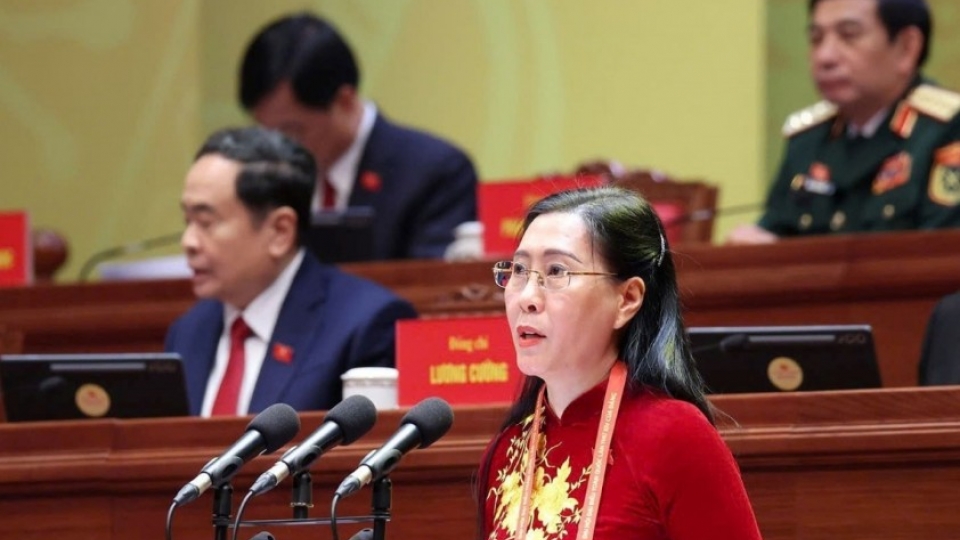
14th National Party Congress receives 559 congratulatory messages
VOV.VN - As of January 19, the 14th National Party Congress had received a total of 559 congratulatory messages from 109 political parties, six international and regional organizations, 16 individuals, 122 people’s organizations, and 306 associations of overseas Vietnamese.