Wood exporters sustain growth through flexible adaptation

VOV.VN - Despite reciprocal tariffs imposed on Vietnam’s wood product exports in 2025, enterprises in Ho Chi Minh City have continued to record growth and prepare production and business plans for 2026.

Vietnam’s wood product exports were estimated at more than US$17.3 billion in 2025, up 5.4% year on year, with Ho Chi Minh City accounting for about half of the total. To achieve this result, many local enterprises made targeted adjustments to their business strategies and expanded exports through e-commerce platforms.
In August 2025, when the United States raised reciprocal tariffs on processed wood products from 0% to 20%, a number of enterprises in Ho Chi Minh City initially faced difficulties. They later introduced practical measures to maintain market presence and profitability.
Huynh Le Dai Thang, director of Nghia Son Wood Co. Ltd., said most domestic wood exporters had previously relied largely on B2B sales, leaving them dependent on importers and without their own brands. When market conditions tightened, importers exerted stronger price pressure, pushing manufacturers into a subcontracting role.
In response, Nghia Son increased investment in design and brand development, expanding exports through e-commerce channels such as Amazon, Walmart and Wayfair. In 2025, the company exported more than 1,000 containers of wooden furniture products, with e-commerce sales rising 40% from a year earlier and accounting for about 15% of total revenue. The share is expected to reach 30% in 2026. The company has secured orders through May 2026, mainly from the US market.
According to Thang, moving into e-commerce requires heavy investment in design and market research. Each year, the company introduces more than 30 new products and takes part in international trade fairs and exhibitions, while conducting market research in the US to better understand consumer demand.

Nam Sao Trading and Manufacturing Co. Ltd. has also adopted flexible measures as export markets, particularly the United States, have become more challenging. General Director Do Thi Kim Loan said the company has shifted from selling smaller volumes with higher margins to larger volumes with lower margins. Export products such as flooring panels and wooden furniture supplied to construction contractors are adjusted in line with clients’ requirements to reduce input costs.
At the same time, enterprises in the sector have worked more closely together to handle large orders, shorten delivery times and cut costs. Loan noted that dividing production into specific stages among different companies helps raise productivity and meet volume and delivery requirements more effectively.
Following administrative consolidation, Ho Chi Minh City’s wood export value is expected to reach more than US$8 billion a year. The city plans to develop a positioning programme to become a global hub for wood exports, with a focus on increasing value added.
Nguyen Chanh Phuong, Vice Chairman of the Handicraft and Wood Industry Association of Ho Chi Minh City (HAWA), said Vietnam has strong production capacity in the wood industry but remains weaker in design and brand building. These are critical areas, particularly for e-commerce exports, where companies must develop distinct products, brands and, over time, their own distribution channels.
As the global wood processing and export sector faces plenty of challenges, especially with the US considering tariffs under Section 232 of the Trade Act of 1974, Vietnamese enterprises are both hoping for positive outcomes from tariff negotiations between Vietnam and the US and restructuring production to maintain profitable operations in 2026.
Wood exports reach over US$2.5 billion in two months
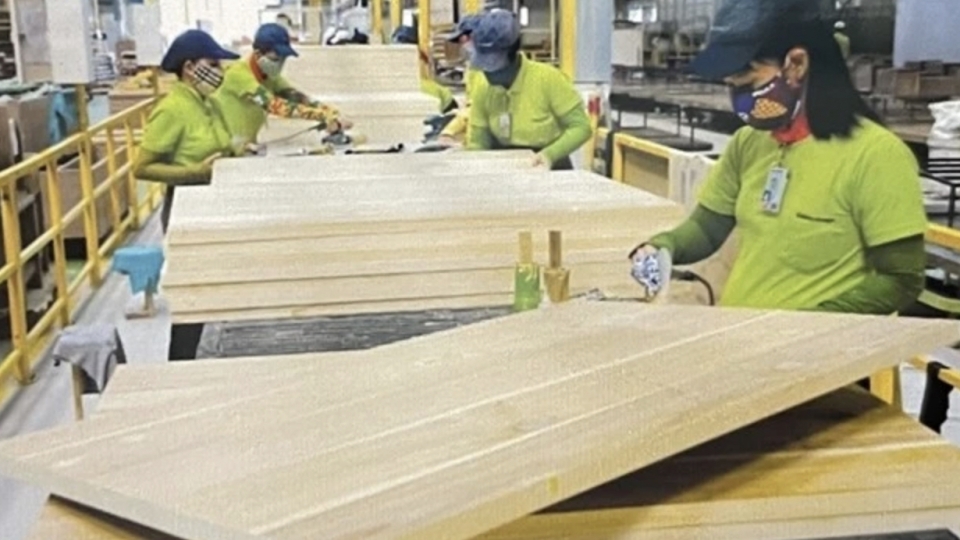
Vietnam’s wood and wood product exports reached over US$2.5 billion in the first two months of the year, statistics from the Ministry of Agriculture and Environment showed.
Wood exports poised to exceed target despite market challenges
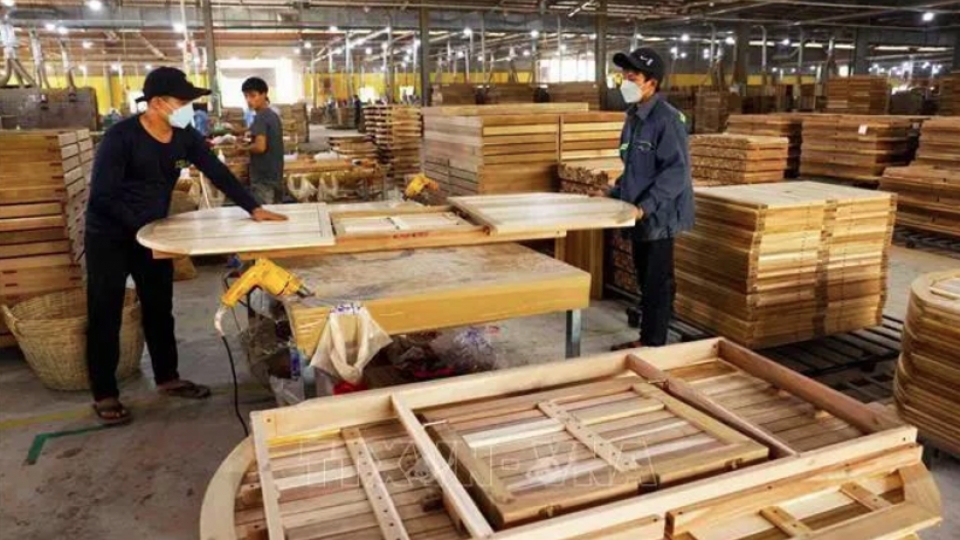
Vietnam’s wood processing and export industry is on track to surpass its 2024 export target of US$15.2 billion, navigating through complicated market developments with strategic adaptability.