Vietnam's wood industry targets US$25 billion in exports by 2030

The Vietnam Timber and Forest Product Association (Viforest) has set an ambitious goal of reaching US$25 billion in exports by 2030, as the sector charts a course toward sustainable development amid growing global trade challenges.
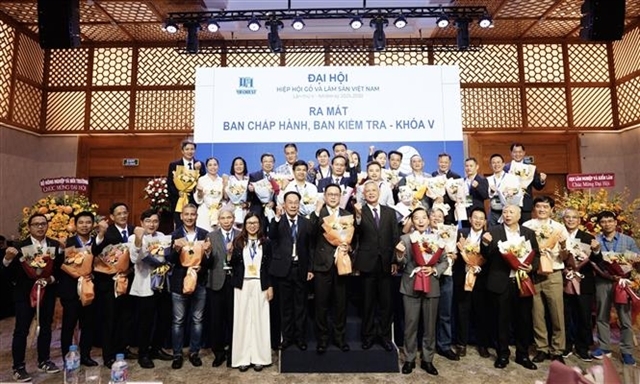
At its fifth congress held in HCM City on December 11, Viforest outlined key strategies for the 2025-30 term, focusing on innovation, market expansion and green transformation.
The association's report showed impressive growth despite global trade volatility. Export turnover of wood and wood products surged from US$10.33 billion in 2019 to US$16.2 billion in 2024, with projections exceeding US$18 billion in 2025. This performance has positioned Vietnam as Asia's leading wood exporter and fifth globally.
However, the sector faces mounting challenges. Political competition risks, trade protectionism, origin fraud and tariff pressures are intensifying, according to Viforest.
Green production requirements are becoming more demanding, with regulations such as the EU Deforestation Regulation (EUDR) requiring companies to prove the legal origin and low emissions of raw materials – a particularly significant challenge for small- and medium-sized enterprises.
Deputy Minister of Agriculture and Environment Nguyen Quoc Tri praised Viforest's contributions while emphasising the urgent need to innovate operational methods to meet new standards, particularly regarding legal timber and emissions-related technical barriers.
He outlined five key tasks for the new term – supporting enterprises, engaging in policy development, promoting market expansion, enhancing branding and developing high-value products. He stressed the critical role of building a legal timber supply chain and projecting the image of a green, transparent sector that meets international requirements.
The congress elected a 31-member executive board, with Nguyen Quoc Khanh, chairman of AA Corporation, appointed as association chairman.
In his inaugural address, Nguyen Quoc Khanh said the sector aims for high added value and diversity, delivering tangible benefits to forest growers.
To achieve the US$25 billion target, the sector must focus on three directions, including enhancing competitiveness based on a tightly integrated ecosystem, building a national Vietnamese wood furniture brand and diversifying markets, products and distribution channels.
According to the newly-elected chairman, the industry needs to build a complete, strong and self-reliant supply chain; enhance production capacity through systematic training; and invest heavily in technological innovation and green production.
Building the Vietnamese wood furniture brand requires four pillars – green credentials, quality, flexibility and competitiveness. The sector needs a transparent, internationally standardised data system and deeper participation in international forums to elevate Vietnam's wood industry brand globally.
Vietnamese enterprises need greater presence at major trade fairs, deeper connections with domestic and international partners, and better utilisation of Vietnam's commercial offices abroad. Domestically, specialised trade fairs must be upgraded to make Vietnam a global destination for international buyers, according to Khanh.
Wood exports reach over US$2.5 billion in two months
Vietnam’s wood and wood product exports reached over US$2.5 billion in the first two months of the year, statistics from the Ministry of Agriculture and Environment showed.