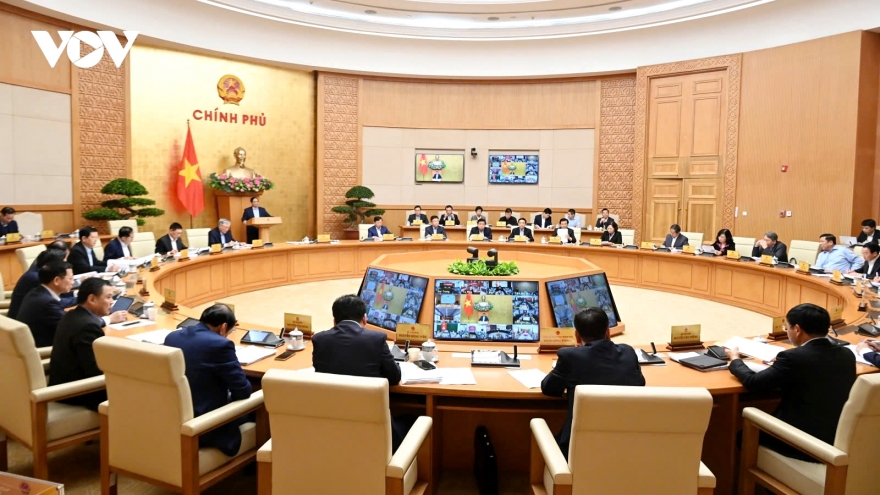
Vietnam’s 2025 growth outperforms expectations despite challenges

VOV.VN - Vietnam’s economic performance in 2025 demonstrates resilience and an ability to move decisively beyond major challenges, Professor Vu Minh Khuong of the Lee Kuan Yew School of Public Policy has told the media in Singapore.
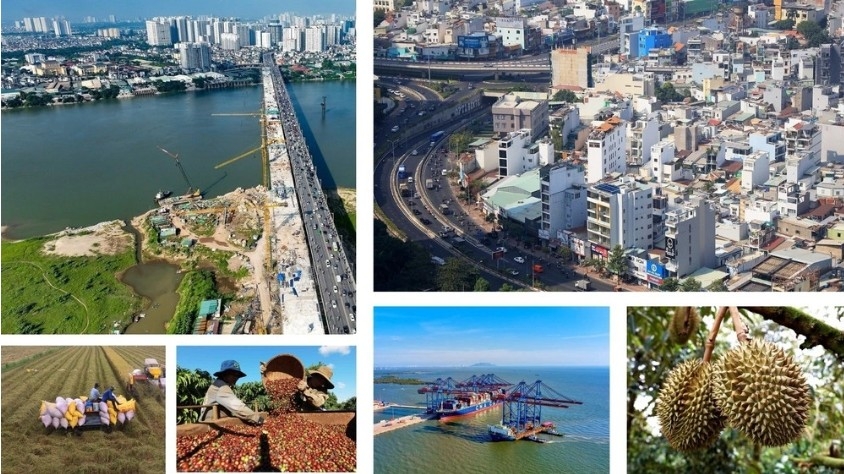
Vietnam is among the countries that recorded growth exceeding expectations despite being subjected to high tariff pressures, demonstrating notable flexibility in responding to shifting global conditions, the professor said. Achieving GDP growth of 8% represents an extraordinary effort and has made a strong impression on international investors and economic partners doing business with Vietnam.
Commenting on the target of double-digit GDP growth in 2026, Professor Vu Minh Khuong said the goal is highly ambitious and difficult, but achievable if Vietnam pushes through robust reforms in the period ahead. He cautioned that relying heavily on public investment and large-scale credit expansion could pose risks to long-term economic sustainability. To secure growth of around 10% on a solid footing, Vietnam cannot follow its old development trajectory, he said, but must move decisively onto a new path.
According to the professor, the entire political system, along with businesses and the public, needs to rethink the country’s development model. Reforms carried out in 2025 mark an important starting point, particularly the consolidation of provinces and ministries, which he said has the potential to generate combined strength across the nation, society and the broader economy. Grasping these fundamentals, he added, would enable Vietnam to accelerate rapidly in the coming years.
Sharing experience from the Johor special economic zone linked with Singapore, Vu Minh Khuong said Johor has positioned itself as a hub for artificial intelligence, the digital economy and data centers. This orientation has helped attract between US$30 billion and US$50 billion from international companies and driven strong growth, putting Johor on the global map.
Vietnam, he argued, should pursue a similar strategy by allowing the development of free trade zones and next-generation special economic zones in major localities such as Ho Chi Minh City, Da Nang and Hai Phong, with Hanoi a longer-term possibility. If Vietnam positions itself as a global hub for AI data, and more importantly, as a next-generation financial center, it could attract tens of billions of US dollars, create hundreds of thousands of jobs and significantly elevate its international standing.
To realize this vision, the professor said, Vietnam needs breakthroughs in both strategic vision and national positioning, alongside special institutional mechanisms. Within such economic zones, legal frameworks aligned with international practices would be critical in creating competitive advantages. Leading global universities could also establish campuses to help train high-quality human resources for Vietnam.
Second, Vu Minh Khuong stressed that the presence of major global corporations in Vietnam should move beyond traditional investment attraction models. Instead, these companies should work closely with Vietnam to help shape its future development. He proposed the creation of highly specialized task forces to engage directly with leading firms, jointly tackling challenges faced by both Vietnam and the global economy, particularly in areas linked to digital transformation.
Third, Vietnam must act swiftly to remove bottlenecks that are constraining labor productivity, he said. If each sector can add an extra one to two percentage points to growth, the 10% target would be within reach. Achieving such growth, he added, would be highly compelling and could usher Vietnam into a new phase of rapid advancement, sending a strong signal to international investors that those who move too slowly risk being left behind as the country emerges as a true “Asian dragon.”
Third, Vietnam must act swiftly to remove bottlenecks that are constraining labor productivity, he said. If each sector can contribute an additional one to two percentage points to growth, the 10% target would be within reach. Achieving such growth, he added, would be highly compelling and could usher Vietnam into a new era of rapid advancement, sending a strong signal to international investors that delaying engagement would mean falling behind as the country emerges as a true “Asian dragon.”
From the perspective of investors, Vu Minh Khuong said reforms in Vietnam have consistently delivered positive outcomes, characterized by what he described as “stability on an upward trajectory.” He nonetheless recommended stronger decentralization to ensure smoother and faster policy implementation.
The professor stressed the importance of a new development trajectory grounded in listening to businesses, experts, initiatives from localities and initiatives from international partners. Such a trajectory is particularly critical in the digital economy, where artificial intelligence poses a central challenge. He also called for closer collaboration with multinational corporations, domestic firms and small and medium-sized enterprises to sustain incremental change.
The professor laid stress on the importance of a new development trajectory grounded in listening to businesses, experts, initiatives from localities and input from international partners. Such a trajectory is particularly critical in the digital economy, with artificial intelligence posing a central challenge. He also called for closer collaboration with multinational corporations, domestic firms and small and medium-sized enterprises to drive continuous, incremental change.
Finally, Vu Minh Khuong underlined the need to recognize and measure progress on a regular basis, including quarterly assessments. He suggested greater transparency in productivity- and innovation-based incentive funds to promote a more dynamic competitive environment. Expressing confidence, he said Vietnam is poised to enter a new era beginning in 2026.
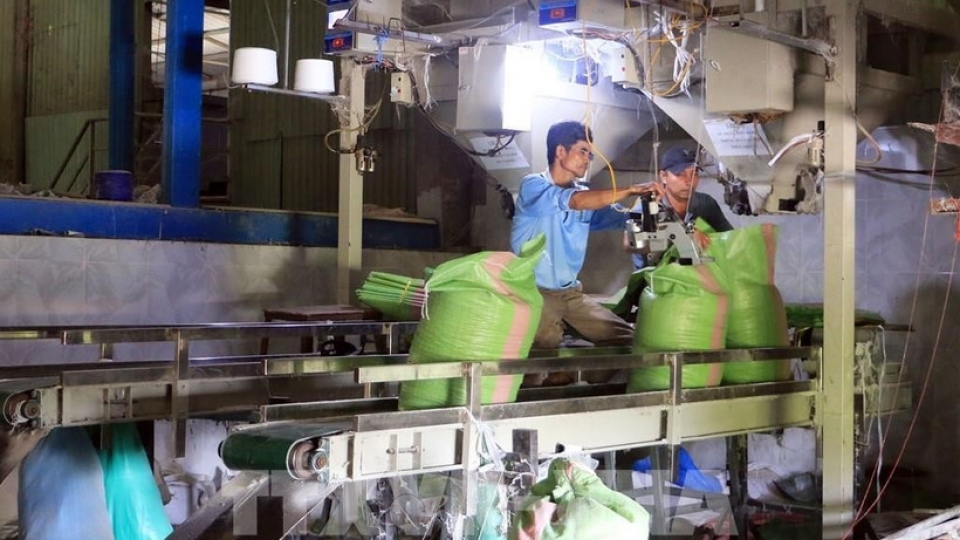
Leading Japanese bank raises Vietnam’s economic growth forecast
Mitsubishi UFJ Financial Group (MUFG), one of Japan’s three core financial and banking institutions and among the world’s largest financial groups, has raised its forecast for Vietnam’s gross domestic product (GDP) growth to 7.7% in 2025 and 8.2% in 2026, up from 6.9% and 7.4% projected in August.