Leading Japanese bank raises Vietnam’s economic growth forecast

Mitsubishi UFJ Financial Group (MUFG), one of Japan’s three core financial and banking institutions and among the world’s largest financial groups, has raised its forecast for Vietnam’s gross domestic product (GDP) growth to 7.7% in 2025 and 8.2% in 2026, up from 6.9% and 7.4% projected in August.
MUFG said the upward revision reflects stronger-than-expected export performance and resilient domestic growth drivers, while also warning of emerging risks related to rapid credit expansion and exchange-rate pressures.
Exports and domestic demand drive growth
In its report “Vietnam: Modest risk of overheating amidst very positive structural reforms”, MUFG noted that Vietnam’s exports in 2025 surged by nearly 17% year on year, well above initial expectations. Growth was broad-based, with electronics exports rising about 28% and machinery and equipment up 14%, highlighting Vietnam’s expanding role in regional and global supply chains. The bank attributed part of this momentum to exemptions for certain products, particularly electronics, from US reciprocal tariff measures.
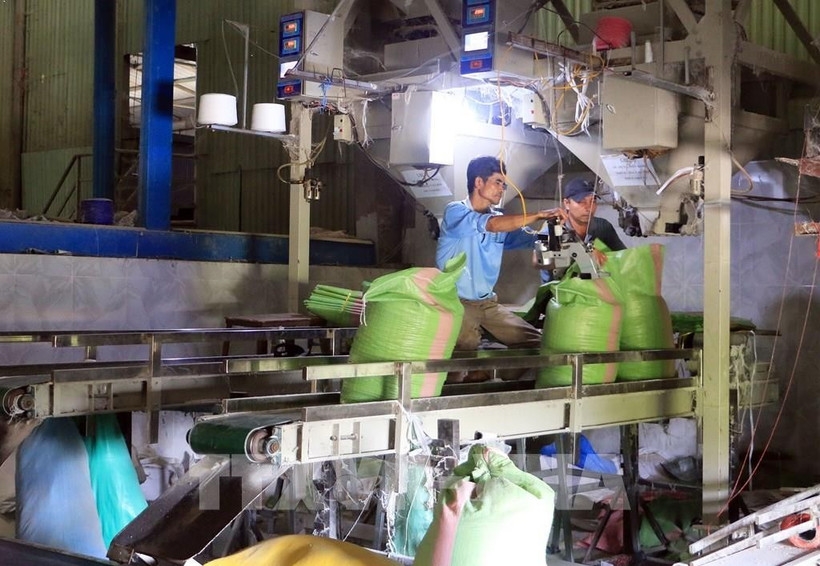
However, MUFG pointed to growing divergence across sectors. Garment and textile exports slowed to around 7% growth in 2025 as of November, compared with 10% in 2024. November alone saw a marginal 0.1% year-on-year increase, reflecting pressure on labour-intensive industries amid weaker global demand and fiercer competition.
Foreign direct investment (FDI) was robust, with realised FDI rising about 10% in 2025 and newly registered capital staying high, signalling continued foreign investor confidence in Vietnam’s medium-term outlook.
MUFG’s baseline scenario assumes Vietnam and the US will sign a formal trade agreement, improving certainty for investment and business activity, though the bank cautioned that negotiations could still face obstacles.
Beyond trade and investment, MUFG stressed that domestic demand and structural reforms are key pillars of growth. Increased public infrastructure spending and efforts to restore private-sector confidence are expected to support internal demand. The bank described Vietnam’s current reforms as the most ambitious since 1986, gradually addressing long-standing structural bottlenecks.
At the same time, credit growth exceeding 19% year on year in 2025 could heighten overheating risks, especially as Vietnam targets GDP growth of 8.3–8.5% in 2025 and around 10% in 2026.
Exchange-rate pressures and policy outlook
MUFG warned that Vietnam’s growth-oriented policy stance may increase depreciation pressure on the exchange rate in 2026, forecasting it may approach VND26,800 per USD. Interbank interest rates are expected to stay above 6% throughout 2026 due to strong credit demand, liquidity absorption via open market operations and uneven liquidity distribution in the banking system.
While current interest rates stay relatively low compared with growth prospects, the bank forecasts the State Bank of Vietnam may raise the refinancing rate once, by about 25 basis points, in the second half of 2026, noting the move would be made cautiously. Expected US Federal Reserve rate cuts in 2026 could help ease pressure on Vietnam’s foreign exchange market.
Overall, MUFG affirmed that Vietnam’s medium-term structural reform outlook remains highly positive, with effective implementation expected to improve productivity, ease structural constraints and support sustained economic growth.
Solid trade turnover sustains strong economic growth
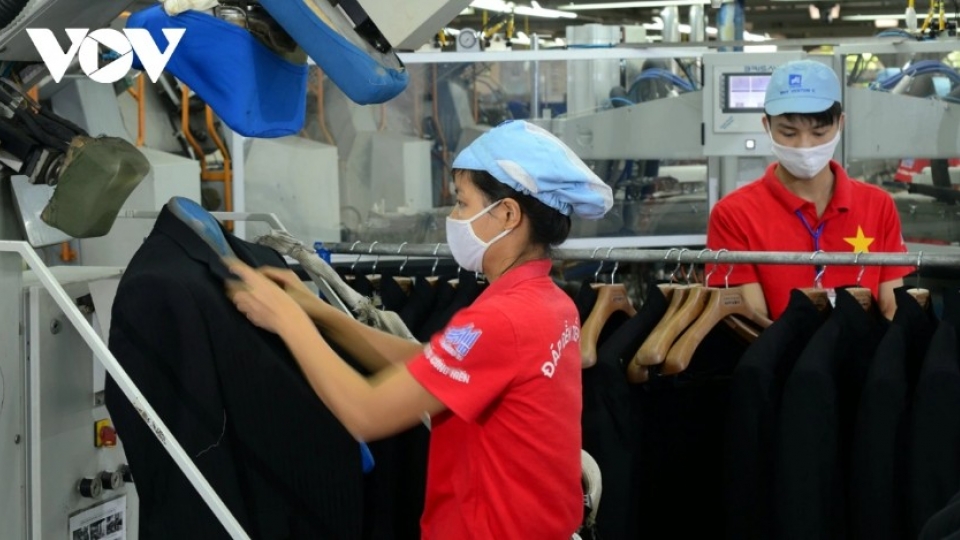
VOV.VN - Trade turnover remained a bright spot in the Vietnamese economy over the nine month period of 2025, expanding 17.3% year on year, far exceeding the full year growth target of 12%.