Vietnam to build a finance-led growth model as a long-term pillar

VOV.VN - As Vietnam pursues rapid, sustainable and high-quality growth in a new development phase, positioning finance as a long-term economic pillar is emerging as a strategic imperative to mobilise resources at scale and support the goals set out in the draft documents of the 14th National Party Congress.
A strategic foundation for a new growth model
The draft documents of the 14th National Party Congress underscore the goal of maintaining peace and stability for fast and sustainable development, improving people’s living standards, and strengthening strategic autonomy, resilience and national confidence. Vietnam aims to become a developing country with modern industry and upper-middle income status by 2030, and a high-income developed nation by 2045.
Notably, the target of average GDP growth of over 10% per year during 2026–2030, alongside a per capita GDP of around US$8,500 by 2030, reflects a clear determination to accelerate growth. Achieving these goals, however, will require moving beyond a model heavily reliant on bank credit and traditional investment expansion toward a more efficient system for mobilising and allocating capital.
According to Associate Professor Nguyen Thuong Lang of Hanoi National Economics University, international experience shows that economies which have successfully accelerated industrialisation and modernisation all possess highly developed financial systems that play a central role in driving growth, spreading resources and managing risks.
Conditions in place for high-growth momentum
Vietnam has recorded notable progress in recent years in macroeconomic stability, improving the investment climate and deepening international integration. GDP growth reached 7.09% in 2024 and 8.02% in 2025, providing strong momentum for a high-growth cycle from 2026 onward.
Experts believe that with effective institutional reforms and the development of a modern financial system, Vietnam could sustain double-digit growth for a considerable period into the early 2030s. In such a scenario, annual realised FDI could average US$35–40 billion, focusing on high technology, green industries and low-emission sectors, while total trade turnover could exceed USD1 trillion from 2026.
A balanced model with finance as a long-term pillar
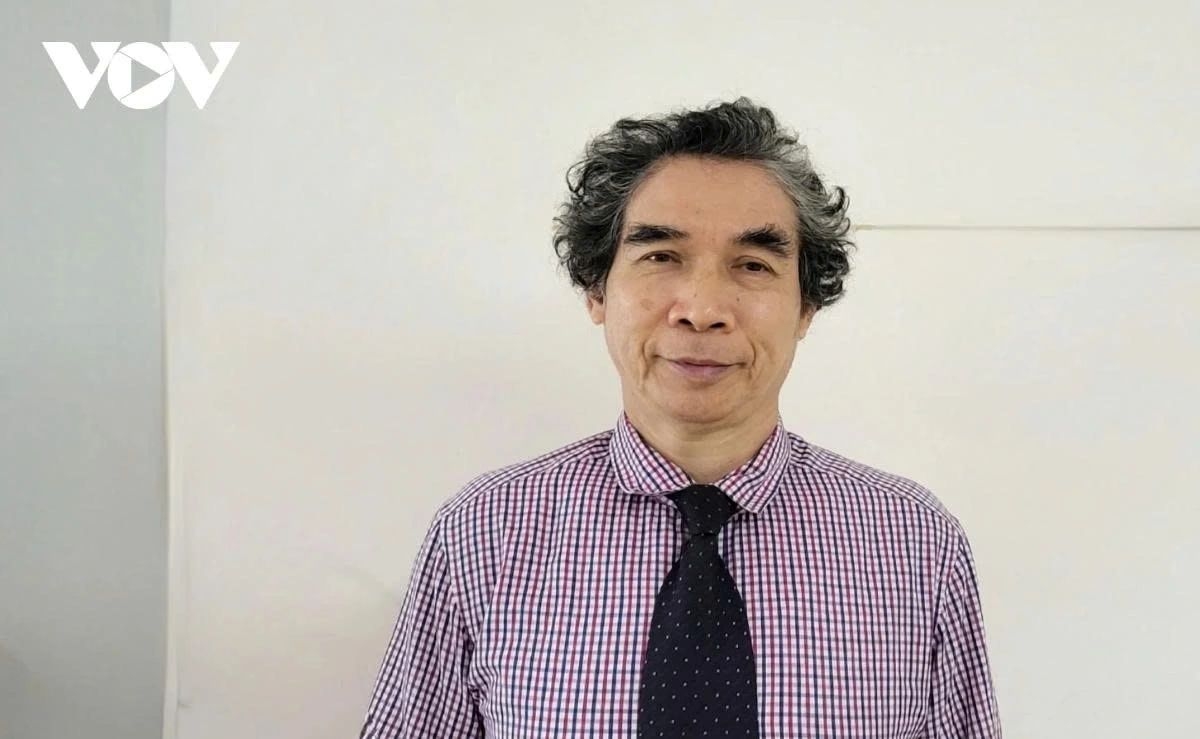
A finance-led growth model does not diminish the role of other sectors, but rather places finance within a balanced structure where agriculture, industry and finance reinforce one another, said Associate professor Lang.
In his analysis, agriculture would remain a stabilising pillar, with a declining share but rising productivity and value-added through high-tech, green and globally integrated value chains. Industry would serve as a resilient growth driver, prioritising high technology, supporting industries, energy and green manufacturing to enhance domestic capacity and reduce external dependence.
On this foundation, finance would act as a long-term pillar, enabling breakthroughs across the economy. A modern, transparent and internationally integrated financial system would link economic sectors more effectively, support innovation and foster large-scale enterprises capable of competing regionally and globally.
Making finance a true growth pillar
For finance to play this role, comprehensive upgrading is required across the monetary market, capital market and financial intermediaries. Upgrading Vietnam’s stock market to “secondary emerging market” status would be crucial to attracting stable, long-term capital. At the same time, government, corporate and municipal bond markets must develop with greater transparency and discipline to become key channels for medium- and long-term funding, reducing reliance on bank credit.
The development of the international financial centre aligned with national strategy is also seen as a potential breakthrough. Initial phases would focus on institutions, infrastructure and human capital, with stronger impacts expected after 2035.
In parallel, early adoption of next-generation finance, including digital finance, fintech, green finance, carbon markets, digital assets and derivatives, could unlock substantial resources in a short time, leveraging Vietnam’s young workforce and rapid technological uptake.
Financial development must be closely aligned with investment restructuring and improvements in capital efficiency. Reducing the incremental capital-output ratio (ICOR) to around 3–3.5 will require prioritising resources for high-technology industries, energy, supporting industries, innovation, and low net-emission sectors.
At the same time, Vietnam needs to better leverage high-quality FDI and free trade agreements to expand exports, increase localisation and avoid the “simple processing trap.” The development of large technology–finance conglomerates, alongside safeguards for systemic stability and national financial sovereignty, will be decisive in ensuring that finance becomes a genuine long-term pillar supporting fast, sustainable and prosperous growth.
When the objectives of the 14th National Party Congress are translated into coherent policies and implementation, a finance-led growth model could become a powerful lever, enabling Vietnam to achieve fast, sustainable growth and realise its aspiration of becoming a prosperous, developed nation in the new era.

Rethinking capital mobilisation to achieve double-digit growth
VOV.VN - Developing capital markets has been identified as a key pillar for mobilising medium- and long-term resources to support Vietnam’s ambition of achieving double-digit economic growth in the coming years.