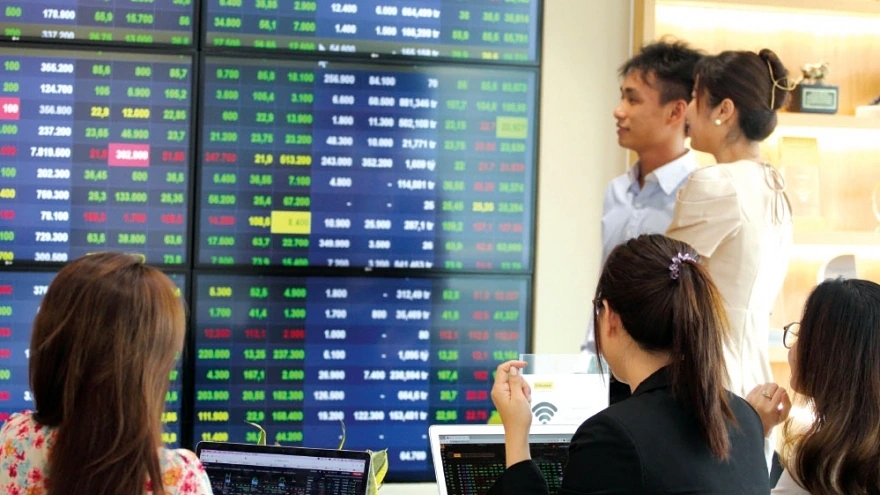
Rethinking capital mobilisation to achieve double-digit growth

VOV.VN - Developing capital markets has been identified as a key pillar for mobilising medium- and long-term resources to support Vietnam’s ambition of achieving double-digit economic growth in the coming years.
As bank credit approaches risk thresholds, changing the mindset on resource mobilisation is no longer an option but an urgent requirement to ensure macroeconomic stability and sustainable growth.
Heavy pressure on bank credit
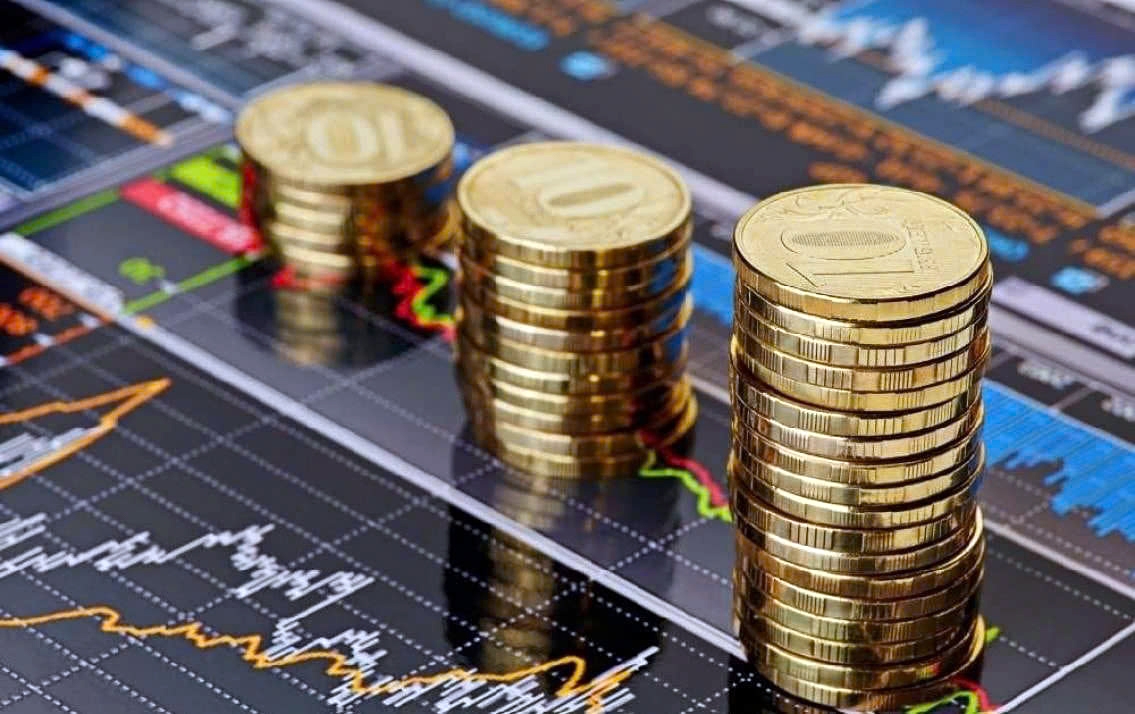
According to many experts, Vietnam’s financial structure is showing clear imbalances due to excessive reliance on bank credit. Outstanding credit currently exceeds 135% of GDP which is significantly higher than in many ASEAN countries, while in the United States the ratio stands at around 80%.
Can Van Luc, chief economist at the Bank for Investment and Development of Vietnam (BIDV) and a member of the Prime Minister’s Policy Advisory Council, said that since 1991, bank credit has consistently played a dominant role, accounting for around half of total capital for the economy. In the first nine months of 2025 alone, the banking system supplied approximately 50%-52% of total funding, at times reaching as high as 57%.
Meanwhile, alternative capital channels remain underdeveloped and disproportionate to the economy’s needs. The stock market mobilises only about VND100-150 trillion annually, roughly equivalent to the fundraising capacity of a mid-sized commercial bank, contributing around 11-12% of total social investment. Corporate bonds and public investment account for about 15-16%, with foreign direct investment (FDI) at a similar level, while domestic private enterprises contribute just 3-4%.
“This mismatch places the burden of medium- and long-term capital provision squarely on the banking system. When bank credit overwhelms capital markets, systemic risks cannot be ignored,” Luc warned.
Lessons from past financial shocks
Sharing the view, Pham Xuan Hoe, former deputy director of the Banking Strategy Institute under the State Bank of Vietnam, noted that history has demonstrated the serious consequences of over-reliance on bank credit.
In 1988-1989, nearly 100 people’s credit funds collapsed due to surging bad debts and weak supervision. During the 2011-2015 period, credit growth soared to 33%, pushing non-performing loans to 17.21% and driving tens of thousands of businesses into losses and bankruptcy. More recently, the Saigon Joint Stock Commercial Bank (SCB) incident in 2022 underscored liquidity risks stemming from financial imbalances.
Notably, outstanding real estate credit has increased by more than 26%, hitting over VND4 quadrillion and accounting for roughly 24% of total system-wide credit. In some banks, real estate loans make up as much as 50% of total lending, heightening the risk of asset bubbles if capital continues to flow heavily into the sector.
International studies suggest that the optimal credit-to-GDP ratio for ASEAN economies is around 96.5%, while for developing economies it ranges from 80% to 120%. Once this threshold is exceeded, the positive impact of credit on growth diminishes and may even become a source of risk, especially when accompanied by high inflation.
Capital markets as an indispensable pillar for long-term growth
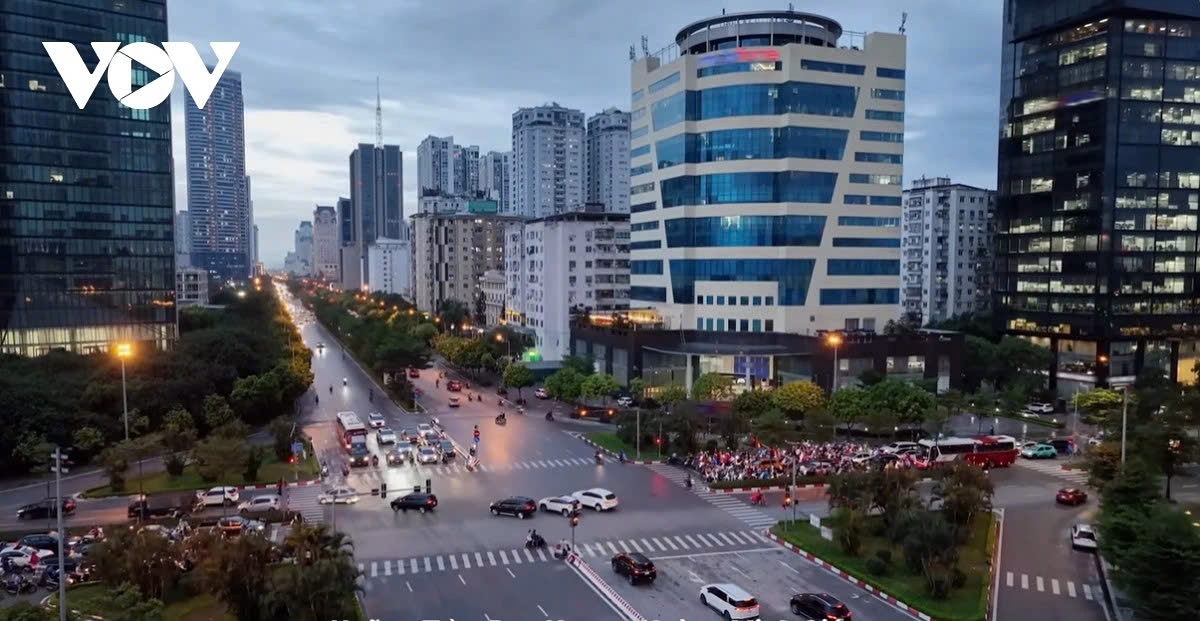
Vietnam’s financial market size is currently equivalent to around 300% of GDP, encompassing total banking assets, stock market capitalization, the bond market, and insurance premium revenues. While large in scale, this also means that risks can spread rapidly in the event of a shock.
Against this backdrop, economist Can Van Luc emphasised that Vietnam must shift its focus toward more balanced capital market development, particularly in mobilising medium- and long-term funding for science and technology, innovation, venture capital, green transition, and digital transformation – the areas where bank credit alone is insufficient.
At the same time, Vietnam needs to accelerate its stock market upgrade, targeting Morgan Stanley Capital International - MSCI standards before 2030, establish the international financial centre in Ho Chi Minh City and Da Nang, and unlock capital trapped in long-delayed and stalled projects.
New thinking, new solutions, new approaches
Nguyen Ngoc Hoa, chairman of the Ho Chi Minh City Business Association (HUBA), said that the international financial centre should be leveraged as channels for long-term capital, capable of mobilising funds with maturities ranging from five to 20 years, including debt trading, thereby easing pressure on the banking system.
“When capital is allocated according to its true nature - long-term funding via capital markets and short-term funding via banks - the financial system becomes safer. Banks can then focus on supporting small and medium-sized enterprises while reducing inflationary pressures from excessive credit growth,” Hoa analysed.
The year 2025 is seen as a turning point for the local stock market following ít upgrade from frontier to secondary emerging market status, alongside the establishment of a legal framework for digital assets and institutional foundations for the international financial centre.
According to Dr. Le Minh Nghia, chairman of the Vietnam Financial Consulting Association (VFCA), to turn these foundations into real growth drivers, Vietnam must boldly embrace new thinking rather than replicate old models. The capital market needs “Made in Vietnam” financial instruments such as green bonds linked to carbon credits, digitalized assets, tokenized securities, and blockchain-based financial products to attract private equity funds, venture capital, pension funds, ESG funds, and green funds.
More importantly, decentralisation and delegation of authority in line with international standards must be implemented immediately instead of being further delayed.
Effective capital market development will not only reduce the burden of capital provision on the banking system but also establish a sustainable foundation for mobilising medium- and long-term resources for the economy. Lessons from the past clearly show that a growth model overly dependent on bank credit carries significant risks of liquidity stress, bad debts, and macroeconomic instability.
Rethinking how resources are mobilized, therefore, is the key for Vietnam to realise its double-digit growth ambitions in the years ahead.

Da Nang welcomes QuantumEdge Capital India MICE group in early 2026
VOV.VN - The central city of Da Nang has welcomed a MICE group from QuantumEdge Capital India, marking the city’s first international MICE arrivals of 2026.