Vietnam sees strong potential in sustainable aviation fuel development

VOV.VN - The International SAF Platform Vietnam 2026 (IPS Vietnam 2026), a major forum on sustainable aviation fuel (SAF), opened in Da Nang city on May 7, bringing together policymakers, industry leaders and international experts to discuss the future of green aviation in Vietnam and the region.
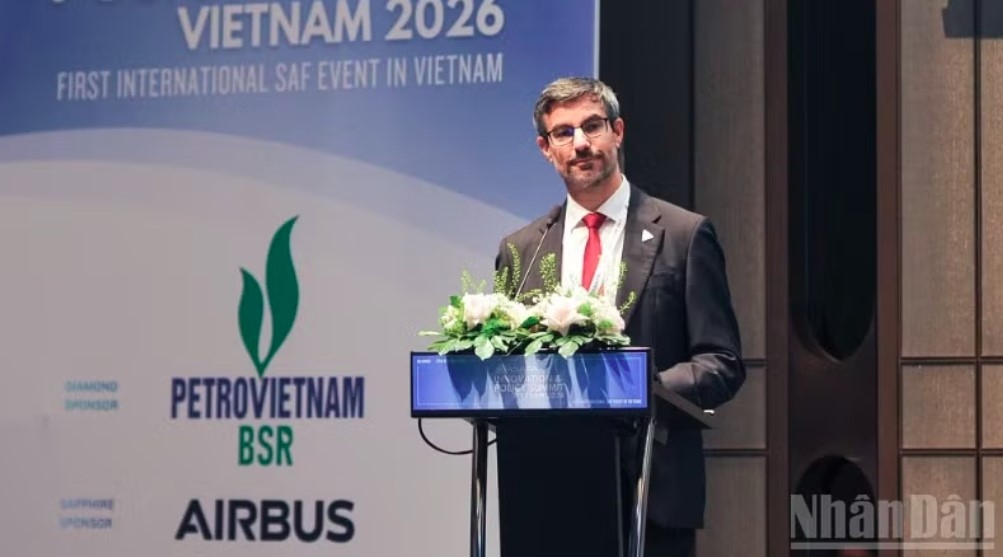
Speaking at the two-day event, CEO of the Asia SAF Association (ASAFA) Fabrice Espinosa emphasised that Vietnam has solid foundations and key prerequisites to build a highly competitive SAF ecosystem. He noted that SAF cannot be scaled effectively by individual countries alone, but must develop through regional policy coordination, cross-border supply chains, common standards, and integrated markets.
In such a system, he said, some countries will lead in feedstock supply, others in refining capacity, and others in market demand, while Vietnam can play a central role across this entire ecosystem.
Meanwhile, Vice Chairman of the Da Nang People’s Committee Ho Quang Buu stressed that Da Nang is pursuing a development strategy focused on becoming an ecological and smart city, promoting green and circular economy models, innovation and international integration.
He pointed out that participating in global energy transition initiatives, particularly in high-emission sectors such as aviation, is strategically important for the city’s long-term development.
According to him, IPS Vietnam 2026 is taking place at a time when the world is accelerating energy transition efforts and strengthening commitments to emissions reduction and sustainable growth.
For Vietnam in general and Da Nang in particular, this is not only a challenge but also an opportunity to reshape development models toward greener, smarter and more sustainable pathways, he said.
He pointed out that IPS Vietnam 2026 is taking place as the world enters a deep energy transition driven by strong emissions reduction commitments, presenting both challenges and opportunities for Vietnam and Da Nang to shift toward greener and more sustainable development models.
Deputy Director of the Department of Innovation, Green Transformation and Industrial Promotion under the Ministry of Industry and Trade Dao Duy Anh, affirmed that SAF is a key solution in Vietnam’s green transport strategy, aligned with national efforts to reduce carbon and methane emissions in the transport sector.
He revealed that Vietnam has set specific goals for SAF development, including mobilising feedstock sources such as agricultural by-products, animal fats, and basa fish oil, while also mastering production technologies and developing distribution systems.
During the first day of discussions, delegates focused on SAF technologies, Vietnam’s feedstock potential, project financing models, market demand and policy frameworks.
On May 8, IPS Vietnam 2026 will continue with strategic discussions on policy dialogue for energy transition in aviation, Vietnam’s SAF development roadmap, investment mechanisms, innovation initiatives and international cooperation aimed at accelerating SAF ecosystem development in Vietnam and beyond.
Within the framework of the event, participating parties are also expected to sign Memorandums of Understanding (MoUs) to strengthen collaboration and promote SAF ecosystem development in Vietnam.
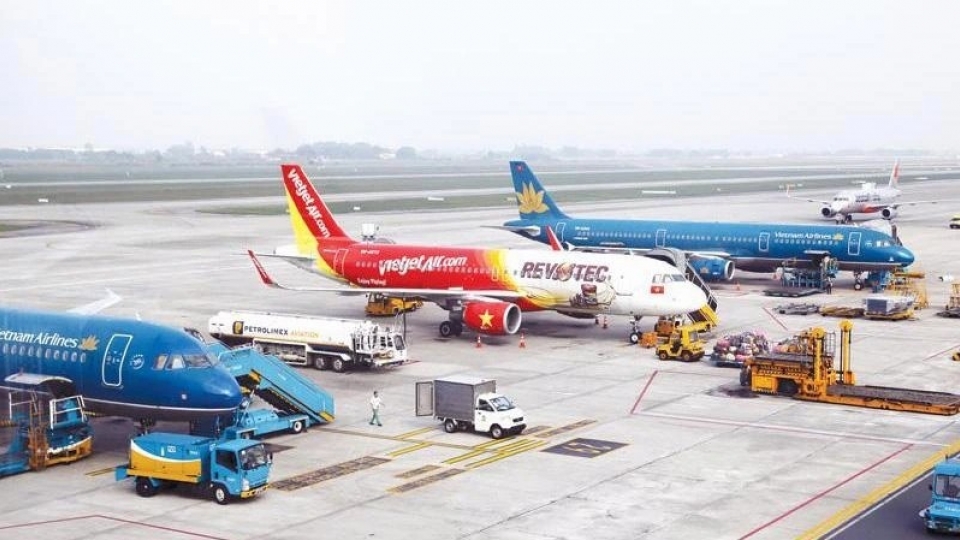
Aviation sector advances sustainable aviation fuel to achieve net-zero goals
VOV.VN - The Civil Aviation Authority of Vietnam has called on industry stakeholders to study and gradually adopt sustainable aviation fuel (SAF) and alternative energy solutions, aiming to reduce greenhouse gas emissions and support the sector’s energy transition.