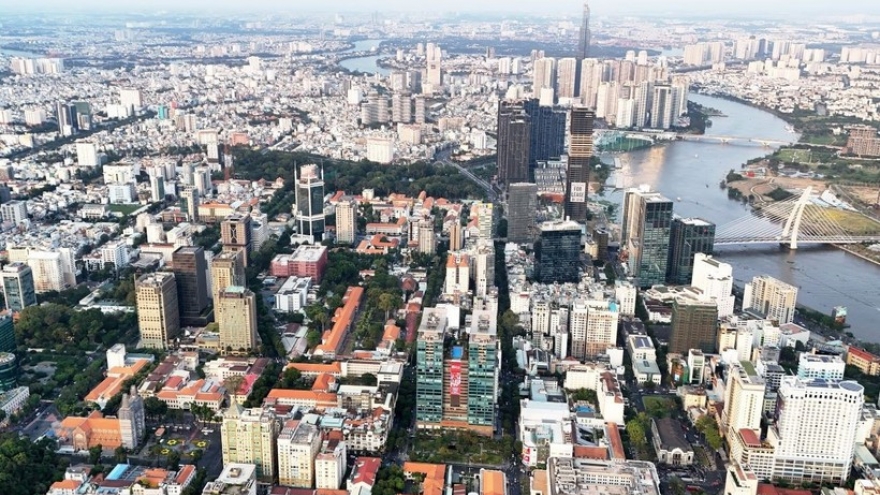
Vietnam remains bright spot in Asia-Pacific property landscape: Savills

With a solid macroeconomic foundation, rising incomes, and sustained foreign direct investment (FDI) inflows, Vietnam is expected to remain a bright spot in the Asia - Pacific real estate landscape.
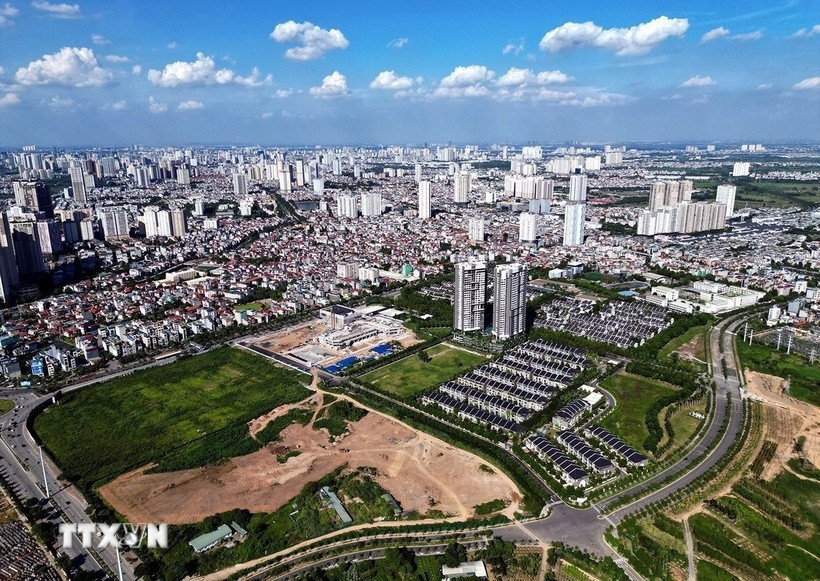
A Savills report showed that the Asia-Pacific property sector is entering a more stable phase in 2026, with Vietnam earning praise for its robust economic fundamentals and expanding domestic demand.
Data from Vietnam’s National Statistics Office (NSO) and international research bodies showed that Vietnam’s GDP growth from 2022-2025 reflected a clear recovery and sustained stability. Following around 8% expansion in 2022, growth moderated to about 5.1% in 2023 amid global headwinds, before accelerating to roughly 7.1% in 2024 and reaching 8.02% in 2025, cementing Vietnam's status among the region's fastest-expanding economies.
Beyond growth momentum, economic quality has also improved markedly. According to the NSO and the Asian Development Bank (ADB), Vietnam’s GDP per capita jumped from roughly US$3,700 in 2022 to nearly US$5,026 in 2025. Higher disposable incomes and the growing middle class are underpinning the domestic market, while simultaneously driving growing demand for transport infrastructure, logistics, urban development, and commercial services, all of which have strong spillover effects on real estate.
Within the broader regional landscape, Savills forecast that demand for Grade A office space across Asia–Pacific will remain robust, particularly in such emerging talent hubs as India, Vietnam, and Malaysia, where multinationals are scaling operations to tap skilled workforce at competitive costs.
In retail, recovering consumer spending, tourism revival and the re-entry of global brands are providing support, even as quality retail space trails underlying demand in many locations.
The industrial and logistics segment benefits from ongoing supply chain diversification and e-commerce expansion. Savills expected rental rates in key regional markets to maintain upward momentum in 2026, driven by genuine occupancy needs and the increasingly critical role of logistics infrastructure in global value chains.
Sharing a similar view, Country Head of JLL Vietnam Trang Bui said the Vietnamese market is entering a phase of “healthy rebalancing”. Demand for Grade A offices in Hanoi and Ho Chi Minh City holds steady, driven by expansion in technology, finance, and manufacturing sectors. Tenants increasingly favour green-certified buildings, operational efficiency, and locations near major transport nodes, a long-term structural trend rather than a cyclical one.
In the industrial-logistics segment, Head of Industrial Services at Colliers Vietnam John Campbell noted that the “China Plus One” strategy continues to reinforce Vietnam’s role in global supply chains. Demand for industrial land leases now comes not only from traditional manufacturers but also from electronics firms, data centres, and cold-chain logistics providers. Rising rental prices reflect real usage demand and long-term investor confidence rather than short-term speculation.
According to CEO of Savills Vietnam Neil MacGregor, regional trends are increasingly evident in the Vietnamese market, but with greater depth and quality.
Vietnam has progressed beyond reliance on low-cost advantages for investment attraction. Capital is now flowing strongly into higher-value areas such as technology, electronics, modern logistics and industries linked to global supply chains.
A cornerstone of Vietnam's property outlook remains the steady inflow of quality FDI. Registered inflows approached US$38–40 billion in 2025, with disbursed capital reaching a record peak, underscoring enduring foreign confidence in the business environment.
European investment, in particular, is growing more discerning, targeting high-value segments such as technology, electronics, advanced processing and logistics. The phased removal of import tariffs on over 99% of goods to the EU under the EU–Vietnam Free Trade Agreement (EVFTA) by 2027 is set to further entrench Vietnam in global supply chains and enhance its appeal to committed long-term capital.
Complementing FDI, substantial public infrastructure spending acts as a vital catalyst for both economic expansion and real estate over the medium to long term. Accelerated progress of flagship projects, including the North-South Expressway, Long Thanh International Airport, Hanoi and Ho Chi Minh City ring roads, plus logistics and energy projects, will improve regional connectivity, encourage urban decentralisation and create new growth corridors along strategic infrastructure axes.
According to Trang Bui, as interregional infrastructure improves, production shifts toward satellite areas will become clearer, driving demand for industrial parks, logistics facilities, and housing for experts, which will sustain market growth over the medium and long term.
Vietnam’s real estate M&As shift toward long-term strategies
Real estate mergers and acquisitions (M&A) in Vietnam continue to draw steady interest from foreign investors, according to insiders.