Vietnam’s real estate M&As shift toward long-term strategies

Real estate mergers and acquisitions (M&A) in Vietnam continue to draw steady interest from foreign investors, according to insiders.
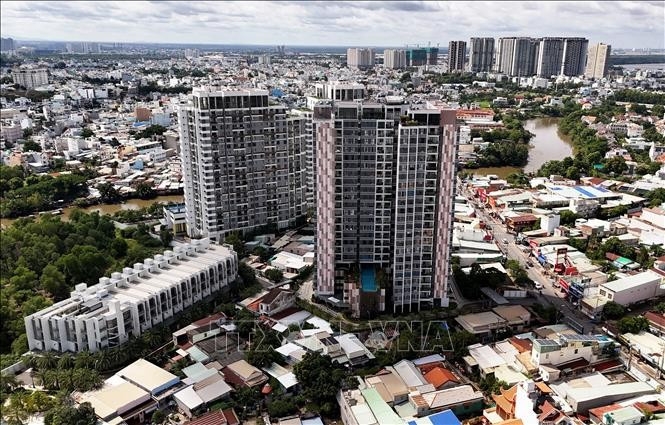
While the headline values of announced deals have tended to remain modest, these figures do not fully reflect the scale of actual capital commitments as investor focus is increasingly shifting towards development opportunities and long-term, strategic partnerships.
A research by Savills shows that amidst an uneven recovery of real estate investment across the Asia-Pacific region, Vietnam has emerged as an increasingly favoured destination. This is underpinned by a stable macroeconomic environment, sustained inflows of foreign direct investment (FDI), and legal reforms gradually proving effective. This trend is clearly reflected in Vietnam’s real estate M&A landscape.
Although market activity remained relatively vibrant throughout 2025, with the active participation of foreign investors, the disclosed values of many transactions were not particularly high. Experts note that this should not be interpreted as a sign of market weakening, but rather as a consequence of changes in deal structures and investment strategies.
Neil MacGregor, Managing Director of Savills Vietnam, said that M&A activity has gained momentum over the past two years as the market adapts to the 2024 Land Law, alongside the amended Housing Law and Law on Real Estate Business. Together, these regulations have provided a clearer and more transparent legal framework for investors. At the same time, the supply of income-generating assets remains limited, prompting most M&A activity to concentrate on development projects rather than cash-flow assets.
According to Savills, the growing concentration of M&A activity in development projects, particularly large-scale residential and urban areas, accurately reflects current market conditions. Vietnam has recently seen a series of major infrastructure projects, laying the groundwork for urban expansion and the development of satellite areas, including Ho Chi Minh City’s Ring Road 3, which, once completed, is expected to open up new areas for suburban housing development.
MacGregor noted that while such projects typically involve long-term investment commitments, their initial capital outlay is often relatively small compared to the acquisition of large, income-producing assets. This helps explain why publicly disclosed deal values may appear modest despite the substantial scale of the projects and the strong reputation of the developers involved.
Market research firms also observe a clear shift in capital flows from core urban areas to satellite locations, where infrastructure is improving and land reserves offer greater development potential. These areas align well with the long-term land accumulation strategies of many investors.
Another notable trend is the rise in joint ventures and minority stake acquisitions. According to MacGregor, this cautious yet calculated approach is particularly favoured by Japanese investors.
An improved legal framework has further strengthened confidence in more flexible transaction structures, ranging from majority control to active minority participation and purely financial investments, helping position Vietnam as a dynamic real estate M&A market capable of attracting a wide range of capital flows.
Savills added real estate remains a key component of Vietnam’s overall M&A value, driven by strong housing demand, rapid urbanisation, and ongoing infrastructure development.
Looking ahead, MacGregor said the market will need additional time for policy changes to be fully reflected in larger deal sizes and improved liquidity. Nevertheless, in the medium term, a more transparent M&A market with better liquidity and more diversified capital sources is expected while over the longer term, Vietnam holds strong potential to attract sizable institutional investment flows.

Real estate M&A market gathers pace
Vietnam’s real estate M&A market is bouncing back strongly this year after a long, quiet spell. With legal hurdles cleared, global capital flowing in, and major corporate shake-ups happening, the stage is set for a surge of big deals.