


Vietnam pivots from low-cost base to high-value tech hub

Vietnam is well-placed to reinvent itself from a low-cost manufacturing base into one of Asia’s leading high-value technology production hubs, according to international financial organisations.
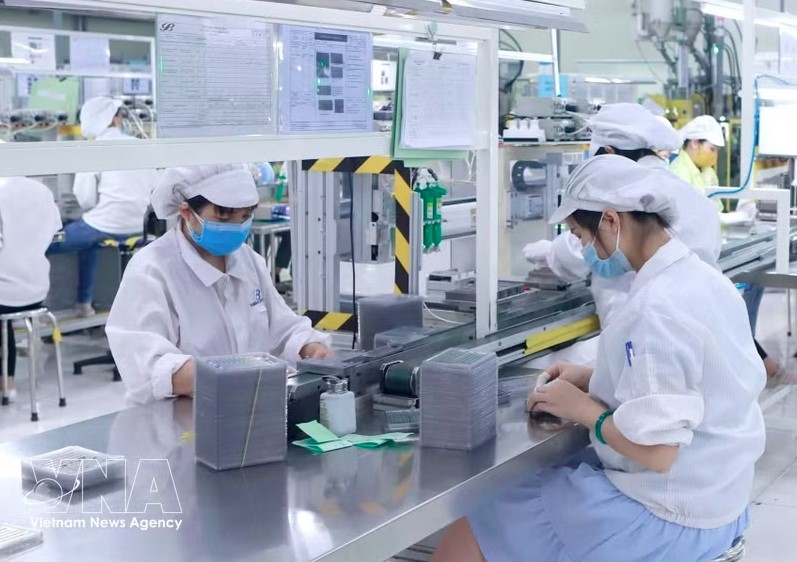
Reports released in June chart an economy moving fast beyond, now increasingly fueled by engineering, technology and innovation, a pivot clearly visible in the changing mix of foreign direct investment.
Mickaël Driol, CEO of Mekong Partners, said foreign cash has migrated out of labour-intensive industries and into higher value-added ones, including advanced electronics, semiconductors, automation, energy transition and digital transformation.
He pointed to French groups such as Air Liquide and Schneider Electric, which are expanding their presence in Vietnam through technology, engineering and advanced manufacturing projects.
Vietnam is no longer just a place to assemble goods, but is steadily becoming a centre for engineering, industrial automation, factory digitisation and long-term industrial muscle, he said.
The Nordic Chamber of Commerce in Vietnam agreed, calling the moment a clear opening to become one of Asia's leading high-value manufacturing centres.
Lasse Pedersen Hjortshøj, Commercial Counsellor and Head of Economic Diplomacy & Trade at the Danish Embassy in Vietnam, said Danish companies no longer treat Vietnam as a mere sourcing stop or rudimentary production base. Instead, investments are increasingly focused on advanced manufacturing, automation, energy-efficient production, digital optimisation and sustainable supply chains. Vietnam is also emerging as a stand-alone strategic market and a vital hub within broader Asian supply chains, he added.
Global bodies chalk up Vietnam's transformation to rock-solid economic resilience and deep foundational strengths.
Tehmina Khan, the World Bank (WB)’s lead economist for Vietnam, Cambodia and Laos, said Vietnam has shown striking resilience against global economic shocks. The WB forecast that Vietnam’s growth will keep outstripping most ASEAN economies and major emerging markets in 2026 and beyond.
Driol said Vietnam's competitive edge now runs far deeper than cheap wages, citing political stability, an increasingly skilled young workforce, extensive global economic integration and robust trade links to heavyweight markets, including the US, the European Union, Japan and the Republic of Korea.
The country has already locked in a strong position in electronics, components, high-tech assembly and industrial equipment, he noted.
Beyond those traditional strenghths, international bodies see strategic infrastructure as the critical accelerator for the next leg of growth.
Fitch Ratings said the Government’s public investment plan for the 2026‑2030 period, steering close to 10% of projected annual GDP into strategic infrastructure, will turbocharge long-term economic expansion.
But even as the outlook brightens, they flagged structural headwinds Vietnam must tackle to seal its place as a high-value tech manufacturing hub.
The WB warned that a growing gap between foreign-invested and domestic private firms is a deepening worry. FDI companies, though making up only about 5% of all businesses, dominate the nation's exports, while domestic firms, especially small and medium-sized enterprises, still wrestle with access to finance and struggle to plug into global value chains.
Driol noted that foreign-invested companies generate nearly 80% of Vietnam's export earnings, showing the economy is still heavily dependent on imported parts, equipment and technology, and vulnerable to global supply chain disruptions.
At the same time, the race into advanced industries like semiconductors and artificial intelligence is piling on pressure to lift labour productivity and sharpen workforce skills.
Clean energy adds another hurdle. NordCham and Singapore-based UOB said reliable, sustainable power is now a critical requirement for high-tech investors chasing international environmental, social and governance (ESG) standards. Yet the risk of power shortfalls and a lack of sufficient renewable energy infrastructure remain major bottlenecks for Vietnam's next growth phase.
Still, they stay bullish on Vietnam's long-term story.
Driol said the country's robust growth, ability to shrug off global turmoil, and policy drive to reel in high-value manufacturing, research and development, and technology investment are steadily reshaping Vietnam from a low-cost factory base into a critical link in the world's industrial value chains.
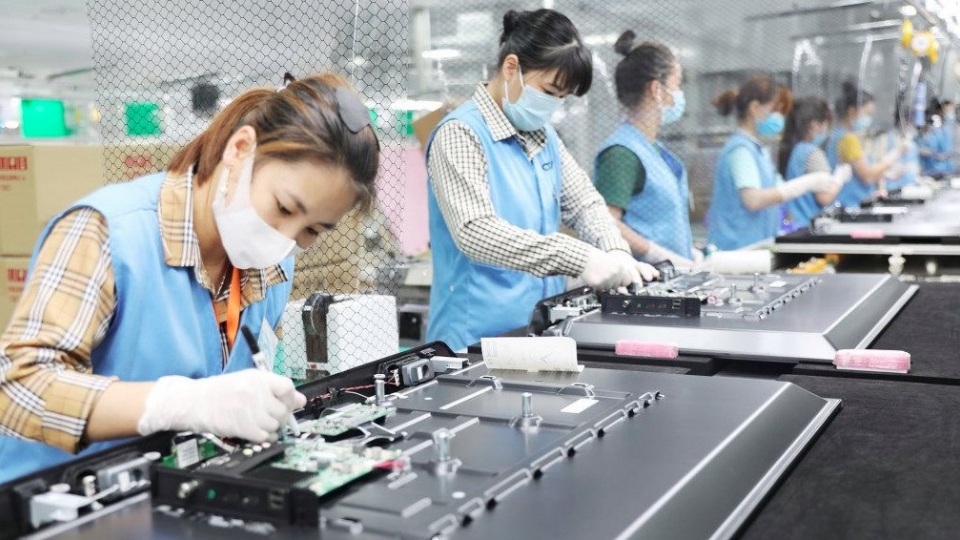
Taiwanese high-tech firm selects Vietnam as Southeast Asia manufacturing hub
VOV.VN - UNIVACCO Technology Inc., a Tainan-based technology manufacturer, has chosen Vietnam as its strategic production base in Southeast Asia after leasing nearly 30,000 square meters of industrial land at Long Thanh Industrial Park in Vietnam’s southern Dong Nai province.

