UK experts highlight prospects for Vietnam International Financial Centre

An International Financial Centre (IFC) is not merely a hub for banks and investment funds, but a geoeconomic stage where national credibility and influence are shaped. Vietnam is facing a strategic opportunity to leverage such a platform to elevate its standing on the regional and global financial map.

At a seminar in London on February 26, Christine Le, Managing Director of Eastern Horizon Wealth Management and President of the Vietnam Finance and Investment Association in the UK, stressed that for Vietnam, an IFC should represent a shift from capital recipient to capital allocator.
That transition marks an upgrade in the global financial value chain and embodies financial soft power, she said, adding that analyses by the International Monetary Fund suggest countries controlling financial infrastructure from payment systems and asset pricing mechanisms to dispute resolution frameworks, are better positioned to shape market standards.
In the competition for capital, many jurisdictions rely heavily on tax incentives. However, international experience shows that while tax breaks may attract capital quickly, institutions are what retain it over the long term. According to surveys by the Organisation for Economic Co-operation and Development, institutional investors place greater value on policy predictability and property rights protection than on preferential tax regimes.
Tax is a competitive tool, but the rule of law is the foundation, Christine Le emphasised, warning that without a solid legal framework, incentives may only generate short-term and reversible flows.
Alan Sellers, CEO and founder of Your Crypto Coach Ltd, highlighted the growing importance of data and artificial intelligence (AI) in determining the competitiveness of financial centres. In the AI era, a financial hub is as much a data space as a geographic one, he noted. Digital payments, cloud computing and real-time risk analytics are transforming financial centres into information-processing platforms.
Yet technology, he cautioned, can enhance efficiency but cannot replace trust. Legal certainty, regulatory credibility and contract enforcement remain at the core of any successful IFC. While new centres may “leapfrog” in digital infrastructure, they cannot bypass the foundational layers of institutional trust.
Sellers projected that AI will reshape – rather than eliminate – financial sector employment. Routine, process-driven tasks will increasingly be automated, while demand will rise for specialists in data science, AI governance, cybersecurity, policy analysis and complex financial structuring.
Christine Le added that for Vietnam to position its IFC as a bridge linking ASEAN, East Asia and Western markets, it must establish three pillars: a legal framework aligned with international standards, interoperable payment and capital market infrastructure, and a stable, predictable long-term policy environment. With these foundations in place, Vietnam could evolve from a capital destination into a regional conduit for supply chain finance, green finance and cross-border fintech.
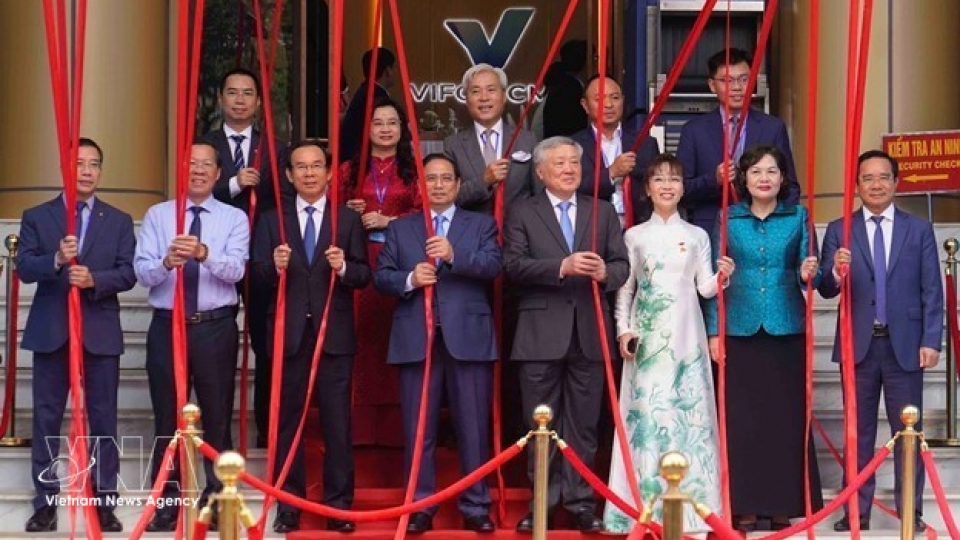
Ho Chi Minh City announces IFC founding investors, shapes operational structure
Ho Chi Minh City has announced the founding members and strategic investors of the freshly launched Vietnam International Financial Centre there (VIFC-HCMC), outlining its market structure and operational direction.