Trade prospects grow between Vietnam and ASEAN partners

VOV.VN - Thailand, Singapore and the Philippines are currently Vietnam’s three largest partners within ASEAN, with combined bilateral trade nearing US$36 billion and projected to grow further as partnerships become increasingly substantive.
Upcoming visits by Party General Secretary and State President To Lam to the three countries are expected to provide fresh impetus for economic and trade cooperation, as well as supply chain connectivity between Vietnam and its regional partners.
Expanding economic links
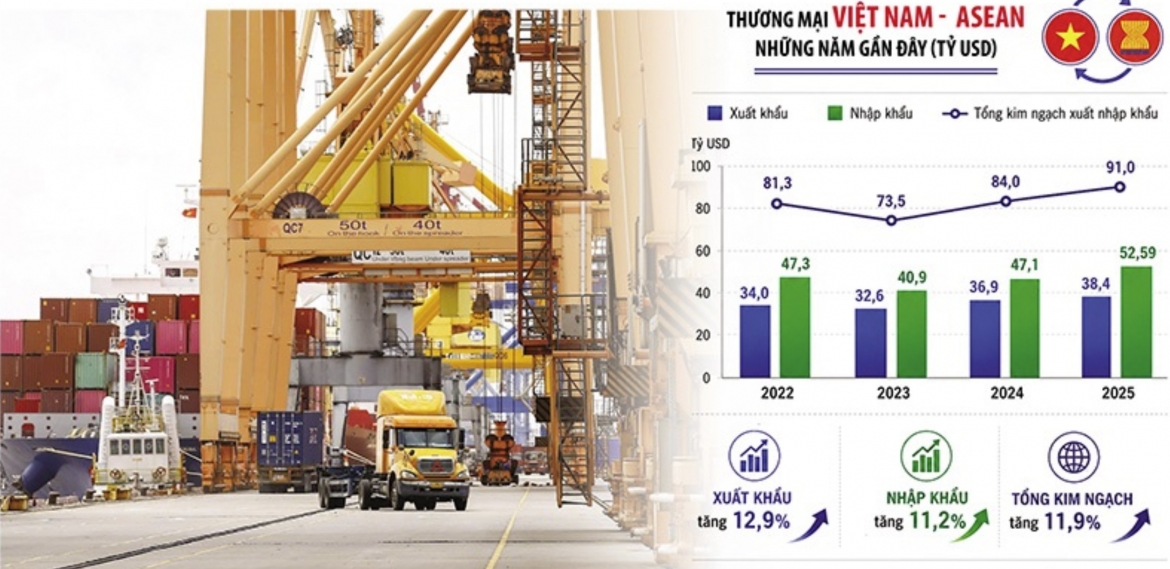
Vietnam-ASEAN trade exceeded US$91 billion in 2025. Thailand, Singapore and the Philippines, in particular, have maintained close trade ties with Vietnam, with import-export growth remaining in double digits in recent years. Total trade turnover between Vietnam and the three markets reached nearly US$36 billion last year.
Thailand is Vietnam’s largest trading partner in ASEAN, with bilateral trade standing at US$21.9 billion in 2025. Vietnam’s exports to Thailand rose 12.7% to nearly US$8.8 billion, while imports increased 6.7% to US$13.3 billion. Vietnam recorded its 13th consecutive year of trade deficit with Thailand, with the shortfall hitting around US$4.5 billion last year.
Economic cooperation between the two countries has posted strong results in recent years. Vietnam is currently Thailand’s second-largest trading partner in ASEAN. The two sides are also advancing the “Three Connects” Strategy, focusing on supply chain links, business and local-level cooperation, and alignment of sustainable growth strategies.
Olivier Langlet, CEO of Central Retail, recently said the group has invested in 44 shopping centres and 330 stores across 26 provinces and cities in Vietnam. Vietnamese goods now account for nearly 95% of products sold through Central Retail’s distribution system in the country. The group is also expanding its retail operations and footprint in Vietnam.
According to Langlet, Central Retail not only supports Vietnamese manufacturers, suppliers and small and medium-sized enterprises in accessing modern retail networks, improving packaging and upgrading product quality, but also helps expand export opportunities for Vietnamese goods through the group’s international distribution system. In March 2026, Central Retail Vietnam connected 50 Vietnamese businesses with importers from the United States and the Republic of Korea (RoK).
During the four month period of 2026, Vietnam-Thailand trade rose 24% year-on-year to nearly US$8.6 billion. Vietnam’s exports climbed 39% to US$3.76 billion, while imports increased 15% to nearly US$4.84 billion.
According to the Vietnam Trade Office in Thailand, the trade structure between the two countries is complementary, although the balance continues to favour Thailand. Thailand primarily exports machinery, production inputs, automobiles, chemicals and industrial materials serving Vietnam’s domestic consumption and export production, while Vietnam exports technology products, components and agricultural goods.
Vietnamese Ambassador to Thailand Pham Viet Hung said the two countries need to strengthen supply chain links, particularly as Thailand holds advantages in regional and global supply networks, helping Vietnam expand its export presence in international markets.
Although trade volume with the Philippines remains smaller than with Thailand, bilateral trade between Vietnam and the Philippines has also grown strongly, surpassing US$8 billion. Rising consumer demand and food security needs in the Philippines have helped Vietnam maintain annual trade surpluses worth billions of US dollars. Vietnam’s exports to the market reached around US$5.4 billion.
Rice continued to be Vietnam’s key strategic export to the Philippines. Despite market fluctuations and a short-term slowdown at the end of 2025, Vietnam still exported more than 3.2 million tonnes of rice to the Philippines last year, generating over US$1.57 billion in revenue. The country was Vietnam’s largest rice export destination.
Over the past two years, Vingroup’s products and services have gradually strengthened their presence in the Philippine market, contributing to export growth and enhancing the image of Vietnamese goods and services in the market of more than 120 million people.
For Singapore, Vietnam was the country’s 10th-largest trading partner during the first four months of 2026. Opportunities for Vietnamese exports in the Singaporean market remain strong, particularly in manufacturing, electronics and tech products.
Cao Xuan Thang, Vietnam’s trade counsellor in Singapore, noted that rising trade reflected closer integration between the two economies’ production chains, with Vietnam taking on a bigger role in regional value chains.
Opportunities from ASEAN’s 700-million-strong market
According to the Ministry of Industry and Trade, ASEAN remains a highly promising market for Vietnamese businesses thanks to its population of more than 700 million people, equivalent to the world’s third-largest economy if ASEAN were treated as a single economic entity.
Geographic proximity and similarities in consumer preferences also help businesses reduce logistics and warehousing costs.
Agricultural products are considered among the easiest Vietnamese goods to access ASEAN markets, although competition remains intense. To increase added value, businesses need to invest more in processing, standardise packaging, register trademarks, improve traceability and expand distribution networks.
Trade prospects between Vietnam and Thailand, Singapore and the Philippines are viewed positively as ASEAN member states strengthen regional links and make greater use of free trade agreements such as the ASEAN Trade in Goods Agreement (ATIGA) and the Regional Comprehensive Economic Partnership (RCEP).
Vietnam and Thailand upgraded ties to a Comprehensive Strategic Partnership in May 2025, underscoring their determination to deepen cooperation across multiple sectors. The two countries have also established a joint working group to capitalise on shifts in global production and supply chains and strengthen industrial links between the two economies. Bilateral trade is expected to soon reach the target of US$25 billion.
Vietnam and the Philippines are also stepping up trade cooperation as both nations move toward upgrading ties from a Strategic Partnership to an Enhanced Strategic Partnership, with bilateral trade targeted at US$10 billion in the near future.
Vietnam is now one of the world’s major suppliers of goods, with total trade approaching US$1 trillion. Exports continue to serve as a key growth driver alongside investment and domestic consumption. Yet Vietnam exported only US$38.4 billion worth of goods to ASEAN in 2025, showing there is still considerable room for expansion in the regional market.
Despite strong potential, ASEAN markets are imposing increasingly stringent requirements on product quality, traceability, technical standards and labelling. Wider use of trade remedy measures across the region is also adding pressure on Vietnamese exports.
Thailand, in particular, leads ASEAN in applying trade remedy measures against Vietnamese products, especially in sectors such as steel, aluminium, plastics and fibres.
Vietnam’s Trade Remedies Authority has advised businesses to strictly comply with rules of origin and prepare sufficient documentation proving the origin of raw materials and production processes, as Thailand tightens controls to prevent third-country goods from routing goods through Vietnam to evade trade remedy duties.
Vietnam remains ASEAN growth leader in 2026 despite global headwinds: WB
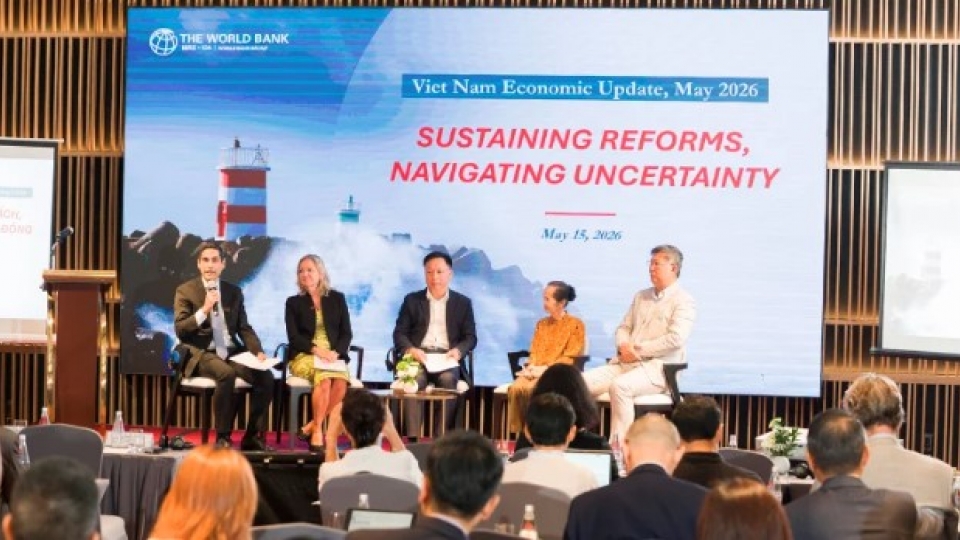
VOV.VN - Vietnam is expected to remain one of ASEAN’s fastest-growing economies in 2026, supported by resilient exports, strong investment inflows and an ambitious reform agenda, despite mounting global uncertainties, according to the World Bank’s latest Vietnam Economic Update released on May 15.