


Vietnam remains ASEAN growth leader in 2026 despite global headwinds: WB

VOV.VN - Vietnam is expected to remain one of ASEAN’s fastest-growing economies in 2026, supported by resilient exports, strong investment inflows and an ambitious reform agenda, despite mounting global uncertainties, according to the World Bank’s latest Vietnam Economic Update released on May 15.
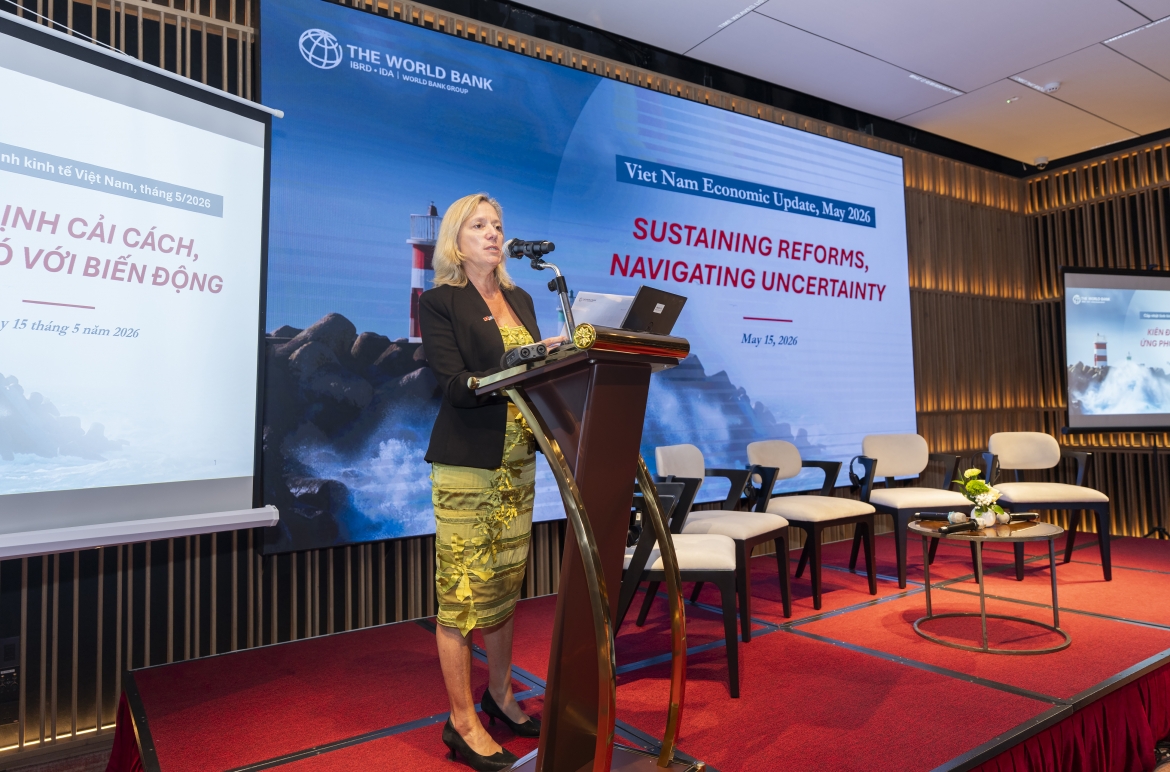
According to the report, Vietnam’s GDP expanded 8% in 2025, the highest growth rate in ASEAN, while the economy grew 7.8% in the first quarter of 2026, marking its strongest quarterly performance in nearly a decade.
Speaking at a press briefing, Mariam J. Sherman, World Bank Division Director for Vietnam, Cambodia, and Lao PDR., emphasised that the country's growth momentum continues to be driven by robust exports, investment and a resilient domestic economy, alongside broad institutional reforms and major administrative restructuring.
However, she cautioned that softer global growth and rising geopolitical tensions are creating a more challenging external environment for Vietnam.
“This calls for further strengthening macroeconomic management while accelerating reforms,” Sherman said, adding that climate-related risks, demographic shifts, rapid technological changes and rising infrastructure demands are reshaping the foundations of long-term growth.
The report noted exports of electronics and high-tech products to the United States surged in 2025 as businesses accelerated shipments ahead of new tariff measures and benefited from the ongoing restructuring of global technology supply chains.
Public investment has also emerged as a key growth driver. Vietnam is implementing an infrastructure investment programme worth approximately US$320 billion over the next five years, alongside wide-ranging institutional reforms aimed at improving administrative efficiency and the business environment.
The World Bank said Vietnam’s medium-term outlook stays positive, with manufacturing and exports expected to continue serving as major growth engines. At the same time, the report emphasised the need to increase domestic value-added, strengthen linkages between foreign-invested and local enterprises, and improve labour productivity to sustain long-term growth.
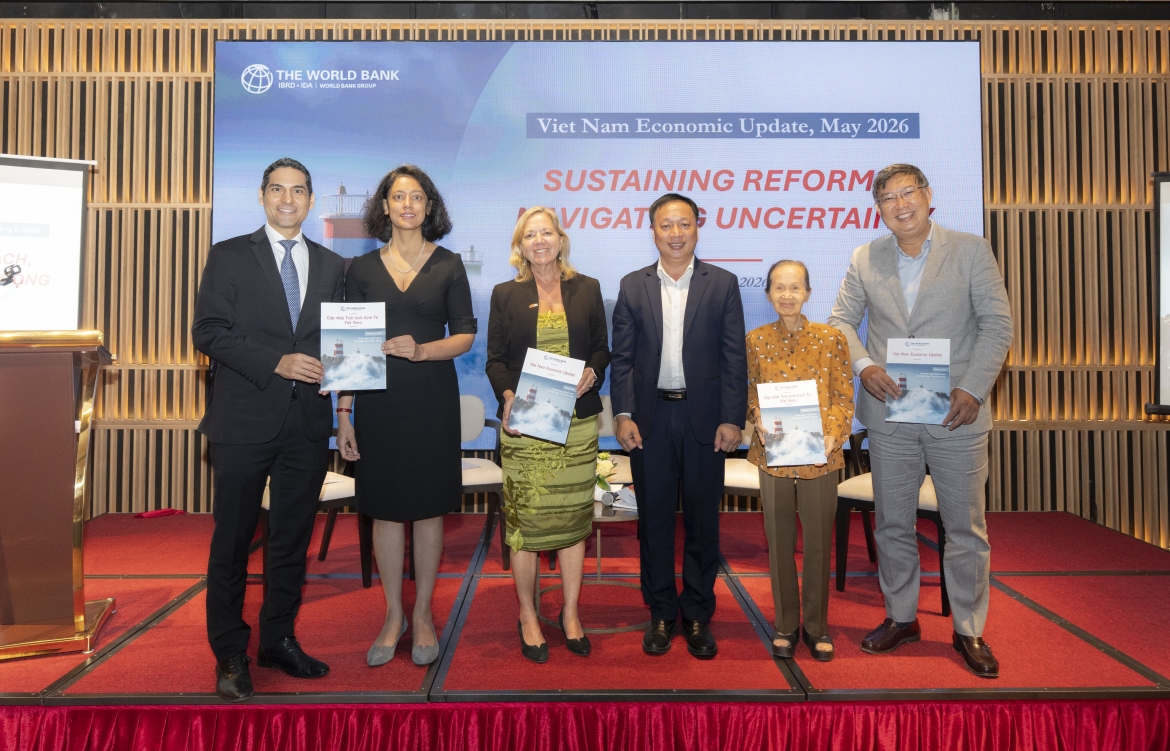
Meanwhile, Tehmina S. Khan, the World Bank’s Lead Economist, said Vietnam is benefiting from the global artificial intelligence investment boom, with AI-related exports now accounting for nearly 30% of GDP, among the highest ratios globally.
Khan noted Vietnam is entering a “Doi Moi 2.0” phase, referring to a new wave of institutional and administrative reforms aimed at fostering private-sector development and improving economic competitiveness.
From 2025 through April 2026, Vietnam enacted more than 86 laws and around 300 decrees aimed at removing legal bottlenecks, improving the business environment and promoting private-sector growth.
Despite the positive medium-term outlook, the bank warned that the external environment is becoming increasingly volatile and unpredictable.
The report said conflict in the Middle East has triggered what the World Bank described as a major global oil shock, pushing energy prices up by more than 50% as of late April 2026 and creating additional pressures for oil-importing economies in East Asia.
For Vietnam, rising energy prices could place pressure on inflation, exchange rates, production costs and domestic consumption.
In this context, Sharma suggested that Vietnam continue strengthening macroeconomic management while accelerating reforms, saying the core challenge lies in effective implementation, ensuring sufficient resources, and sustaining the reform agenda, alongside managing external risks and domestic vulnerabilities.
The World Bank forecast Vietnam’s GDP growth to moderate to 6.8% in 2026 before recovering in 2027–2028 as external pressures gradually ease and domestic growth drivers strengthen.
To sustain long-term growth momentum, the bank recommended that Vietnam deepen capital market development, improve the efficiency of public investment and attract higher-quality FDI linked to technology transfer, innovation and stronger connections with domestic enterprises.
WB forecasts Vietnam's economy to grow 6.8% this year
VOV.VN - Vietnam’s Gross Domestic Product (GDP) is projected to expand by 6.8% this year and 6.5% in 2026, according to the World Bank’s (WB) latest economic update report for Vietnam, Taking Stock, released at a press conference in Hanoi on March 12.

