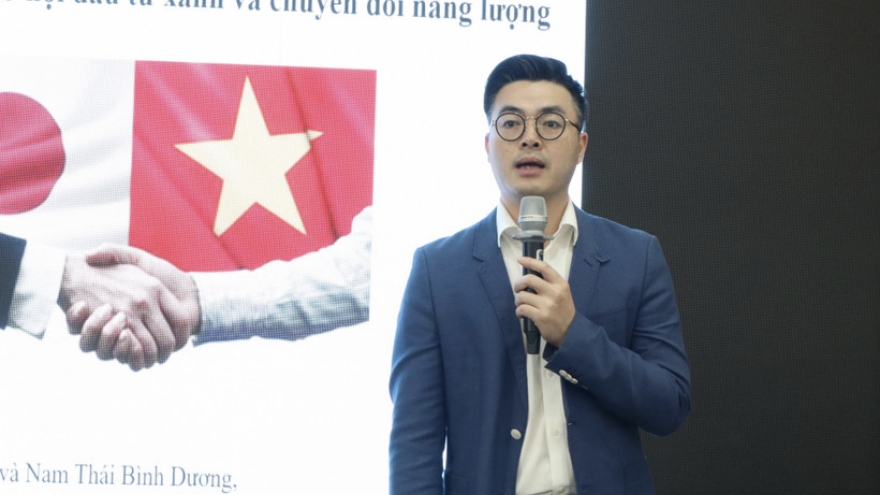
Trade poised for new record but sustainability concern persists: Conference

Vietnam’s trade is poised to hit a new record this year, underscoring the country’s growing role in global market but also exposing persistent structural weaknesses that could weigh on long-term sustainability, experts said at a conference on December 16.

The conference was organised by the Ministry of Industry and Trade’s Agency of Foreign Trade to discuss solutions to maintain strong and sustainable export growth in 2026 and the years ahead.
The ministry estimated that total import-export revenue could reach US$920 billion this year, a record high that would place Vietnam among the world’s top 15 countries by trade value.
Vietnam has recorded its 10th consecutive year of trade surplus in 2025, reinforcing its position as one of the most open economies in the region. Total trade has expanded sharply over the past three decades from just US$13.4 billion in 1995 to US$786.9 billion in 2024.
The agency’s Deputy Director Tran Thanh Hai said the country’s total trade surplus was estimated at about US$22 billion this year, reflecting robust external performance amid global uncertainty.
The structure of exports also improved, with processed and manufactured goods accounting for about 85% of total export value. Seven product categories each surpassed 10 billion USD in export turnover, while new-generation free trade agreements such as the Comprehensive and Progressive Agreement for Trans-Pacific Partnership (CPTPP) and the EU–Vietnam Free Trade Agreement (EVFTA) helped further open access to high-standard markets.
According to Nguyen Anh Son, Director of the Agency of Foreign Trade, Vietnam’s trade has witnessed a boom during the 2020–2025 period and has become a key pillar of economic growth. Exports expanded at an average of 10% per year, enabling Vietnam to join the world’s top 20 exporting economies from 2023.
After earning US$430.2 billion in exports in the first 11 months of this year, Vietnam is poised to reach a record total export value of more than US$470 billion, up 16% over 2024.
“Despite impressive results, Vietnam’s exports are facing significant difficulties and challenges,” Son said.
In the global market, slow economic recovery, prolonged geopolitical conflicts, trade fragmentation, production shifts and rising protectionism are narrowing traditional growth space for exports, according to Son.
In addition, stricter requirements related to sustainability, emissions reduction, origin traceability, social responsibility and green supply chains are becoming mandatory and creating pressure on exporters, especially small and medium-sized enterprises (SMEs), to transition.
Another problem is the heavy dependence of export growth on the foreign-invested sector, while domestic enterprises have yet to climb global value chains.
Many sectors remain heavily dependent on imports for raw materials and components, making production and exports vulnerable to external shocks and posing risks of supply chain disruptions.
New requirements
According to Hai, the challenges, however, are creating a historic opportunity for Vietnam amid the global restructuring of supply chains.
The US–China trade war, the COVID-19 pandemic and the conflict in Ukraine have highlighted the risks of reliance on a single manufacturing hub, prompting a strong wave of production shifts out of China.
As multinational corporations seek to diversify risks, Vietnam is emerging as a strategic destination for investment.
In the globalisation process, regionalisation and protectionism are rising, while the pandemic and geopolitical conflicts have fragmented global trade into multiple layers of standards and requirements. Countries around the world tend to impose more technical barriers to promote domestic production.
Notably, changes in US trade policy following the return of President Donald Trump are expected to have a strong impact and create additional pressure on Vietnam to adapt to policy shifts in this key market.
Tran Van Trong, General Secretary of the Vietnam E-commerce Association, said cross-border e-commerce was opening up significant room for export expansion, especially for SMEs. However, it also required urgent improvements in digital capacity, logistics and compliance with international market regulations.
Nguyen Thi Thu Trang, former Director of the WTO and Integration Centre under the Vietnam Chamber of Commerce and Industry, said meeting sustainability standards related to the environment, labour, social responsibility and corporate governance was no longer optional but a mandatory requirement for exports.
“Proactively adapting to sustainability standards will help Vietnamese businesses enhance competitiveness, reduce trade risks and lay the foundation for long-term growth,” Trang said.
At the conference, Son stressed that exports must continue to serve as a core growth driver but with a decisive shift from extensive growth to deeper, more efficient and sustainable development.
The focus must be on increasing value added, technological content, localisation rates and strengthening economic self-reliance while gradually reducing dependence on traditional cost-based advantages, Son said.
Experts at the conference said it was necessary to better utilise free trade agreements, particularly new-generation FTAs, through improved market information, stronger support for rules-of-origin compliance and technical standards.
State support measures such as institutional reforms, logistics infrastructure development, green and digital transformation and efforts to enhance corporate competitiveness were also needed to promote exports.
Central Highlands hosts foreign business delegation for agricultural trade links
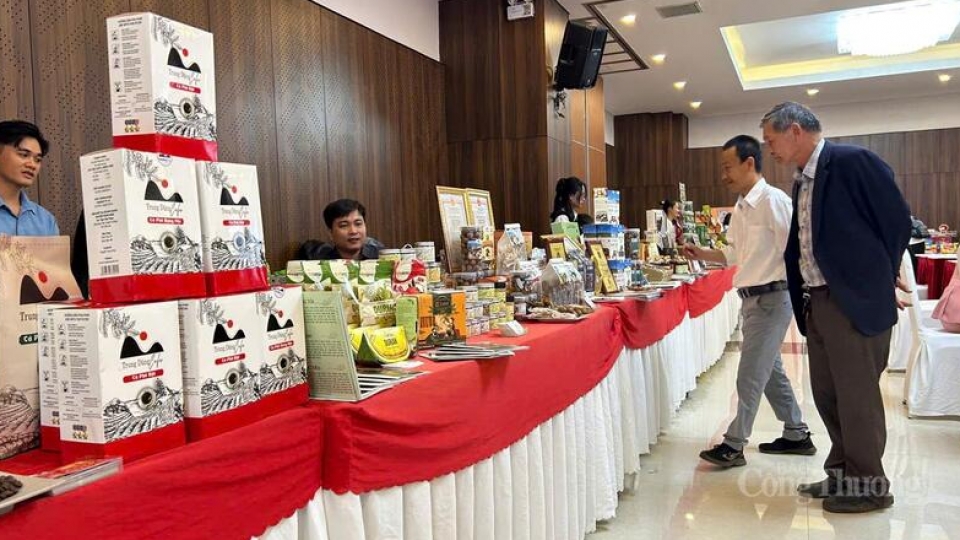
VOV.VN -The Dak Lak Department of Industry and Trade on December 15 hosted a program welcoming a delegation of foreign businesses to trade agricultural products from the Central Highlands, attracting more than 20 companies from China, Singapore, Australia, and the Republic of Korea (RoK).