


Project proves effective in promoting smart factory development in southern region

Digital transformation and the application of technology in manufacturing have become essential for Vietnamese businesses amid the rapid development of the fourth Industrial Revolution.
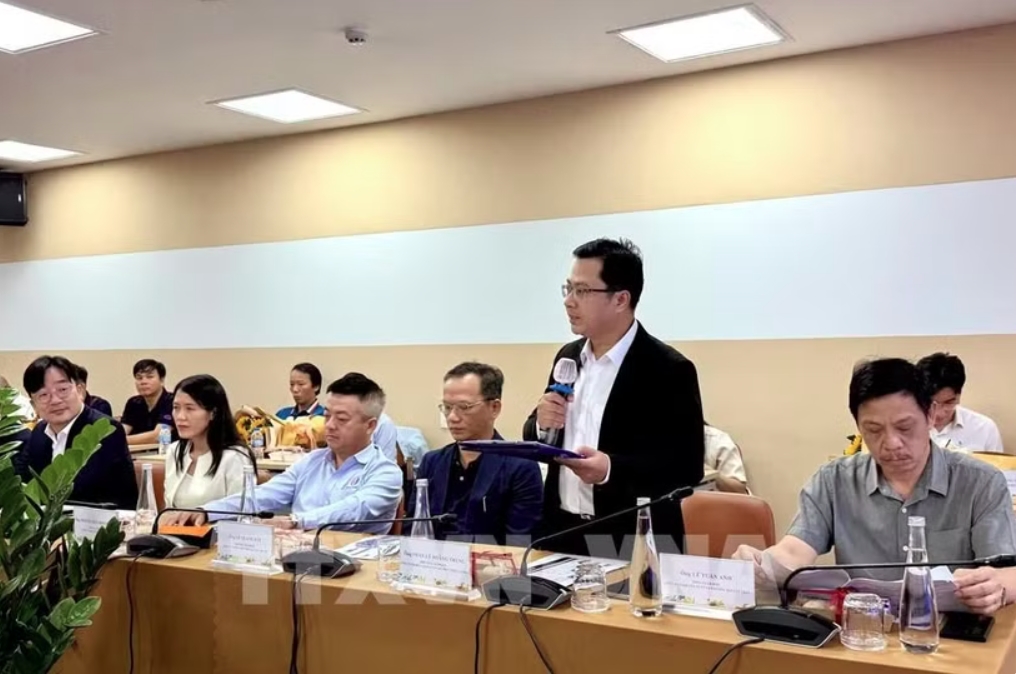
Smart factories can help improve productivity, product quality and production management, while enabling businesses to participate more deeply in global supply chains, experts and enterprises said at a conference in Ho Chi Minh City on October 21.
The conference, jointly organised by the municipal Department of Industry and Trade and Samsung Electronics Vietnam Co., Ltd, reviewed the 2026 Smart Factory Development Cooperation Project in southern Vietnam.
Presenting the project’s outcomes, Samsung expert Lee Kyung Ha said that smart factories require integrated operational systems that connect data across the entire production chain, enabling continuous, data-driven improvements. Businesses must move beyond traditional manual management towards standardised, data-based operations and sustainable digital production platforms.
However, implementation must be tailored to each enterprise’s actual production conditions. Digital transformation should not stop at adopting technology but also identify operational shortcomings and handle them, turning digital solutions into tangible improvements in production management, quality control, logistics and energy efficiency.
Participating enterprises have made progress in modernising their operations. Cat Thai Group and SMC Phu My Precision Co., Ltd. have adopted real-time operating systems and data-driven production processes to improve quality. Meanwhile, Vietaus Polymer and SIBA High-Tech Mechanical Group JSC have integrated digital technologies into the development and stabilisation of new factories.
Le Hoang Trung, Deputy General Director of SIBA High-Tech Mechanical Group, said the project has helped the company assess its operations, access advanced management practices and develop a long-term smart factory roadmap. Initial results include improved shop-floor operations, standardised workflows, better quality awareness, more efficient warehousing and logistics, and stronger equipment management.
The company has also begun digitising design data through a product data management (PDM) system, monitoring energy consumption and visualising production information.
Ha Van Ut, Deputy Director of the municipal Department of Industry and Trade, said the project’s greatest value lies in changing management mindsets, helping businesses shift from experience-based decisions to evidence-based management and standardised processes.
He praised cooperation between Samsung experts and local supporting-industry enterprises, stressing that tailored roadmaps and sustained technical support will help strengthen competitiveness and meet increasingly demanding domestic and international supply-chain standards.

FDI firms speed up smart factory development in Vietnam
VOV.VN - Vietnam has emerged as one of Southeast Asia’s most dynamic manufacturing hubs, attracting steady foreign direct investment (FDI) from Japan, the Republic of Korea (RoK) and Europe.

