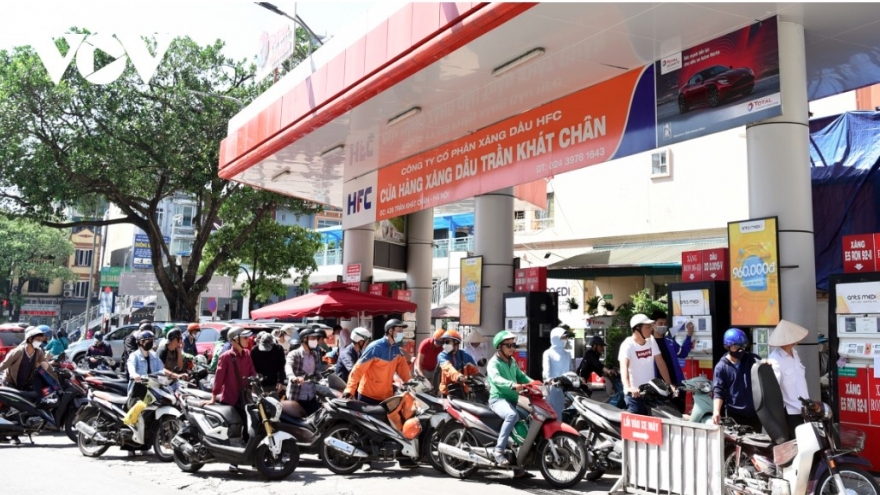
Petroleum reserves must be elevated to national strategic level

VOV.VN - The State needs to build a national strategic petroleum reserve system, as most petroleum reserves in Vietnam are currently held by key traders under commercial obligations.
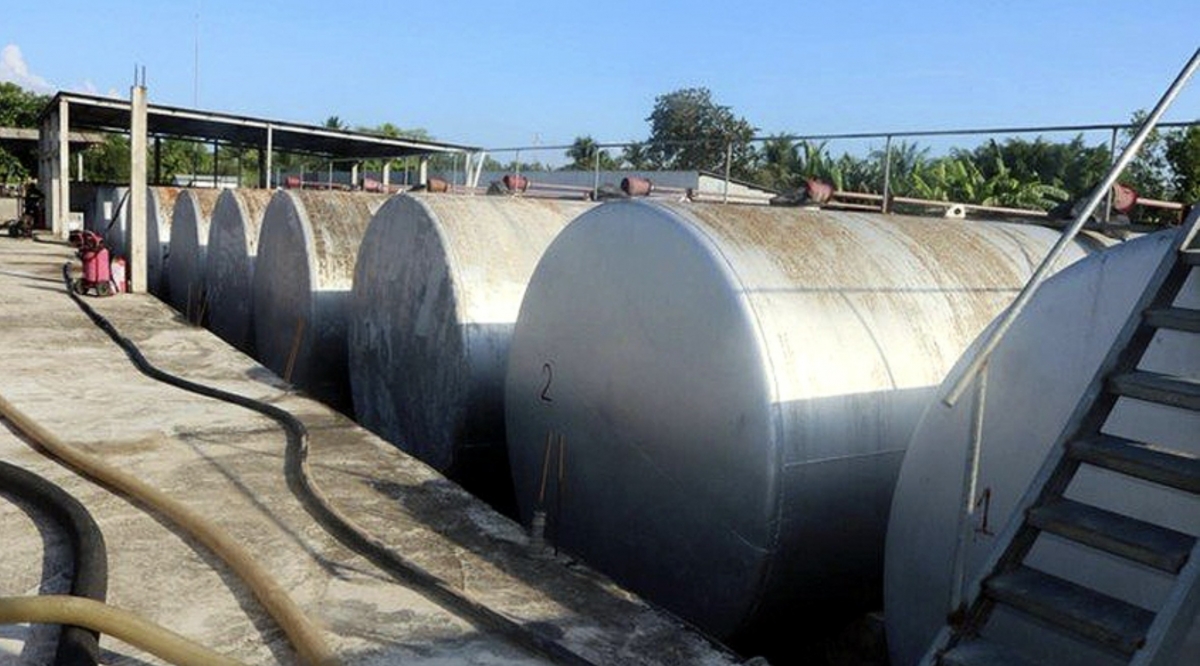
Oil and fuel prices in many countries have risen sharply over nearly three weeks due to the conflict in the Middle East. Vietnam, however, is implementing a range of measures to ensure supply and stabilise the domestic market.
Alongside negotiations to import fuel to secure stable supply, the Government has issued a decree reducing the preferential import tariff on unleaded gasoline from 10% to 0%. Preferential import duties have also been cut from 7% to 0% for diesel, fuel oil, jet fuel and kerosene.
Amid global price fluctuations, the petroleum price stabilisation fund has been used continuously in recent days, including at high levels. Price management combined with the use of the fund has helped limit increases in domestic fuel prices, supporting people’s living conditions and business operations.
To ensure supply and price stability in the face of global market fluctuations, Tran Huu Linh, Director General of the Domestic Market Management and Development Department under the Ministry of Industry and Trade, said the Prime Minister has instructed ministries and agencies to soon develop new plans for petroleum reserves to respond to unpredictable developments in the global market.
This includes calculating and building additional storage facilities, and raising petroleum reserves to national-level reserves covering both producing enterprises and State key petroleum traders. Current commercial reserve requirements-20 days for key traders and five days for distributors, make it difficult to respond proactively to global petroleum market fluctuations.
“Based on market developments and new policies, the upcoming decree on petroleum trading will strengthen inspection and supervision to ensure key traders and distributors comply with commercial reserve regulations. In addition, ministries and sectors need to consider other options to build petroleum reserves, ensuring crude oil supply, feedstock for refining and other petroleum products when the global petroleum market remains under pressure from emerging conflicts,” Linh said.
From the enterprise side, Dr. Giang Chan Tay, Director of Boi Ngoc Co., Ltd., said developments in the Middle East over the past two weeks have led to sharp and frequent swings in the global oil market. Concerns over supply disruptions have pushed prices up quickly, while signals that supply remains available have led to immediate declines.
This shows the global energy market is currently strongly influenced by psychological factors and geopolitical risks.

In this context, he said a key solution to stabilise supply is for the State to build a national strategic petroleum reserve system. At present, most reserves are held by key traders under commercial obligations. This model helps reduce budget pressure, but in essence remains commercial and is not a national strategic energy reserve.
Under his proposal, the State should build storage facilities capable of ensuring supply for about 60 days, equivalent to around 3.6 billion litres of petroleum products, or roughly 3.6 million cubic metres of storage capacity.
“The value of a national energy reserve lies not only in initial investment costs, but in its ability to protect the economy from supply shocks. The reserve can operate on a first-in, first-out basis, while applying a rotation mechanism through selling to and buying back from key traders. This ensures fuel is not stored for too long and is continuously circulated, maintaining quality,” Tay said.
He added that based on experience from large petroleum storage projects worldwide, the average investment cost is about US$300 per cubic metre of capacity. At the proposed scale, total construction costs are estimated at around US$1.1 billion, which is not a large investment when placed in the context of national infrastructure.
On March 13, the Government Office issued Notice No. 113 on conclusions by Prime Minister Pham Minh Chinh at a meeting of the task force on energy security. The Prime Minister requested key traders, under the direction of the Ministry of Industry and Trade, to proactively import about 30% of domestic fuel demand and maintain reserves in line with regulations.
In the long term, the Government aims to raise petroleum reserves to at least 90 days of imports, while promoting energy transition to reduce dependence on imported fossil fuels. The Ministry of Finance has been tasked with studying a plan to reduce the environmental protection tax on fuel to zero, combined with the use of the petroleum price stabilisation fund.
Domestic petroleum supply meets demand amid Middle East conflict
VOV.VN - Despite fluctuations in the global energy market caused by conflict in the Middle East, Vietnam’s domestic petroleum supply is assessed as largely stable.