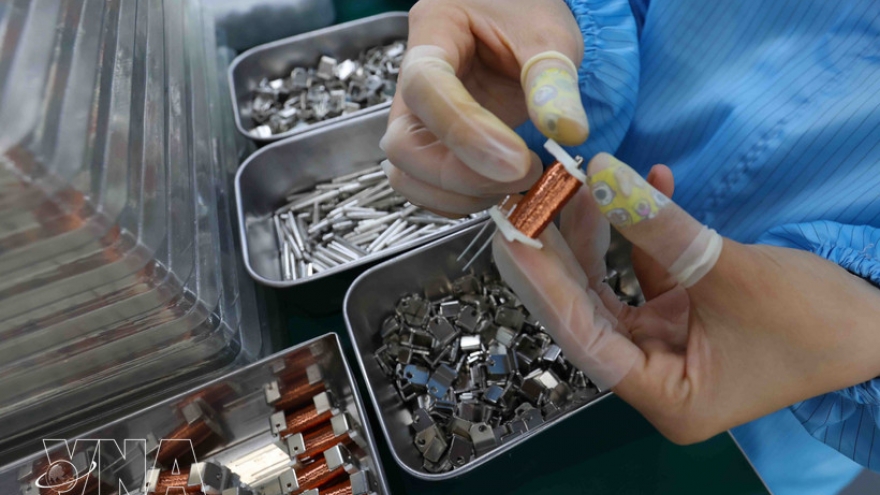
Next-generation FDI: Going green to retain investors

VOV.VN - When localities can demonstrate capacity in greening, digitalization, supply chain linkage and substantive support speed, next-generation FDI will flow in and expand.
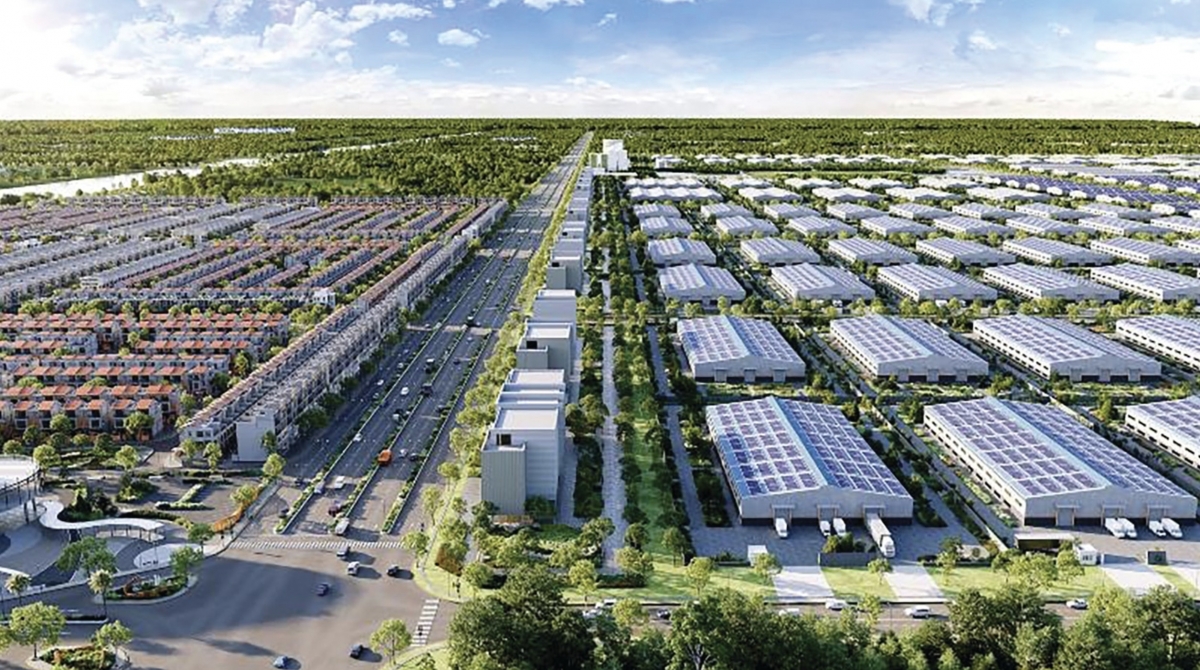
Building an ecosystem for FDI
In 2025, foreign direct investment posted a bright spot as disbursed FDI hit US$27.62 billion, up 9% year-on-year and the highest in the 2021-2025 period. Registered capital exceeded US$38 billion, up 0.5%. The figures show that international investors’ confidence in Vietnam’s business environment has been maintained amid global economic uncertainties.
Data from the General Statistics Office under the Ministry of Finance indicate that in January 2026, total registered FDI reached US$2.58 billion, down 40.6% year-on-year. However, realized capital totaled US$1.68 billion, up 11.3%, reflecting continued disbursement capacity and growth in new projects.
According to analysis in 2026, FDI will concentrate on high-quality capital with strong technological content, high added value and broad spillover effects. This will serve not only as a driver for double-digit growth but also as a foundation to enhance competitiveness, promote innovation and support long-term sustainable development.
Pham Doan Tung, Director of Top Land Project & Industry Joint Stock Company and Chairman of the Hai Phong Industrial Development Support Association (IDA), said current FDI inflows into Vietnam can be viewed in two layers: volume remains solid, while quality is increasingly differentiated and selective.
Investors are no longer asking only about land rental prices or tax incentives. They are raising questions about green electricity, the depth of local supply chains, the stability and predictability of procedures, and the availability of technical labor. According to Tung, FDI is shifting from cost optimization to risk optimization and sustainability.
The 2025 capital attraction map shows intensifying competition among localities. Ho Chi Minh City led with about US$7 billion; Bac Ninh nearly US$6 billion; Hanoi around US$4.5 billion; Dong Nai US$4.3 billion; and Hai Phong US$3.8 billion, ranking fifth nationwide. These figures reflect infrastructure and location advantages while underscoring the need to raise standards to retain and expand investment chains.
Regarding next-generation FDI trends, Tung said they can be summarized in three elements: greening-digitalization-supply chain linkage.
Geening is no longer a slogan. Investors face ESG pressure, requiring emission reduction, carbon traceability and transparent environmental data. Industrial parks without a clean energy roadmap, standardized environmental governance and synchronized waste treatment systems will find it difficult to be selected.
Digitalization means investors bring factories to Vietnam together with digital management systems, automation, cybersecurity and, in some cases, R&D units. They require an operating environment with digital infrastructure, data integration capacity and security.
Supply chain linkage is the condition for a factory to become operational immediately upon investment. FDI does not aim to build a standalone plant but to establish a secure link in the global supply chain. Therefore, it requires an ecosystem including logistics, tier-1 and tier-2 suppliers, shared technical services, technician training, worker housing and amenities for experts.
Greening to “unlock” next-generation FDI
From practical experience, the IDA Chairman identified three major bottlenecks in attracting FDI into industrial parks and clusters.
First, green and digital infrastructure remain uneven. Many areas are strong in land availability but weak in energy and data management as well as shared technical services.
Second, there is a shortage of mid-level technical and managerial personnel matching the profile required by next-generation FDI, including automation technicians, internationally standardized QA/QC staff, process engineers, and safety and environmental engineers.
Third, the depth of supporting industries remains limited. Vietnamese enterprises largely engage in simple processing, lacking core components and high-tech materials. Linkages between FDI enterprises and domestic firms remain weak, localization rates are low, and retained added value is modest.
In Hai Phong, the scale and quality of FDI have outpaced local supporting industry capacity. Many corporations still source components from other provinces or import them. There is a shortage of sufficiently strong intermediary enterprises to absorb technology transfer, a lack of specialized supporting industry space with laboratories, testing facilities and internationally standardized logistics, and a shortage of internationally qualified engineers. These factors constrain the anchoring of supply chains.
Next-generation FDI is not hindered by a lack of incentives but by insufficient supporting industry depth to give investors confidence in localization and long-term commitment.
Competition for high-quality capital is intensifying among provinces and in comparison with India and several Southeast Asian countries. As tax incentives lose their differentiating power, competition is shifting toward operational capacity.
To “unlock” this capital in 2026 and beyond, Tung proposed four core shifts.
First, shift from selling land to providing an ecosystem, including green electricity, standardized environmental treatment, logistics, digital infrastructure and technical services.
Second, shift from abundant labor to skilled labor, with training based on enterprise demand, linkage among schools, enterprises and associations, and skill standardization.
Third, shift from attracting standalone projects to retaining investors and forming supply chain clusters by upgrading domestic enterprises and systematically connecting supply and demand.
Fourth, enhance the speed and predictability of procedures, ensuring policy stability and consistency, and handling bottlenecks by sector and industry.
According to the IDA Chairman, when localities can demonstrate greening, digitalization, supply chain linkage and substantive support capacity, next-generation FDI will not only arrive but also expand, transfer technology and generate spillover value.
Disbursed FDI of US$27.62 billion in 2025 is a positive indicator. However, turning capital inflows into a long-term growth driver depends less on how many additional billions are attracted and more on the extent to which the industrial ecosystem is upgraded. Localities that move faster in standardizing green, digital and supply chain capacity will gain an advantage in this competition.
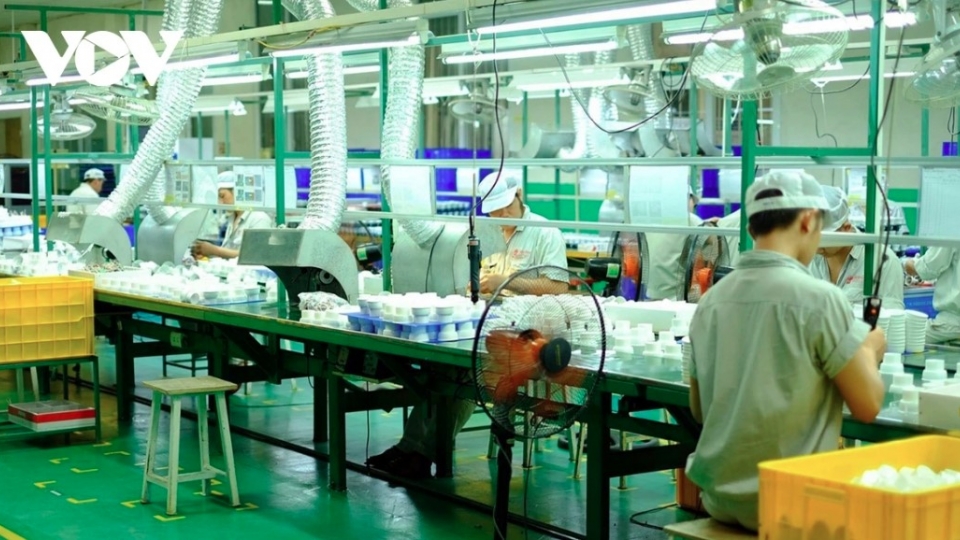
Stronger push to attract FDI from the start of 2026
VOV.VN - Amid continued fluctuations in the global economy, 2026 has been identified as a pivotal year for Vietnam to reposition its foreign direct investment (FDI) strategy toward higher-quality capital flows with stronger technological content, higher added value and broader spillover effects.