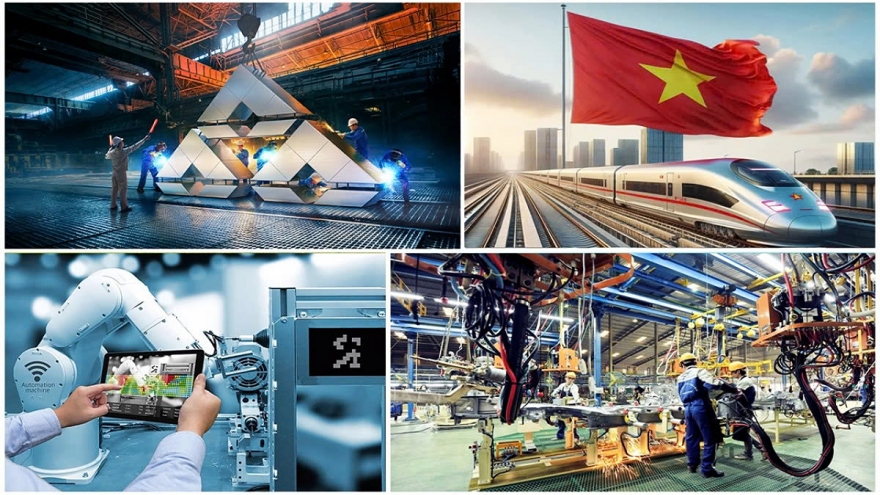
New growth model seen as key to Vietnam’s double-digit expansion in 2026-2030

VOV.VN - With a target of double-digit GDP growth in 2026-2030 and the ambition of becoming a high-income country by 2045, many economists say Vietnam’s economy needs to move quickly to redefine its growth model, with stronger economic restructuring toward greater efficiency, sustainability and innovation.
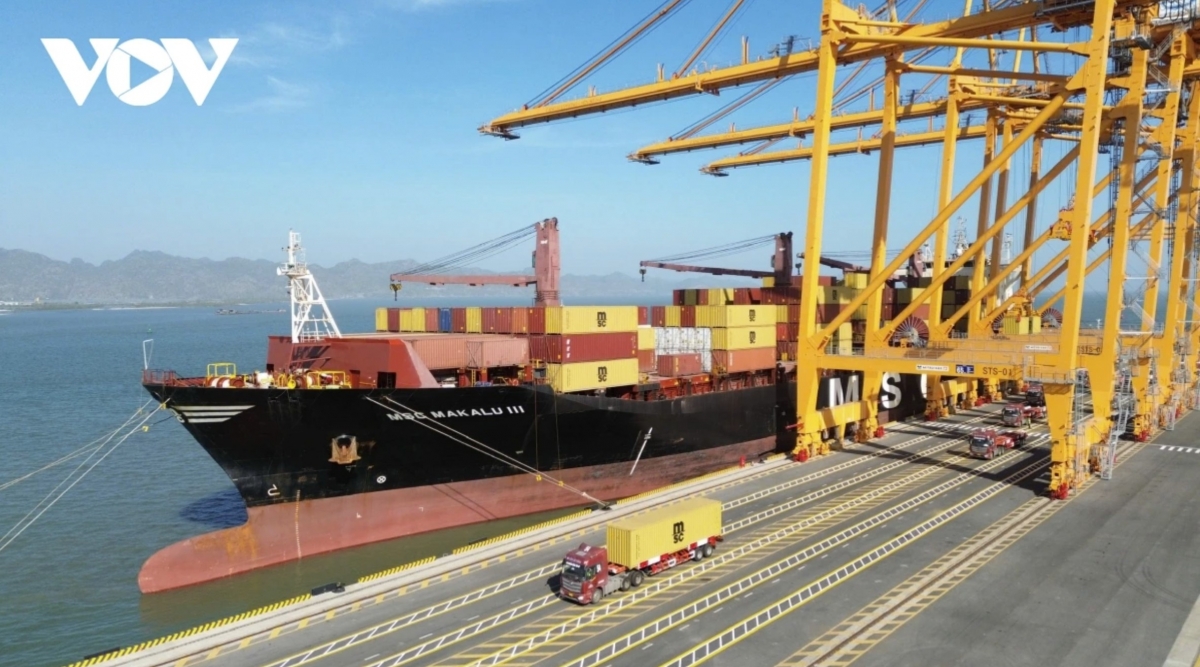
Shaping a new growth model
According to Nguyen Quoc Anh, Deputy Director of the Institute for Strategy and Economic-Financial Policy, the country is entering a new development phase aimed at becoming a high-income developed nation by 2045, based on three pillars: self-reliance, innovation and deep international integration.
“To realize the 2045 goal and, more importantly, to achieve double-digit GDP growth of 10% or more in 2026-2030, an ambitious target, a new, more efficient and sustainable growth model needs to be established,” Quoc Anh said.
From 2026 onward, annual growth would need to reach at least 10%. Despite global shocks during 2021-2025, the economy maintained macroeconomic stability, providing a solid foundation for the next phase.
“However, growth quality remains constrained, as key drivers still rely heavily on capital, natural resources and low-cost labor, without a breakthrough shift,” he said.
From that assessment, the institute has called for early identification of bottlenecks and stronger economic restructuring. A review of the 2021-2025 restructuring process, combined with international experience and lessons from localities, should inform orientations, targets and measurable indicators for 2026-2030.
From the perspective of public investment, Can Van Luc, chief economist at the Bank for Investment and Development of Vietnam (BIDV) and a member of the Prime Minister’s Policy Advisory Council, said restructuring should be pursued gradually and on a continuous basis, rather than through a “Big Bang” reform, which was adopted in 2011 amid instability.
Public investment plays a leading role and serves as “seed capital” for the economy, accounting for about 17.2% of total social investment in 2021-2025, Luc said. Each additional unit of public investment can mobilize 1.61 units of private investment, though the current structure remains unbalanced.
Total public investment in 2025 is estimated at about US$34 billion (VND900 trillion), the highest level in five years and equivalent to nearly 7% of GDP. Around 80% is allocated to infrastructure, while spending on science and technology, health care and education remains limited.
Public investment accounts for 18.2% of total social investment, with the remainder coming from the private sector, foreign direct investment and the banking system.
Luc also pointed to stalled and delayed projects that have weighed on disbursement nationwide, along with a high ICOR ratio, indicating low capital efficiency. Investment in education, training, science and technology and health care remains modest.
To improve efficiency and support double-digit growth in 2026-2030, he proposed gradually reducing infrastructure spending to about 50-55% of total public investment, while allocating at least 20% to education and training, 10-12% to health care and 3-5% to science and technology.
Toward a high-growth, sustainable economic model
Redefining the growth model for 2026-2030 will also require more selective attraction of official development assistance and foreign direct investment, more effective policies to channel remittances, and restructuring agriculture toward greener production in line with global consumption trends, economists said. Improvements in the business environment and the removal of institutional bottlenecks will be essential.
Vo Tri Thanh, President of the Institute for Brand and Competitiveness Strategy, said emerging sectors such as artificial intelligence, semiconductors, biotechnology, new materials and supporting industries require increasingly effective restructuring.
He said a shift toward inclusive sustainable development is needed, including a transition from “brown” to “green” growth and closer integration of the real economy with the digital economy so benefits are shared more widely.
International experience shows that countries successful in transforming their growth models typically rely on proactive fiscal policies that play a development-enabling role, promote innovation and guide restructuring, Thanh said, adding that strengthening the fiscal policy framework is critical to sustainability, transparency and efficiency.
Le Thi Mai Lien, Head of the Macroeconomic and Forecasting Division at the Institute for Strategy and Economic-Financial Policy, said stronger institutions and a more open legal framework are needed to accelerate new economic models, particularly in the private sector as a key growth driver.
She also underlined the need for breakthroughs in science, technology and productivity through strategic investment in research and development and high-tech applications to raise the contribution of total factor productivity.
At the same time, deeper restructuring is needed to concentrate resources on high value-added sectors, especially high-tech manufacturing, while accelerating the development of the green and digital economy.
Clear, quantifiable targets and indicators should be established to assess restructuring outcomes in line with high-growth objectives, while enabling the economy to tap new sources of growth and make better use of the achievements of the Fourth Industrial Revolution.

Science and technology - the key to a sustainable growth model for Vietnam
VOV.VN - Science, technology, and innovation are becoming the “golden key” to unlocking a sustainable growth model for Vietnam in the era of digital transformation and green transition.