Indonesian scholar praises Vietnam as model of sustainable, inclusive growth

The comprehensive achievements Vietnam has recorded over 40 years of Doi Moi (Renewal), particularly the strong results of the past five years, have underscored the sound development path and effective governance of the Communist Party of Vietnam amid profound regional and global changes.
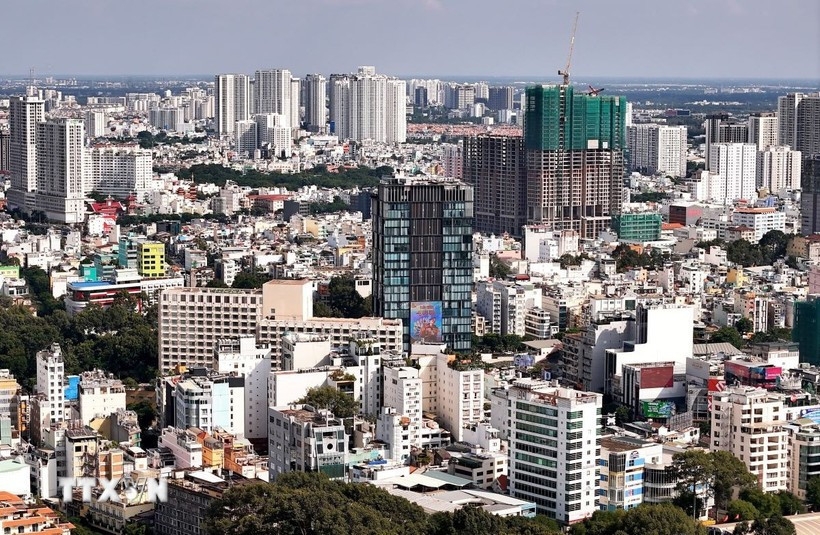
Speaking to the Vietnam News Agency ahead of the 14th National Congress of the Communist Party of Vietnam, scheduled to take place in Hanoi from January 19 to 25, Veeramalla Anjaiah, a senior researcher at the Centre for Southeast Asian Studies (CSEAS) in Jakarta, Indonesia noted that the congress holds special significance as Vietnam stands on the threshold of a new development phase. Against the backdrop of intensifying competition among major powers, rising global risks and a resurgence of protectionism, Vietnam’s ability to maintain political stability, achieve high economic growth and deepen international integration stands out as a notable success among developing countries.
Reviewing the four decades of Đổi mới (Renewal), the CSEAS researcher noted that Vietnam has successfully transitioned from a centrally planned economy to a socialist-oriented market economy while integrating ever more deeply into the global system.
Vietnam is a typical example showing that gradual reforms, political stability and long-term vision can generate sustainable and inclusive growth, he stressed.
Anjaiah expressed particular admiration for the socio-economic performance during the Party's 13th tenure. Average economic growth of 6.3% per year, together with an estimated 8.02% expansion in 2025, has placed Vietnam among the world’s most dynamic economies. GDP has exceeded US$514 billion while per capita income approached US$5,000, reflecting marked improvements in people's living standards.
Other impressive indicators, including total foreign trade turnover of around US$930 billion and a strong tourism recovery with over 21.5 million international arrivals in 2025, further highlight Vietnam’s growing appeal within regional supply chains and investment flows.
Beyond economic growth, the country has made notable strides in human development and social security, he observed. Poverty has been reduced to about 1.3%, health insurance coverage reached roughly 95% of the population, and the Human Development Index risen to 0.766, clearly demonstrating a people-centred development approach.
These achievements, he said, stem from the consistent leadership of the Communist Party of Vietnam, the spirit of self-reliance and resilience, and strong national solidarity, laying a solid foundation for the country’s strategic development goals towards 2030 and the vision to 2045.
On external relations, Anjaiah noted that Vietnam is increasingly regarded by the international community as a stable, reliable and responsible partner, steadfast in the foreign policy of independence, self-reliance, peace, cooperation and development. Its national standing has been further enhanced through a policy of multilateralisation and diversification of external relations, as well as its proactive engagement in global mechanisms.
He also commended Vietnam’s flexible yet principled diplomacy, which enables it to maintain balanced relations with major powers while reinforcing its role as a stable and reliable regional partner. Vietnam's network of strategic and comprehensive strategic partnerships has contributed to elevating its international profile amid intensifying geopolitical competition.
Anjaiah voiced confidence that the 14th National Party Congress will continue to set right strategic directions, helping Vietnam seize new opportunities, overcome challenges and realise its goal of becoming a developing country with modern industry by 2030, and a developed, high-income nation by 2045.
“What Vietnam has achieved over the past four decades provides a solid basis for confidence as it enters a new era of development,” he concluded.
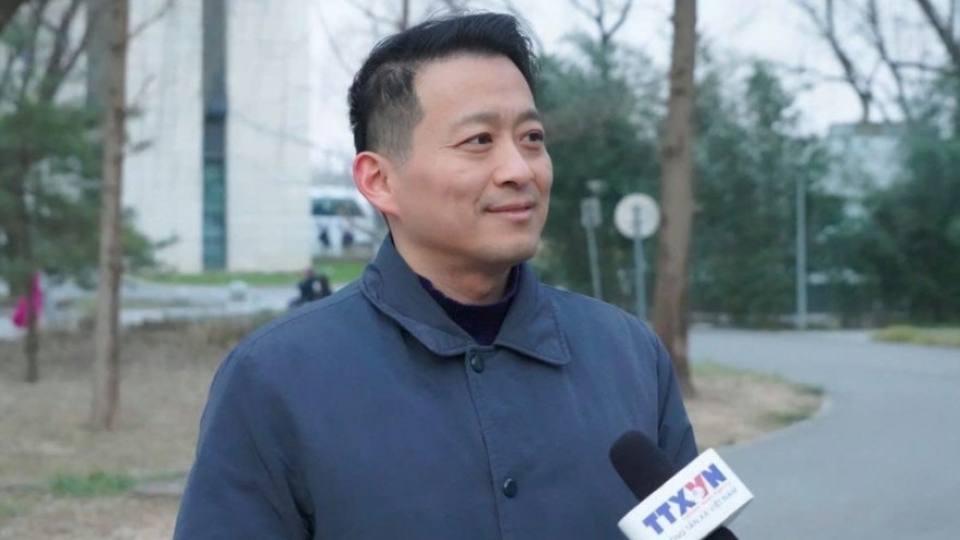
Chinese scholar assesses Vietnam’s development prospects
The 14th National Congress of the Communist Party of Vietnam (CPV) is set to mark a milestone of special significance, ushering the country into a new stage of “strategic breakthrough” development, with science – technology, innovation, and institutional reform playing a pivotal role, according to a Chinese professor.