Green ocean economy discussed at Vietnam–India maritime dialogue

VOV.VN - Researchers, experts and policy representatives from Vietnam and India discussed maritime security challenges and cooperation opportunities amid growing changes in the Indo-Pacific region, at the second maritime dialogue held recently in New Delhi.
Reported presented at the dialogue show maritime security cooperation has been identified as a key pillar in the strategic relationship between Vietnam and India. Through previous rounds of discussions, the two sides identified priority areas for cooperation, including marine scientific research, development of the ocean economy, humanitarian assistance and disaster relief, naval and coast guard cooperation, maritime law enforcement, capacity building and maritime connectivity.
Building on this initiative, the National Maritime Foundation of India (NMF) and Diplomatic Academy of Vietnam (DAV) signed a memorandum of understanding on March 15, 2024, to establish an annual dialogue mechanism aimed at discussing maritime issues of shared concern and providing policy recommendations to the governments of both countries.
The first NMF–DAV dialogue, held on March 27, 2025 in Hanoi, focused on promoting maritime security and cooperation in the Indo-Pacific, addressing issues such as maritime domain awareness, capacity building to respond to grey-zone challenges and the transition toward a greener ocean economy.
Speaking at the opening session of the second dialogue, Vice Admiral Pradeep Chauhan, director general of the NMF, noted the world is facing a “triple planetary crisis” involving climate change, pollution and biodiversity loss.
He noted that these challenges make ocean governance a systemic development issue requiring new approaches. In his view, Vietnam and India should consider the ocean economy not merely as a standalone sector but as a development orientation for the broader economy.
Greening the ocean economy, he said, could promote the sustainable use of marine resources while strengthening both traditional and non-traditional maritime security.
He also highlighted several pressing challenges, including overexploitation of marine resources, illegal fishing, marine pollution and geopolitical risks to maritime transport.
Energy security, supply chains and the exploitation of strategic seabed minerals were also identified as important factors shaping the future development of both countries.
Through the dialogue, Chauhan expressed hope that Vietnam and India would further enhance research cooperation and develop policy mechanisms to ensure comprehensive maritime security linked with sustainable ocean economic development.
Taking the floor, Nguyen Thanh Hai, Vietnam’s Ambassador to India, stressed the importance of strengthening dialogue and cooperation in maritime security amid rapidly evolving global geopolitical developments.
According to the ambassador, recent events such as tensions in the Middle East and rising oil prices have demonstrated the crucial role of maritime security in maintaining global economic stability.
He welcomed the establishment of multiple cooperation and research mechanisms between Vietnam and India to exchange views, analyse maritime security challenges and provide policy recommendations to both governments.
The Ambassador emphasised that the green ocean economy represents a key pillar for promoting comprehensive maritime security in the Indo-Pacific region.
He expressed hope that policy recommendations emerging from the dialogue would deepen cooperation between the two countries and contribute to building a cooperative framework for sustainable ocean economic development.
Meanwhile, Do Thanh Hai, deputy director of the Institute for East Sea Studies under the Diplomatic Academy of Vietnam, shared both Vietnam and India are coastal countries with strategic positions in the Indian Ocean and the East Sea (known internationally as South China Sea).
As a result, their economic development and security are increasingly linked to the stability and sustainability of maritime spaces.
According to the scholar, the ocean economy should not only focus on resource exploitation and economic growth but must also prioritise sustainable development, ecosystem protection and the long-term interests of future generations.
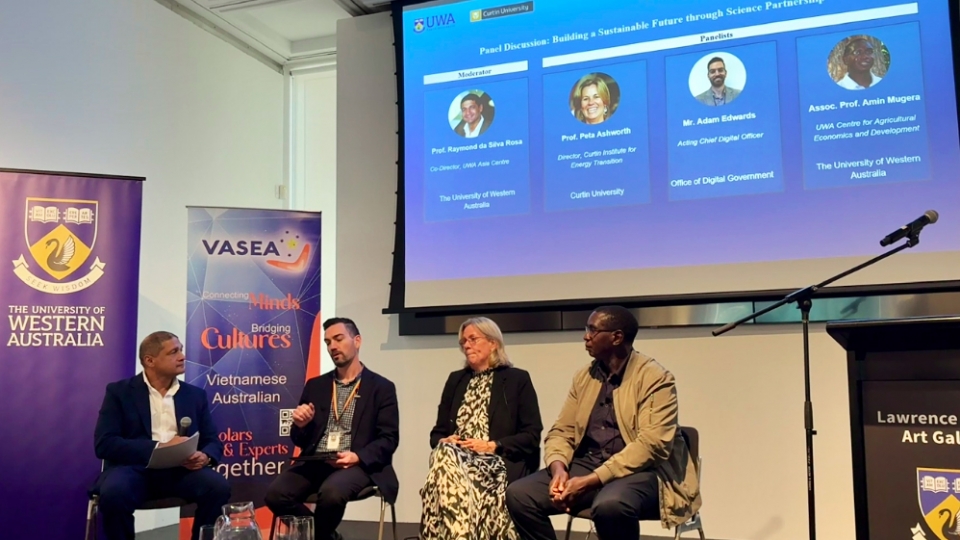
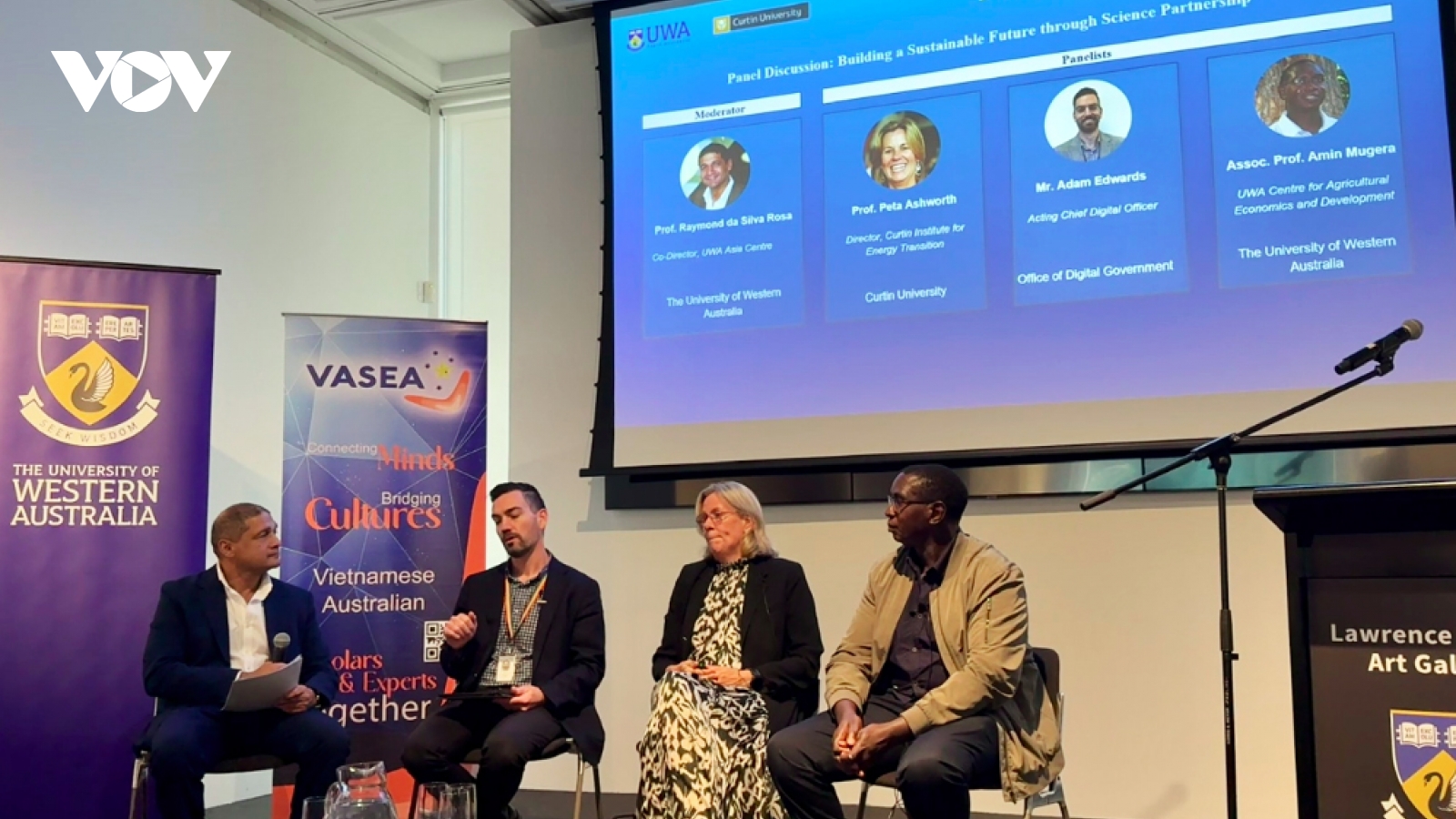
Vietnam and Western Australia seek deeper cooperation in green economy
VOV.VN - Vietnam and Western Australia agreed to strengthen cooperation in science, technology and sustainable development at a forum in Perth on December 3, with both sides identifying green economy, renewable energy, sustainable agriculture, modern mining and digital transformation as priority areas.