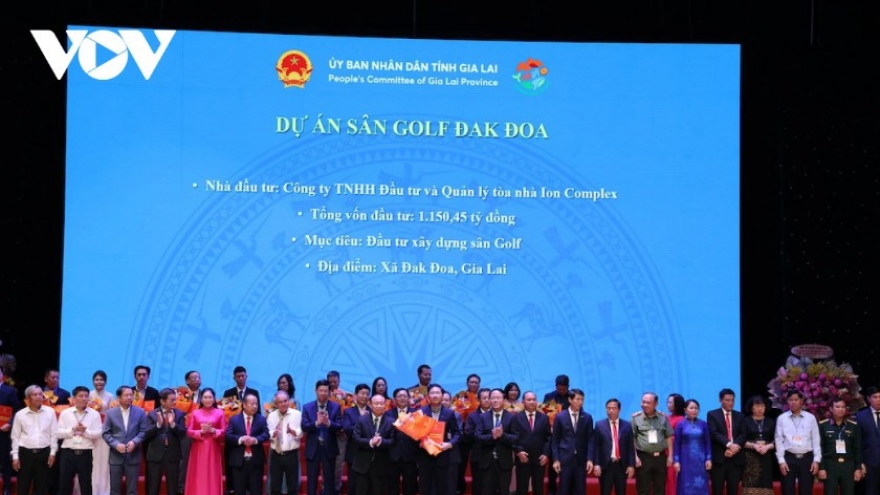
Gia Lai signs cooperation agreement with four southern Lao provinces

VOV.VN - Gia Lai province in Vietnam’s Central Highlands on March 29 signed a cooperation agreement for the 2026–2030 period with four southern Lao provinces, including Attapeu, Champasak, Salavan and Sekong.
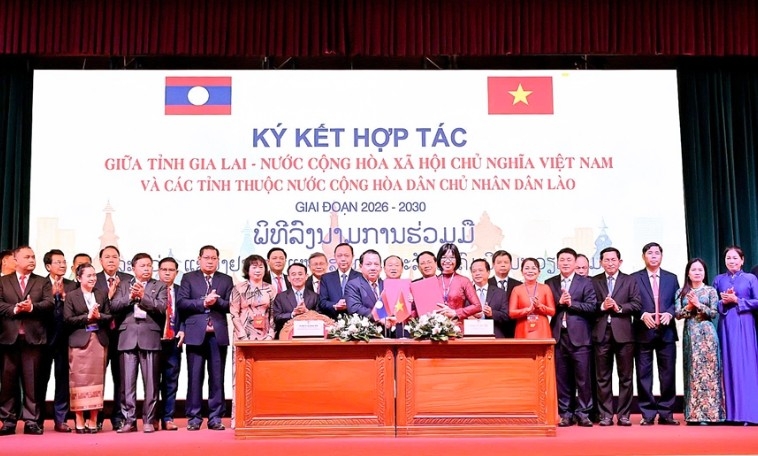
In his remarks, Chairman of the Gia Lai provincial People’s Committee Pham Anh Tuan said the Vietnam–Laos relationship was cultivated by President Ho Chi Minh, President Kaysone Phomvihane and President Suphanuvong, along with generations of leaders of both countries, and has continued to be strengthened and developed.
Built on trust and close ties, cooperation between Gia Lai and the southern Lao provinces has delivered practical results in education and training, healthcare, agriculture, trade and investment, science and technology, and people-to-people exchanges.
Economic, trade and investment cooperation has gradually expanded, with cross-border trade growing more active, contributing to socio-economic development and improving living standards on both sides.
At the signing ceremony, representatives of the four Lao provinces expressed their appreciation for Gia Lai’s support in recent years, saying the close ties have contributed greatly to socio-economic development and political security in the region. They affirmed that cooperation will be further expanded across sectors, helping deepen ties between Gia Lai and the four southern Lao localities and contributing to the broader Vietnam-Laos relationship.
Leaders of both sides agreed to step up trade connectivity, develop logistics, and cooperation in agriculture, education, healthcare, culture and tourism, while coordinating closely to ensure national defence and security and maintain stability along the peaceful and friendly border.
On the occasion, the Department of Agriculture and Environment of Sekong province and PISICO Binh Dinh Corporation signed a memorandum of understanding (MoU).
Under the MoU, the parties will establish coordination and support in research, surveys and the exploration of investment opportunities, focusing on industrial and agricultural crops, the development of large timber trees, the supply of plant varieties in project areas, and studying investment in mineral exploitation.
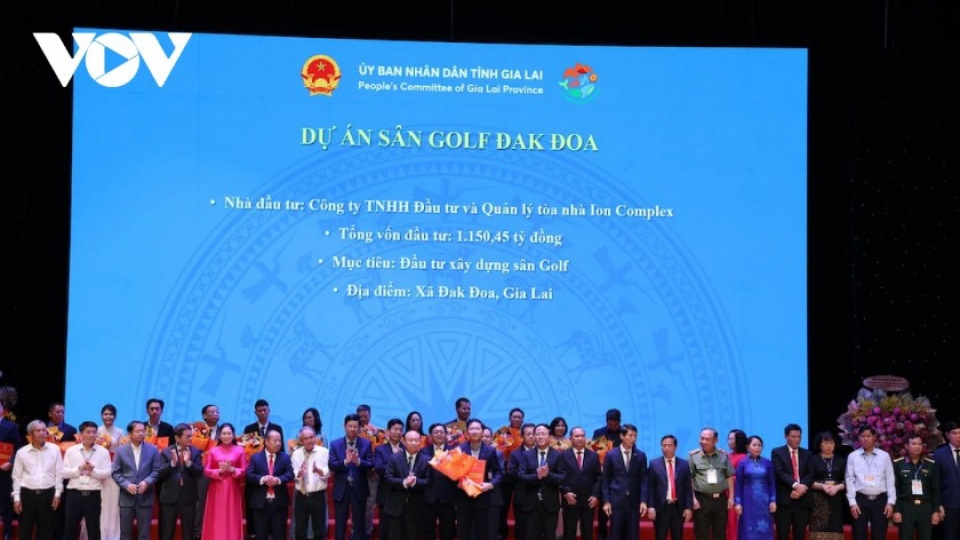
Gia Lai draws over US$33 billion in investment at 2026 promotion conference
VOV.VN - Gia Lai, a Central Highlands province of Vietnam, attracted nearly 300 projects worth more than US$33 billion at its 2026 investment promotion conference held on March 28 under the theme “Gia Lai -Transforming the growth model in the digital era”.
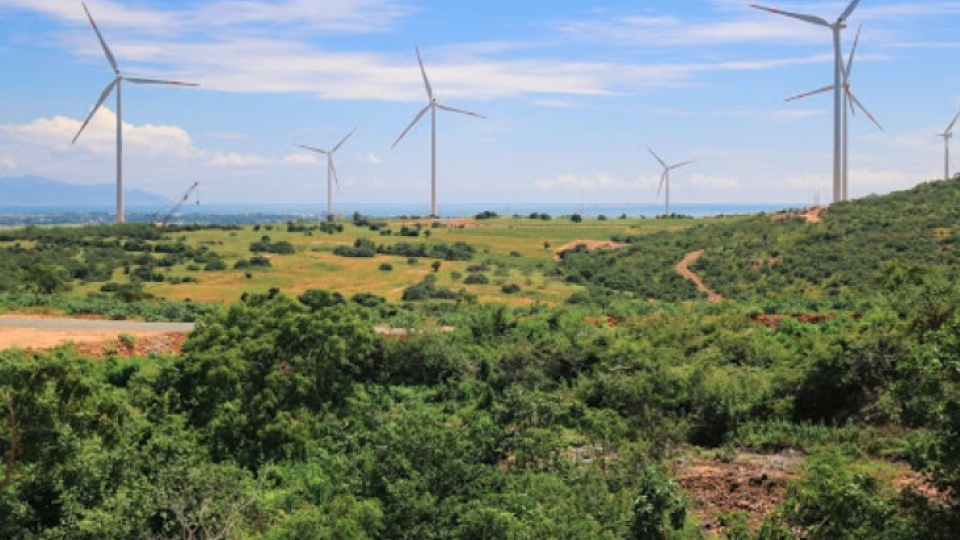
Investor approved for nearly VND 48.4 trillion wind power project in Gia Lai
VOV.VN -The People’s Committee of Gia Lai province has approved the results of the call for investor registration for the first phase of the VND48 trillion Hon Trau Wind Power Plant project, according to the Investment Promotion Center under the provincial Department of Finance.