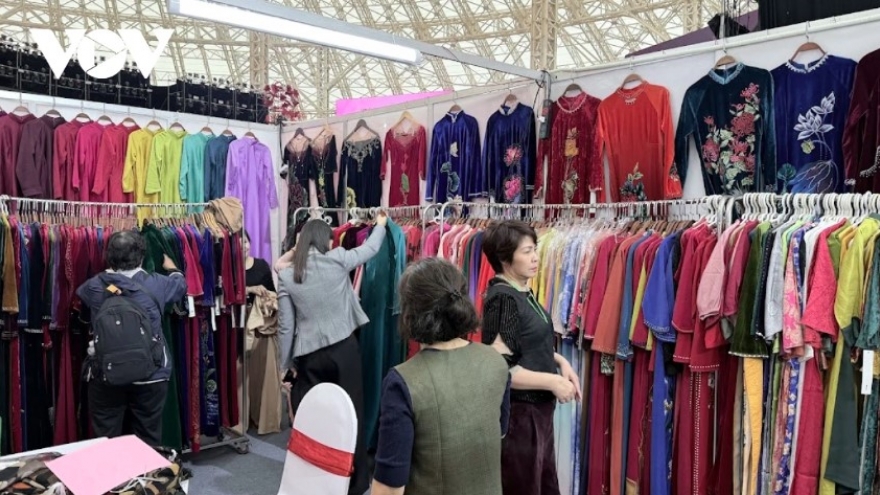
Garment firms accelerate production early in 2026 to meet export orders

VOV.VN - Many Vietnamese garment enterprises have moved quickly from the beginning of the year to fulfill export orders scheduled for delivery in the first and second quarters of 2026.
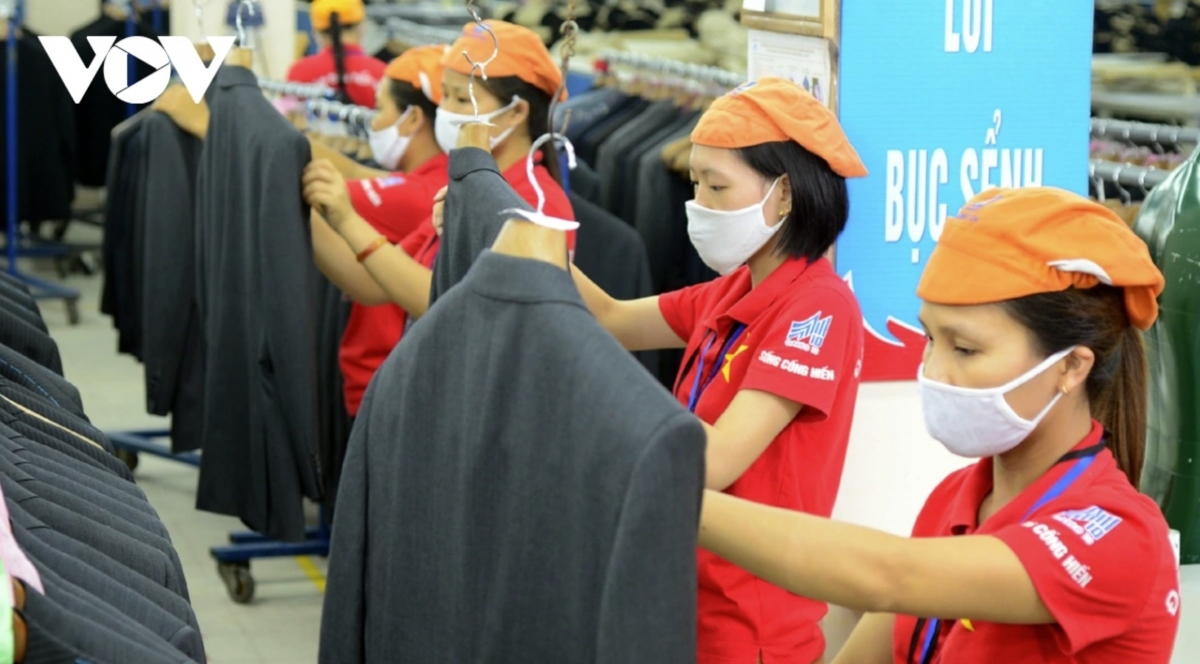
Export orders in the textile and garment sector are relatively abundant at present. Many companies have secured contracts through the end of the second quarter and are continuing negotiations for subsequent quarters.
As of late February, May 10 Corporation has orders sufficient to sustain production through April.
Than Duc Viet, General Director of May 10, said orders for the second quarter are still being sought and negotiated and remain uncertain. This is not an isolated case but a common situation among enterprises in the sector.
“Unlike in the past, when orders were usually finalized three to six months in advance, or even a year ahead, the time for order confirmation has shortened markedly. Some contracts are now concluded only a few weeks, even close to the production date. This makes production planning more urgent, faster and subject to change at any time. Therefore, May 10 mobilized employees even before the Lunar New Year (Tet) holiday, kept the opening-of-the-year activities concise and warm, and moved straight into concrete tasks and production emulation to ensure deliveries from the very first working week,” Viet said.
Entering 2026, which the company defines as a year of determination, aspiration and breakthrough, May 10 faces higher requirements in terms of growth quality, labor productivity and sustainable development.
All officials, Party members and employees are striving to ensure revenue and profit growth of over 8%, while targeting an average monthly income of VND 12 million per employee.
At Vinatex Southern Textile and Garment Corporation (VSC), Nguyen Hung Quy, General Director of VSC, said nearly 100% of employees returned to work in the early days of the Lunar New Year 2026. With the positive spirit of the new year, all three of VSC’s factories have recorded high productivity.
“VSC has secured export orders through July 2026 and is continuing to negotiate contracts for the third quarter. The company is maintaining its acceleration strategy, stepping up production from the first quarter. With strong determination among managers and employees, VSC is striving for strong business results, contributing to the corporation’s continued development,” Quy said.
Similarly, Pham Phu Cuong, Chairman of the Board of Directors of Nha Be Garment Corporation (NBC), said the company has set a target of 570 billion VND in profit across the system in 2026. NBC has secured orders through the end of the second quarter and is actively negotiating contracts for the remaining quarters of the year.
From the beginning of 2026, NBC has focused on restructuring its product portfolio toward higher value-added items and technically demanding orders with good unit prices. The company is also intensifying investment in AI and robotics, aiming to reduce its workforce by 30% while maintaining overall production capacity and system-wide productivity.
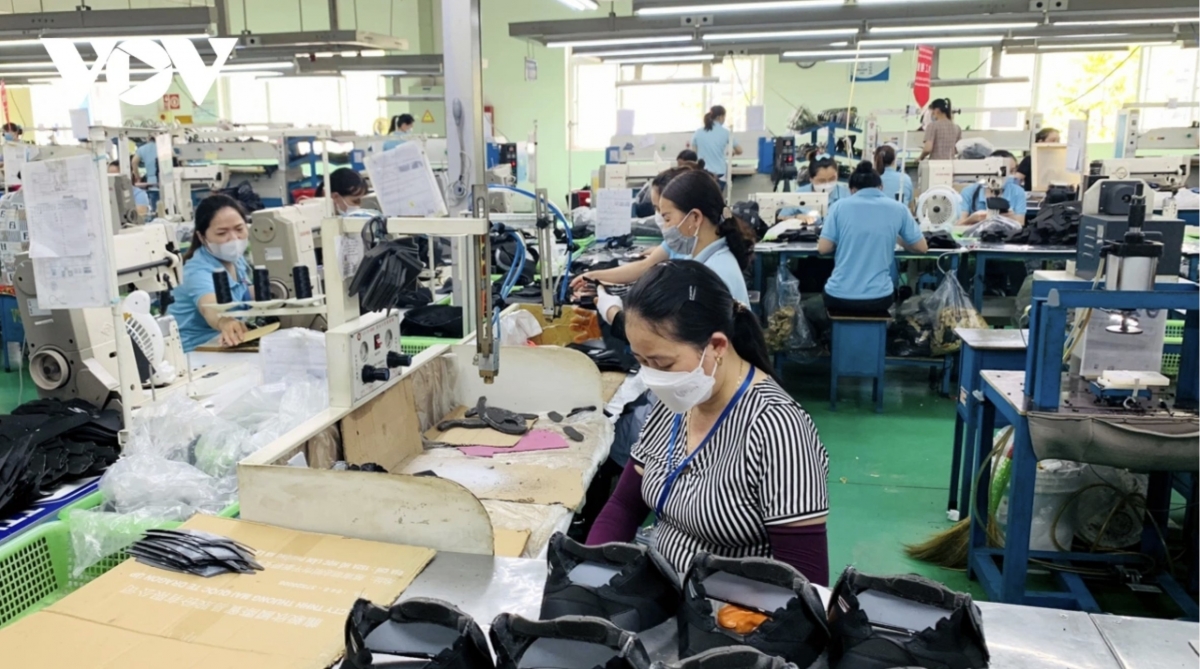
“NBC is promoting greater autonomy for its member units, building a solid foundation and combined strength for sustained development. At the same time, human resource management is being strengthened through comprehensive policies to improve workers’ living conditions and through step-by-step training to build a high-quality workforce,” Cuong said.
With export orders remaining abundant, the spirit of post-holiday production has spread widely across textile and garment enterprises. On February 23, the seventh day of the Lunar New Year, about 40%-45% of textile and garment companies nationwide had resumed operations.
Some factories restarted earlier due to urgent delivery schedules, while others, particularly in the southern region, began operations on the eighth or ninth day of the holiday or later, reflecting workforce mobility across provinces.
According to Vu Duc Giang, Chairman of the Vietnam Textile and Apparel Association, the momentum at the start of 2026 stems from what he called the “lesson of 2025,” when the sector recorded export turnover of around US$46 billion. Notably, textile and garment exports exceeded US$4 billion in January 2026 alone, providing fresh impetus from the outset of the year.
In 2026, the sector must handle urgent early-year orders while preparing for the peak production season from late April, particularly from May onward. During the high season, pressure will stem from delivery schedules and from the need to stabilize labor and production lines.
This is a decisive condition to ensure seasonal schedules and lay the groundwork for 2027, Giang emphasized.
Abundant export orders are seen as a positive factor for production in 2026 and the following years. To boost more sustainable export growth, the Ministry of Industry and Trade has identified key directions, including development of supporting industries and higher localization rates; promotion of innovation and digital transformation; more selective attraction of foreign direct investment; development of supporting services such as logistics, finance and marketing; and compliance with green and sustainability standards.
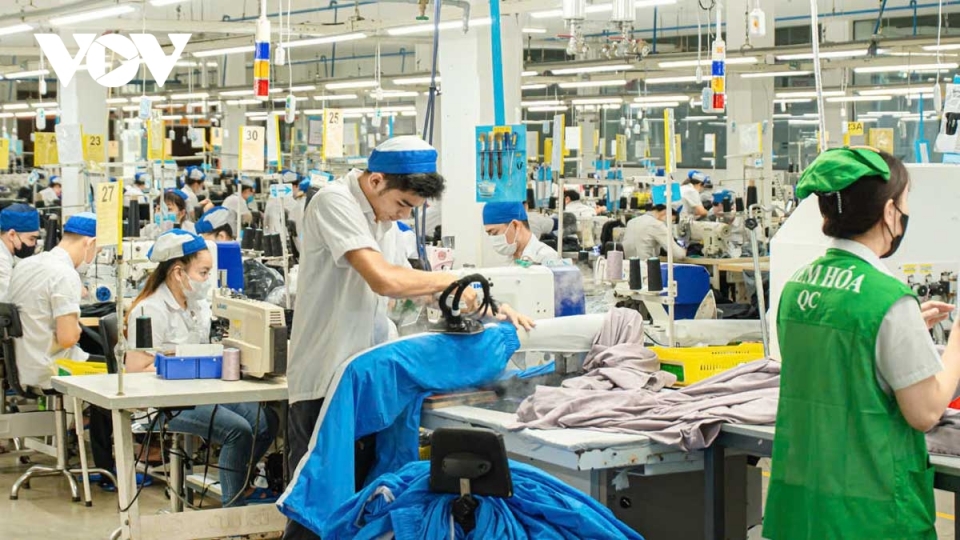
Textile and garment industry shifts toward high-value orders
VOV.VN - In 2026, Vietnam’s textile and garment industry is set to undergo a significant strategic change, shifting its focus from large-scale outsourcing to smaller, higher-value orders that require advanced technical standards, targeting key markets such as the United States and Japan.