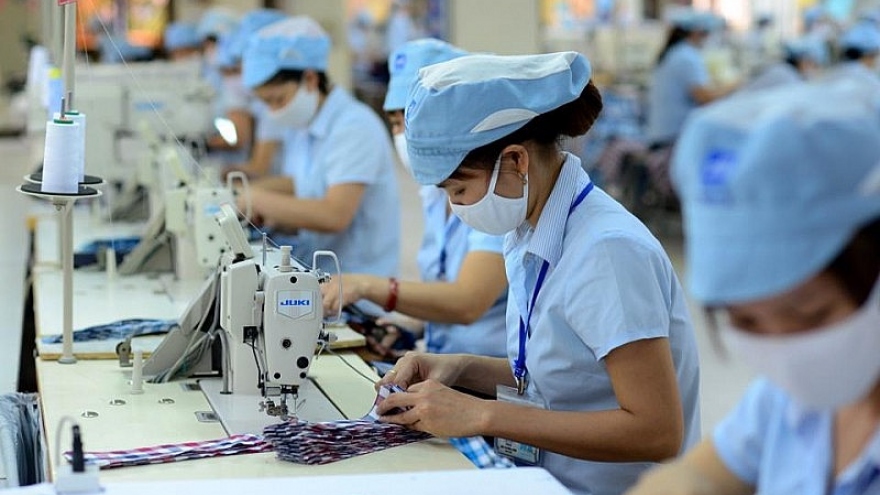
Textile and garment sector looks for new room for growth amid competition

VOV.VN - The focus of the textile and garment industry is shifting away from growth in output alone toward raising value added, improving product and service quality, and enhancing the standing of its products.
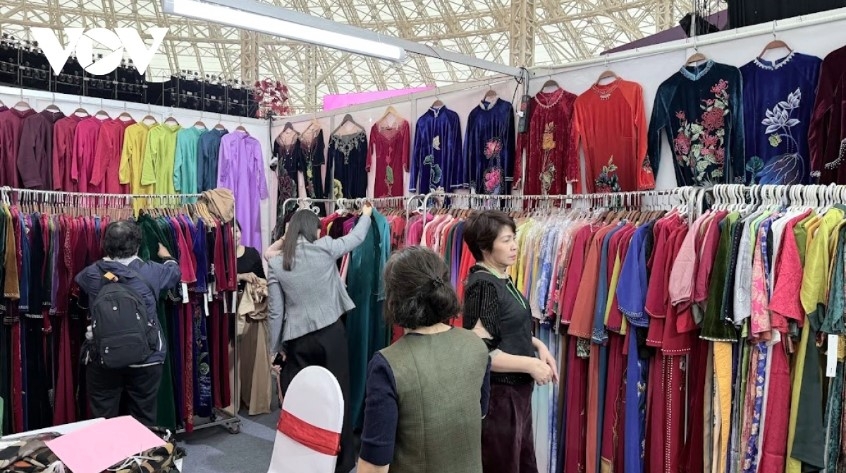
In 2026, the potential to increase value added in textile and garment products is widely considered substantial, as the industry moves away from dependence on large-scale contract manufacturing. Enterprises are increasingly shifting toward product segments with higher intellectual content, supported by technology and data. Alongside exports, companies are also paying greater attention to the domestic market, as national-level trade fairs continue to be held regularly.
At the Spring Fair 2026 currently taking place in Hanoi, many well-known textile and fashion companies have brought export-standard products to domestic consumers.
Hoang Thi Chien, head of the business department at Hanvico, said the fair provides a timely opportunity for enterprises to introduce high-end product lines more directly to local consumers and the domestic market.
According to Chien, companies are offering large discounts, thus enabling domestic consumers to access higher-end products at prices well below those in regular distribution systems. In addition to boosting retail sales during trade fairs, enterprises also see opportunities to reach broader customer groups and establish longer-term business relationships after the events.
In 2025, TNG Investment and Trading faced numerous difficulties, particularly as policy changes in the US directly affected sales, forcing the company to diversify markets and strengthen its resilience.
Le Xuan Vi, TNG’s Deputy General Director in charge of digital transformation, said that as customers repeatedly demanded price reductions, the company had to respond with a long-term approach, placing digital transformation, automation and technology at the centre of efforts to raise productivity, reduce costs and increase the value delivered.
TNG is focusing at the same time on productivity, quality and competitiveness, while developing product lines suitable for export to other markets with stable quality and reasonable prices, Vi said.
The company is also applying digital solutions to tackle cost, productivity and pricing pressures as competition grows tougher. Even a time saving of five to 10 seconds through technology can deliver sizeable gains when accumulated over a day, a month or a year, he added.
According to Truong Van Cam, Vice Chairman of the Vietnam Textile and Apparel Association (VITAS), the industry’s calm response and timely adaptation helped it retain major markets and seize opportunities during 2025.
Cam said the 2025 results do little change the fact that scope for growth based on scale is narrowing, while competitive pressure from rival producers continues to increase. This, he added, calls for a reassessment of the industry’s development approach in the period ahead.
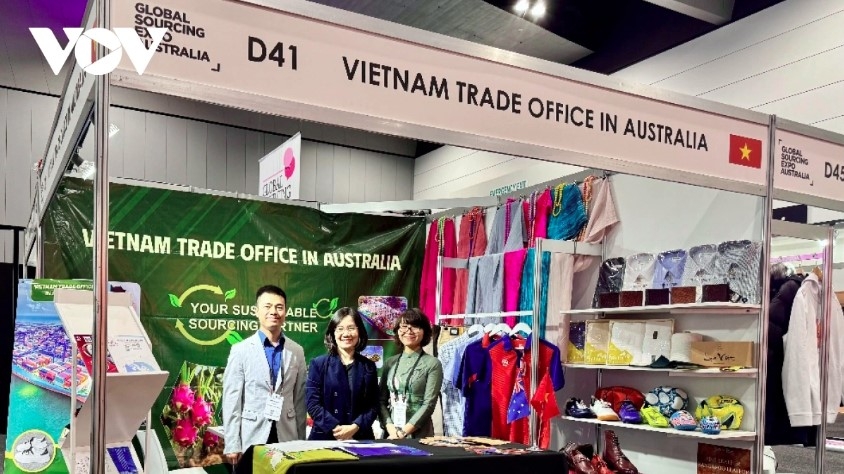
From the perspective of global trade conditions, Cam said export growth targets of 15-16% would be highly demanding for the textile and garment sector. Global trade is currently expanding at only about 2-5%, while worldwide growth in the textile and garment industry stands at around 2-3%.
At the same time, many countries competing directly with Vietnam are providing strong policy support for their textile industries, particularly economies that rely heavily on the sector.
In this context, Cam said continuing to pursue growth based primarily on output volume is no longer sustainable. The textile and garment sector has set a target of export turnover of about US$49-49.5 billion in 2026, equivalent to growth of roughly 8%. The emphasis, he stressed, is not on expanding scale, but on improving the quality of growth.
“The sector has determined that it will not expand significantly in size. Output may continue to rise, but the main objective is to raise value added, improve product quality, service quality and the overall standing of Vietnamese textile and garment products,” Cam said.
“Growth is shifting in depth, with enterprises’ internal capabilities serving as the core basis, allowing the industry to maintain its position as one of the economy’s key export sectors.”
One positive aspect, Cam added, is the industry’s localization rate. Although foreign-invested enterprises account for about 60% of the sector, domestic companies continue to play a substantial role in the supply chain.
A localization rate of around 40% is considered a noteworthy outcome, particularly when compared with many countries in the region that remain heavily dependent on imported raw and auxiliary materials.
Going forward, Cam said the textile and garment sector will continue to strengthen enterprise capacity, develop domestic sources of raw and auxiliary materials, reinforce supply-chain linkages, and meet increasingly stringent international requirements on quality, services and sustainability.
In an environment of growing global competition, he said, Vietnam’s textile and garment industry is unlikely to achieve breakthroughs through scale expansion alone.
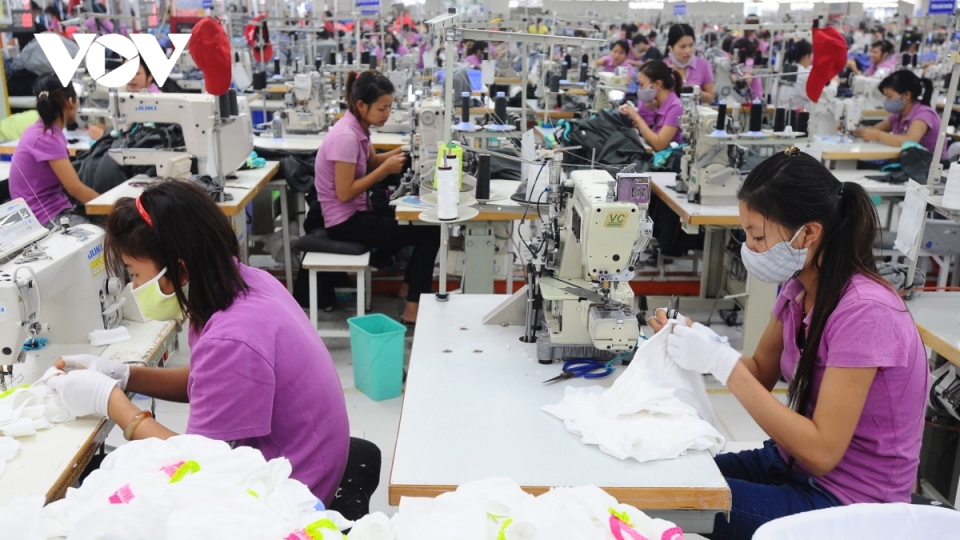
Textile and garment sector earns huge profits in first half
VOV.VN - The local textile and garment industry continued to enjoy robust growth during the first half of the year as export turnover saw an annual increase of 15% to reach US$15.2 billion, according to the Ministry of Industry and Trade.
Textile and garment sector hits over US$19 bil of FDI over 30-year period
VOV.VN - The total amount of foreign direct investment (FDI) capital invested into the country’s textile, dyeing, and garment industry has reached more than US$19 billion across 1,383 projects during the three decades, according to the Vietnam Textile and Apparel Association.