FDI attraction in 2026: Vietnam adapts to new global investment standards

As global competition for foreign direct investment (FDI) intensifies, Vietnam continues to enhance its appeal to multinational investors, backed by competitive advantages, an improving business environment and policy reforms aligned with emerging global investment standards.

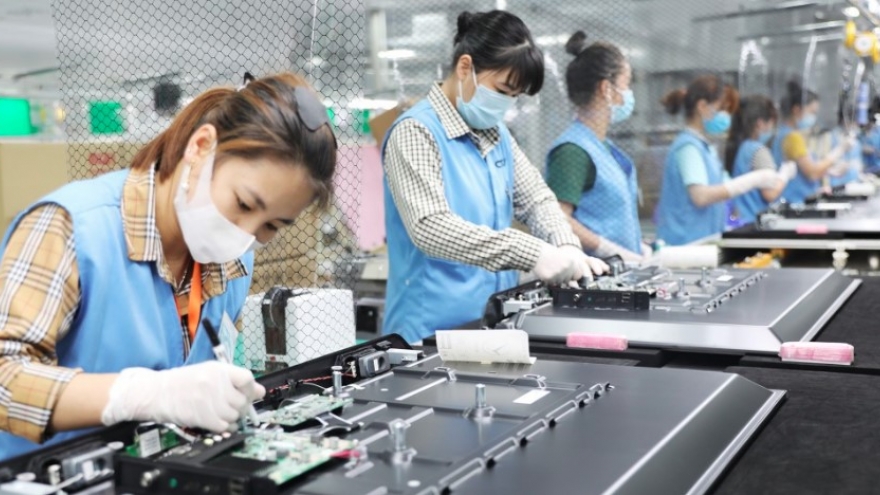
The increases in registered and disbursed capital not only signal growth in volume but also highlight a shift toward higher-quality projects, particularly in high-tech and strategic sectors.
In early February, Savills Vietnam reported that Taiwan (China)-based UNIVACCO Technology Inc. leased 29,742 sq.m of industrial land at Long Thanh Industrial Park in Dong Nai province, marking the selection of Vietnam as its strategic manufacturing base in Southeast Asia.
Around the same time, Bac Ninh province granted investment approvals and registration certificates to multiple projects with total registered capital exceeding US$1.03 billion. Key projects include a US$100 million Cooler Master Vietnam facility at Gia Binh Industrial Park, a US$56.3 million office and factory leasing development at Nam Son – Hap Linh Industrial Park, and a US$25 million project producing printed circuit boards, semiconductor chips and specialised electronic cables at Gia Binh Industrial Park.
Data from the National Statistics Office under the Ministry of Finance show that total registered FDI reached US$6.03 billion in the first two months of 2026, down 12.6% year-on-year. However, new investment registrations remained robust, with 620 newly licensed projects worth US$3.54 billion, up 20.2% in the project number and 61.5% in registered capital compared to the same period last year.
Meanwhile, the disbursed FDI was estimated at US$3.21 billion, an increase of 8.8% year-on-year and the highest level recorded for the first two months in the past five years.
FDI flows are increasingly directed toward high-value sectors, including high technology, green industry, renewable energy and the digital economy. The energy sector has drawn particular attention, with a wave of LNG power, green hydrogen and renewable energy projects being proposed or accelerated. Among them is a US$10-billion LNG power centre in Ca Na commune, Khanh Hoa province, proposed by a consortium of investors from the US, the Republic of Korea and Singapore, in partnership with the Mekong Delta Investment and Development of Maritime Economic Zones JSC.
Economic analysts note that Vietnam remains an attractive investment destination thanks to its stable macroeconomic environment, a population exceeding 100 million, improving labour quality and increasingly competitive investment attraction policies.
On the policy front, Hong Sun, honorary chairman of the Korea Chamber of Business in Vietnam (Kocham), welcomed the amended Investment Law passed in December 2025, highlighting simplified post-licensing procedures and special incentives for mega projects and research and development (R&D) investments.
He said the introduction of new investment support mechanisms to replace traditional tax incentives, in line with global minimum tax regulations, will help retain major investors while enhancing Vietnam’s competitiveness and signalling its readiness to adapt to new global investment rules.
The reforms are expected to remove procedural bottlenecks, shorten the timeline from project registration to implementation and strengthen Vietnam’s competitiveness within the region, he added.
Nguyen Hong Chung, investment policy expert and chairman of DVL Lawfirm, said the revised law promotes decentralisation, clearer authority and procedures, and a transition from pre-licensing to post-licensing inspection in business conditions.
While these reforms are hoped to accelerate decision-making, lower compliance costs and improve investment predictability, they also place greater requirements on local implementation capacity and inter-agency coordination.
The move toward post-licensing inspection reflects modern governance practices adopted globally, helping reduce market entry barriers while reinforcing compliance discipline and accountability, Chung said.
To further enhance FDI attraction amid rising global and regional competition, Deputy Minister of Finance Tran Quoc Phuong said the ministry is drafting new strategies on foreign-invested economic development and next-generation FDI attraction, focusing on more open, transparent and competitive institutional frameworks.
Experts believe that positive FDI inflows in early 2026, combined with ongoing policy reforms by the Government and the Ministry of Finance, will provide a strong stepping stone for Vietnam to maintain its standing as a leading destination for foreign investment.

Vietnam set to retain strong FDI inflows in 2026 on macro stability
VOV.VN - Vietnam is expected to maintain solid foreign direct investment (FDI) inflows in 2026, backed by macroeconomic stability, strong long-term growth potential, and its expanding role in global supply chains, according to economists.