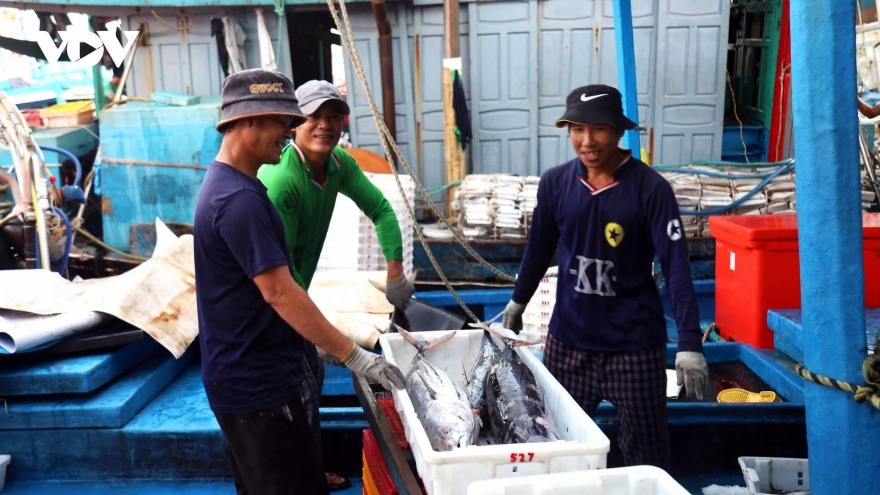
Digital foundations help Vietnam tackle issues in fisheries management

As Vietnam steps up efforts to have the European Commission (EC)'s “yellow card” warning on illegal, unreported, and unregulated (IUU) fishing lifted, adopting digital technology and data-driven management for fishing vessels has become a key solution to strengthen fisheries governance in marine capture activities.
The development and synchronous operation of specialised databases and software systems are helping shift fisheries management from manual, fragmented practices to a modern, integrated approach based on digital data.
The Department of Fisheries and Fisheries Surveillance has been tasked with building component databases and has so far deployed 12 specialised software systems across the fisheries sector.
In the field of IUU fishing prevention, four key systems are now in operation: the National Fisheries Database (Vnfishbase), the Vessel Monitoring System (VMS), the database on administrative sanctions in fisheries, and the electronic catch documentation and traceability system (e-CDT).
Among these, Vnfishbase is regarded as the backbone of Vietnam’s modern fisheries management system. Officially put into operation in 2019, the platform meets core management requirements, particularly in managing fishing vessel data from the central to local levels. It allows unified updates and monitoring of vessel registration and fishing licences, especially for vessels measuring 15 metres or longer, which are subject to strict IUU fishing monitoring.
According to Deputy Director of the Fisheries and Fisheries Surveillance Centre Nguyen Duy Thanh, the system has now been synchronously implemented across all coastal localities with active fishing fleets. Vessel data has been standardised and regularly updated, supporting timely policy direction and management by the Ministry of Agriculture and Environment and local authorities. Notably, 100% of fishing vessels nationwide have been registered and updated on Vnfishbase, forming a unified data foundation for fleet management.
To strengthen vessel identification, Vnfishbase has been linked with the National Population Database under the Government’s national digital transformation programme for 2022–2025, with a vision to 2030. This data integration enhances accuracy in vessel management and directly supports IUU fishing prevention efforts. Authorities are also continuing to review, verify and update data.
At the local level, digital applications are delivering tangible results. In Ho Chi Minh City, all fishing vessels have been fully registered on Vnfishbase, while deregistered vessels are publicly listed and synchronised with the VMS, improving identification, inspection and control at sea.
Meanwhile, electronic catch documentation and traceability are considered a decisive link in meeting export market requirements. The e-CDT system, mandatory for vessels 15 metres and longer, has also attracted thousands of vessels from six metres upwards to participate voluntarily.
In Dong Thap province, 100% of vessels entering and leaving ports declare electronically via e-CDT, with all landing receipts processed online, significantly improving transparency and legality.
Fisherman Le Hoai Thuong from Can Tho city said the system simplifies administrative procedures while facilitating monitoring by authorities.
Despite progress, challenges remain, particularly in technical infrastructure and operational capacity at the grassroots level. Experts stress the need to upgrade digital platforms and strengthen training for local officials to ensure effective, sustainable fisheries governance and compliance with fishing regulations.
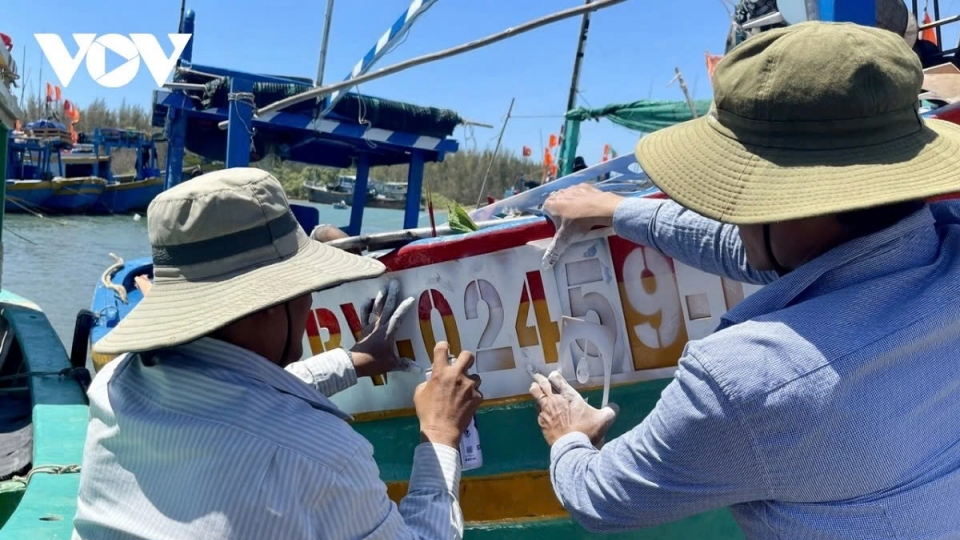
Vietnam ramps up IUU fishing enforcement to lift EU yellow card
VOV.VN - In 2025, Vietnam entered a critical phase in its efforts to remove the European Commission’s (EC) “yellow card” warning on illegal, unreported and unregulated (IUU) fishing.