Digital economy surpasses US$72 billion amid advances in science and technology

VOV.VN - The Ministry of Science and Technology (MoST) announced a series of positive developments in science, technology, innovation and digital transformation at its monthly press briefing in Hanoi on June 1.
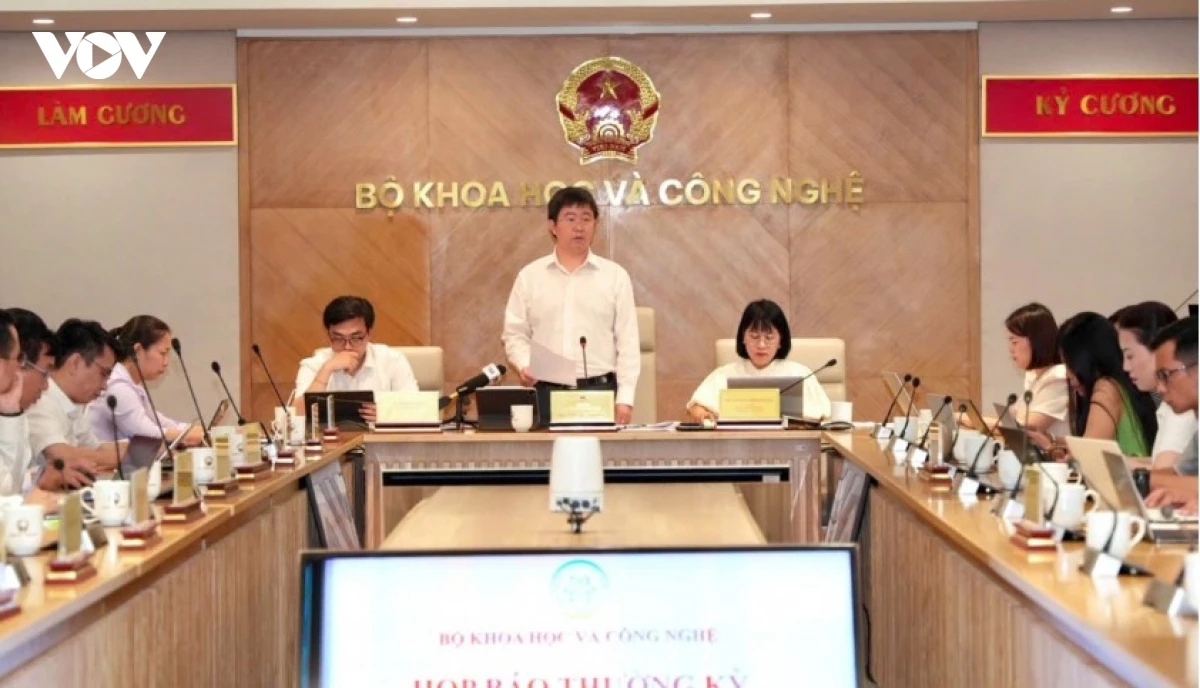
Highlights included strong growth in the digital economy, continued improvements in telecommunications infrastructure and further progress in Vietnam’s startup ecosystem.
The ministry continued to implement key tasks in May aimed at improving the institutional framework, advancing science, technology and innovation, and accelerating national digital transformation as a contribution to socio-economic development in the new context.
Several indicators showed notable progress. High-tech products accounted for 50.76% of Vietnam’s total merchandise exports in the first quarter of 2026.
According to the StartupBlink Global Startup Ecosystem Index 2026, Vietnam climbed five places to rank 50th globally, its highest position to date.
As of May 2026, Vietnam had 963 science and technology enterprises, 20 technology exchanges and 37 innovation centres across 26 of the country ’s 34 provinces and centrally governed cities. In digital transformation, the rate of fully online public service applications reached 50.2% in May.
The digital economy’s value-added contribution was estimated at 14.02% of GDP in 2025, equivalent to approximately US$72.1 billion.
Telecommunications infrastructure also recorded further improvements. Mobile broadband speeds reached 207.3 Mbps, ranking 11th among 104 countries, while fixed broadband speeds stood at 287.33 Mbps, placing Vietnam 11th among 154 countries.
The number of mobile broadband subscriptions hit 110.5 million, including 24.29 million 5G subscriptions, while fixed broadband subscriptions totalled 25.62 million. Postal service revenue in May was estimated at VND8.5 trillion, up 30% year-on-year.
In institutional and policy development, the ministry submitted two decrees and two resolutions to the Government in May, along with 11 decisions for issuance by the Prime Minister. It also promulgated four circulars under its authority.
The documents focus on strengthening the legal framework for emerging and strategic technologies, supporting growth and competitiveness, enhancing state management, developing technical infrastructure, and ensuring safety, security and sustainable development.
For June, the ministry said it will continue performing tasks outlined in the Prime Minister’s conclusions on the implementation of Resolution No. 57 and other strategic directions for the sector.
Priority areas include further improvements to policies and regulations covering science and technology, innovation, digital transformation, standards and quality infrastructure, as well as postal and telecommunications services.
The ministry will also step up efforts to develop strategic technologies, prepare for the restructuring of national science, technology and innovation programmes, finalise the mational science and technology exchange project, and submit the national digital architecture framework to the Prime Minister for approval.
PM urges youth to master science and technology for national breakthrough
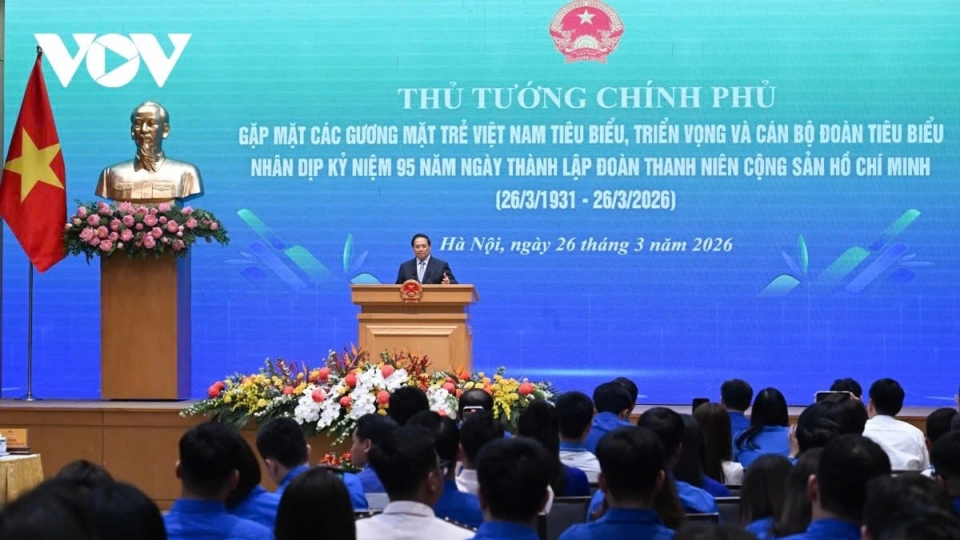
VOV.VN - Prime Minister Pham Minh Chinh has called on Vietnamese youth to take the lead in science, technology and innovation, stressing their role in driving the country’s breakthrough development in the years ahead.