


Da Nang needs up to 13.6% growth in Q4 to meet 2026 target

VOV.VN - Da Nang needs to achieve growth of up to 13.6% in the final quarter of 2026 to meet its annual economic target, prompting city leaders to call for faster public investment disbursement, stronger business support and the removal of bottlenecks holding back growth.
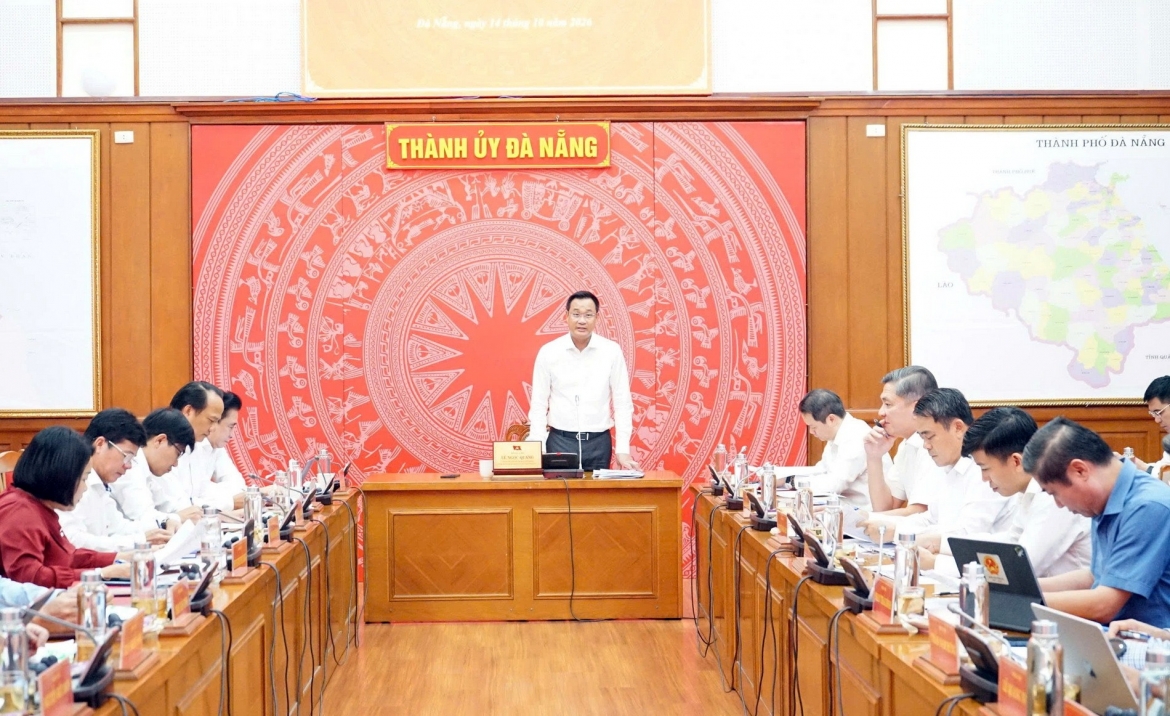
At a meeting on October 14, Da Nang Party Committee Secretary Le Ngoc Quang urged the municipal Party Committee and People’s Committee to prioritise urgent measures to accelerate socio-economic development in the final three months of the year.
The city’s gross regional domestic product (GRDP) grew by an estimated 11.83% in the third quarter, bringing growth in the first nine months to 10.31%, according to a report by the municipal People’s Committee. Da Nang ranked ninth among Vietnam’s 34 provinces and centrally governed cities for nine-month growth, while its third-quarter performance ranked seventh nationwide and third among centrally governed cities.
The city’s budget revenue was projected to reach 133.8% of the annual estimate, while public investment disbursement was among the country’s leading performers. Da Nang also ranked eighth among the 34 localities in its public service performance index and third nationwide in its startup ecosystem.
Despite these results, nine-month growth fell short of the city’s original scenario. Under its revised plan, Da Nang is targeting annual GRDP growth of 11–11.22%, requiring growth of between 12.8% and 13.6% in the fourth quarter.
Services and construction remain key growth drivers
Tran Thi Thanh Tam, director of the municipal Department of Finance, held that services and construction would be central to achieving the year-end target.
Services account for more than 55% of Da Nang’s economic structure, making stronger performance in the sector particularly important in the final quarter. Construction is another area with potential to contribute to growth, she said.
However, several industries continue to face difficulties. Mining, manufacturing and processing have encountered challenges, while sales have lagged behind production in some areas. The number of businesses withdrawing from the market has also increased.
Industrial production has been constrained by unstable demand and orders, a shortage of clean land ready for investment, concerns over reliable energy supplies and intensifying competition, particularly in automobile manufacturing and assembly.
Delays in site clearance and land handover have affected project implementation and investment disbursement. Businesses are also facing difficulties accessing bank credit, with credit growth significantly slower than deposit growth.
Some projects whose legal obstacles have been addressed under National Assembly resolutions are unable to secure financing because of issues involving legal documentation, collateral and repayment plans. Some buyers of social housing have also been denied loans because they lack sufficient equity.
Removing bottlenecks and mobilising investment

Da Nang Party Committee Secretary Le Ngoc Quang noted Da Nang’s growth has yet to become sustainable. Several potential new growth drivers, including the international financial centre, the free trade zone, logistics and high technology, have yet to make a meaningful contribution to economic expansion.
The city also needs to strengthen its industrial and construction sectors, whose combined weight in the economy is relatively low compared with leading localities, he said.
Quang requested that the municipal authorities review every economic target, particularly five indicators at risk of being missed, identify the causes of underperformance and develop specific measures to address them.
He urged officials to focus support on sectors capable of generating additional growth, businesses able to expand production and projects that could be completed and brought into operation soon.
Accelerating public investment disbursement, resolving obstacles facing projects and mobilising resources for development were also identified as priorities. Projects whose legal issues have been addressed should be put into effective implementation, he said.
Quang also called for a review of officials’ performance, with action to replace those with limited capacity or who shirk responsibility, avoid difficult tasks or allow work to stagnate. At the same time, the city should encourage and protect officials willing to take initiative and responsibility for the common good.
Building longer-term growth capacity
Beyond the immediate fourth-quarter target, Da Nang is seeking to accelerate investment in strategic infrastructure, industrial parks and high-tech zones to attract major investors and support business expansion.
Quang emphasised the city is working to attract strategic investors, including foreign direct investment (FDI) projects worth billions of US dollars, to help reshape the economic structure and boost growth.
The city’s ability to meet its 2026 target will depend on whether it can translate its existing investment and development plans into tangible results, while addressing constraints on production, financing and project implementation.
The final quarter will therefore be a critical period for Da Nang to narrow the gap between its growth performance and its annual target, laying the groundwork for stronger economic expansion in 2027 and beyond.
Da Nang gears up for world heritage cooperation conference this December
VOV.VN - Vietnamese and international delegates will exchange experience in heritage conservation, promote heritage values and strengthen international cooperation, at a Conference on World Heritage Cooperation 2026 slated for December 3-5 in Da Nang city.


