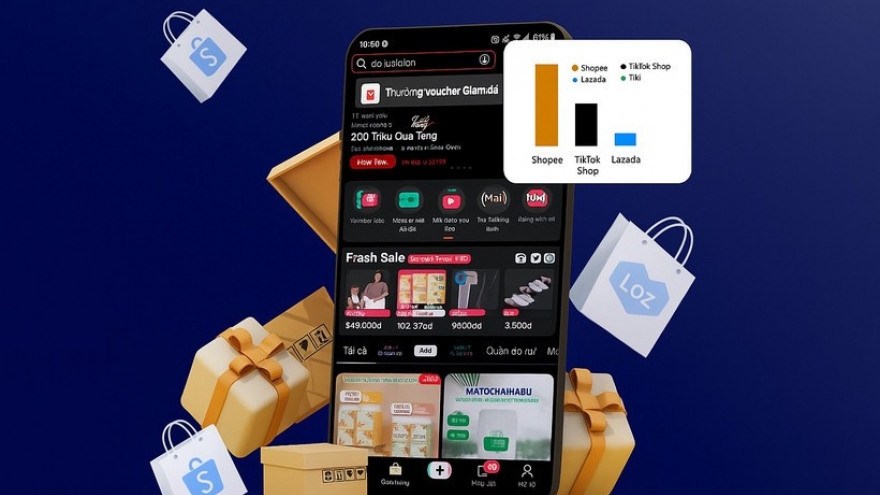
Cross-border e-commerce opens fast track for agricultural exports to ASEAN

VOV.VN - Cross-border e-commerce is emerging as a powerful “fast track” that enables Vietnamese agricultural products to penetrate the ASEAN market, significantly reducing reliance on traditional intermediaries.

Leveraging pre-existing consumption channels
As the global economy continues to face uncertainty, e-commerce is increasingly becoming a central pillar of modern distribution systems, particularly in emerging economies. In Vietnam, e-commerce is not only expanding domestic consumption but also creating new opportunities for agricultural and local specialty products to directly reach the ASEAN market - a region that shares cultural similarities, consumer habits and dietary preferences.
Instead of relying solely on conventional export channels with multiple intermediary layers, cross-border e-commerce allows Vietnamese businesses to shorten supply chains and bring products directly to international consumers. However, effectively tapping into this opportunity requires companies to understand digital support models and build adequate operational, logistics and financial capabilities tailored to agricultural products.
The transition from domestic sales to cross-border e-commerce is becoming inevitable. Speaking on the sidelines of the recent conference, Mac Quoc Anh, Vice President and Secretary General of the Hanoi Association of Small- and Medium-sized Enterprises (Hanoi SMEs), noted that post-pandemic e-commerce has moved from a supplementary role to a central position in distribution chains. This shift is taking place amid rising costs of traditional retail spaces and the growing exposure of inefficiencies within legacy distribution chains, particularly at intermediary stages.
For agricultural products, participation in e-commerce platforms not only expands market access but also enables businesses to sell directly to end consumers. This shift helps producers move away from a passive role focused solely on volume consumption and towards building and enhancing brand value.
By narrowing the gap between producers and consumers, Vietnamese agricultural products gain more opportunities to communicate quality standards, traceability and product stories — key factors in gaining consumer trust in international markets.
Experts describe e-commerce platforms as a “pre-established consumption space.” Rather than investing heavily in overseas distribution infrastructure, businesses can simply list their products on digital platforms. By leveraging real-time data from e-commerce platforms, businesses can progressively integrate into the regional consumption chain, assess market responses, and refine their strategies accordingly.
A key breakthrough of cross-border e-commerce lies in streamlined operations. Whereas traditional export methods involve complex procedures, Vietnamese businesses can now sell to the ASEAN market in a manner that closely mirrors domestic sales. This is made possible by the tools offered by major platforms, such as multi-country store synchronization, centralized inventory management, cross-border logistics solutions, and multilingual customer support.
As a result, even small and medium-sized enterprises (SMEs) with limited resources can access millions of international consumers without building complex import–export systems. Cross-border e-commerce therefore acts as a genuine “shortcut,” significantly lowering both the time and costs required to enter new markets.
Developing digital content: A mandatory requirement
Despite its vast potential, listing products on international platforms is only the first step. For a product to establish a strong presence and achieve sustainable growth, businesses must simultaneously manage several critical areas, including logistics, digital content, finance, and risk management.
Logistics is widely regarded as the “lifeline” of agricultural exports, especially in a cross-border e-commerce environment. Agricultural products are often perishable and have short shelf lives. Without timely promotion and distribution to the right consumer segments, products can quickly become difficult to sell. For seafood and frozen goods, requirements for cold-chain storage and transportation are particularly stringent.
Alongside logistics, digital content development is essential to prevent Vietnamese products from becoming invisible among millions of global listings. Practical experience from initiatives such as the OCOP (One Commune One Product) Online Market shows that while many enterprises initially struggled due to limited e-commerce experience and supply capacity, strong institutional support and well-structured content strategies helped millions of products achieve successful sales.
For international markets, building localized digital channels that showcase regional culture and specialty products is increasingly seen as a foundation for long-term brand strategies.
Cross-border e-commerce is opening a viable fast track for Vietnamese agricultural products to penetrate ASEAN markets. However, to ensure this pathway does not become a dead end, businesses must systematically strengthen operational capacity, logistics, digital content, financial management and data governance.
Closer coordination among government agencies, major e-commerce platforms and logistics providers will be critical in building a robust ecosystem — one capable of supporting Vietnamese agricultural brands as they seek greater visibility and competitiveness on the region’s digital trade map.
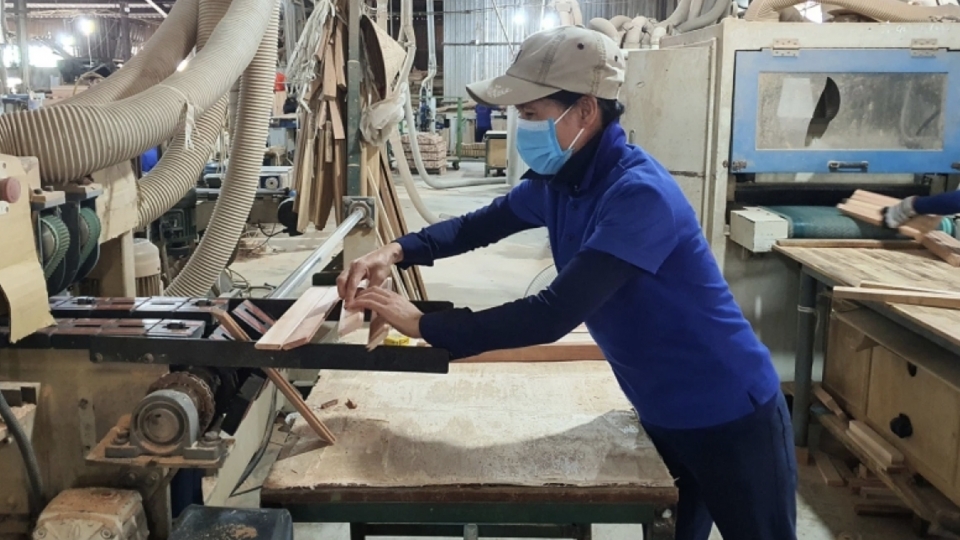
E-commerce reshapes Vietnam’s wood export model
VOV.VN - Amid a major restructuring of global supply chains, Vietnam’s wood industry is turning to e-commerce as a more sustainable growth channel, shifting from contract manufacturing toward direct-to-consumer exports and higher value creation.