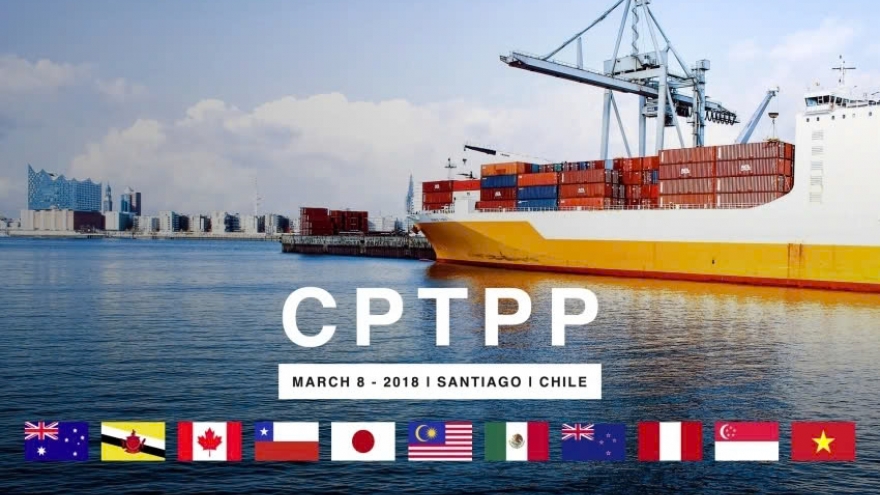
CPTPP certificates of origin see strong utilisation after six years

The rate of issuance of certificates of origin (C/O) and the level of utilisation of tariff preferences by Vietnamese enterprises have recorded positive changes after six years of implementing the Comprehensive and Progressive Agreement for Trans-Pacific Partnership (CPTPP).
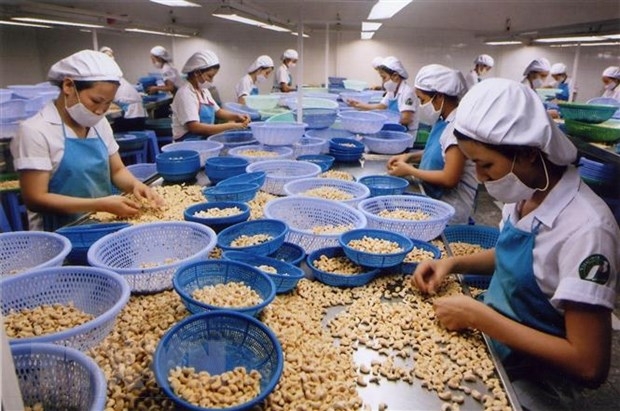
Statistics from the Agency of Foreign Trade under the Ministry of Industry and Trade show that the export turnover of goods to CPTPP markets issued with a C/O reached only about US$0.7 billion, equivalent to nearly 2% of total turnover, in 2019, the first year the agreement was implemented.
This figure increased to about US$5 billion last year, accounting for approximately 8.8%.
Notably, the utilisation rate of origin preferences has risen sharply in some markets where Vietnam has an FTA for the first time under the CPTPP framework.
For example, in the Mexican market, only about 7% of Vietnam’s export turnover to this market was issued with a C/O under the CPTPP in 2019, but this rate increased to approximately 47% last year.
By product group, the C/O issuance rate for goods exported to Mexico is very high. Specifically, seafood export turnover to this market with an issued C/O accounts for about 70–80%, while the leather and footwear group has a rate of over 80%.
Regarding the Canadian market, Trinh Thi Thu Hien, deputy director of the Agency of Foreign Trade, said the rate of export turnover with CPTPP C/Os was only about 8% in 2019. However, this figure rose to 17–18% last year.
Among these, some product lines have a relatively high origin preference utilisation rate, such as suitcases, bags, hats, umbrellas, sedge mats and rattan and bamboo products, with the turnover rate issued with a CPTPP C/O reaching approximately 42–45% last year.
The seafood export group to Canada alone has a rate of about 80%.
Hien also pointed out that these figures indicate a positive growth trend in the utilisation of CPTPP origin preferences, especially in markets that offered tariff preferences for Vietnamese goods for the first time.
This result reflects the efforts of the exporting business community in gradually understanding and meeting the agreement’s rules of origin to enhance the competitiveness of Vietnamese goods in CPTPP markets, she said.
At the same time, it is also the result of communication and dissemination activities on FTAs in general and the CPTPP in particular carried out by the Ministry of Industry and Trade and other ministries and agencies in recent years, she added.
Trailing other FTAs
Despite the growth, when compared with other new-generation FTAs such as the Vietnam–EU Free Trade Agreement (EVFTA) or the Vietnam–UK Free Trade Agreement (UKVFTA), the CPTPP origin preference utilisation rate remains lower.
Analysing the reasons for this difference, Hien said that for markets such as the EU or the UK, each market is associated with only a single FTA with Vietnam.
Therefore, if enterprises do not use preferences from the EVFTA or UKVFTA, there is almost no other tariff preference mechanism to substitute, she said.
Conversely, within the CPTPP framework, many member countries simultaneously participate in various other FTAs alongside Vietnam.
This allows enterprises to choose from multiple sets of rules of origin and parallel tariff preference mechanisms, resulting in the utilisation rate of the CPTPP C/O form being shared with other agreements, she said.
For example, regarding the Australian market, Vietnam and Australia are both members of the CPTPP, the ASEAN–Australia–New Zealand Agreement and the Regional Comprehensive Economic Partnership (RCEP), Hien explained.
Thus, goods exported to Australia can benefit from tariff preferences under three different frameworks, corresponding to three different sets of rules of origin, she said.
Similarly, in the Japanese market, Vietnam and Japan are currently participating in four FTAs: CPTPP, the ASEAN–Japan Agreement, the Vietnam–Japan Agreement and RCEP. Therefore, goods exported to Japan can enjoy tariff preferences under multiple mechanisms, she added.
In practice, if only the CPTPP C/O form rate is considered for goods exported to Japan, the figure is only around 3–5%, Hien said.
However, this does not mean that only that proportion of goods benefits from tariff preferences, she noted.
Currently, the rate of preferential C/O issuance under the ASEAN–Japan Agreement for Vietnam’s exports to Japan is about 25%, under the Vietnam–Japan Agreement about 20% and under RCEP nearly 5%. When these forms of preferences are aggregated, the total turnover rate of goods exported to Japan benefiting from tariff preferences reaches about 50%.
The specific figures and evidence presented above clarify the reasons for differences in CPTPP preferential C/O issuance and utilisation rates in certain markets, as well as the disparity compared with other FTAs such as the UKVFTA or EVFTA.
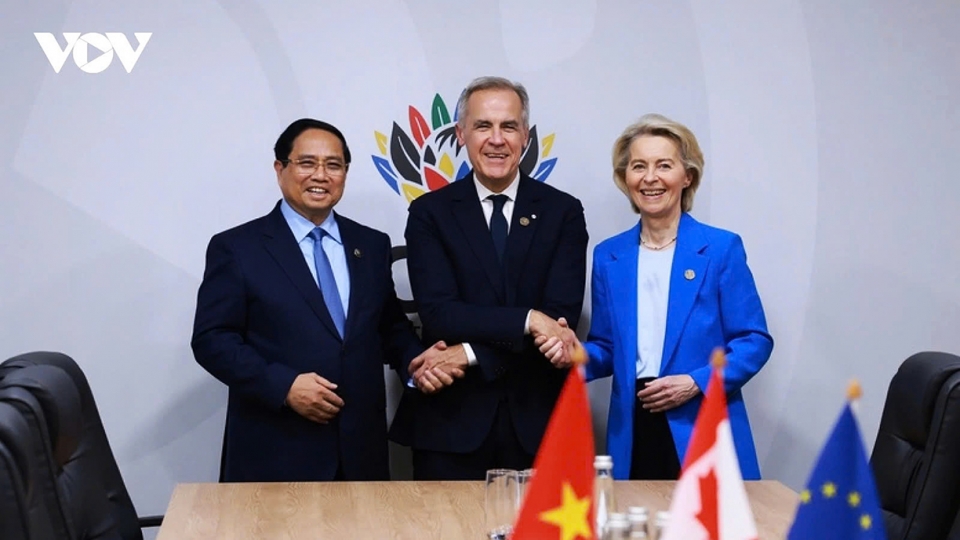
Vietnam sets CPTPP–EU cooperation as priority for 2026 CPTPP Chairmanship
VOV.VN - Vietnam will assume the CPTPP Chairmanship in 2026 and has identified the promotion of cooperation between the Comprehensive and Progressive Agreement for Trans-Pacific Partnership (CPTPP) and the European Union (EU) as a key priority for its term.
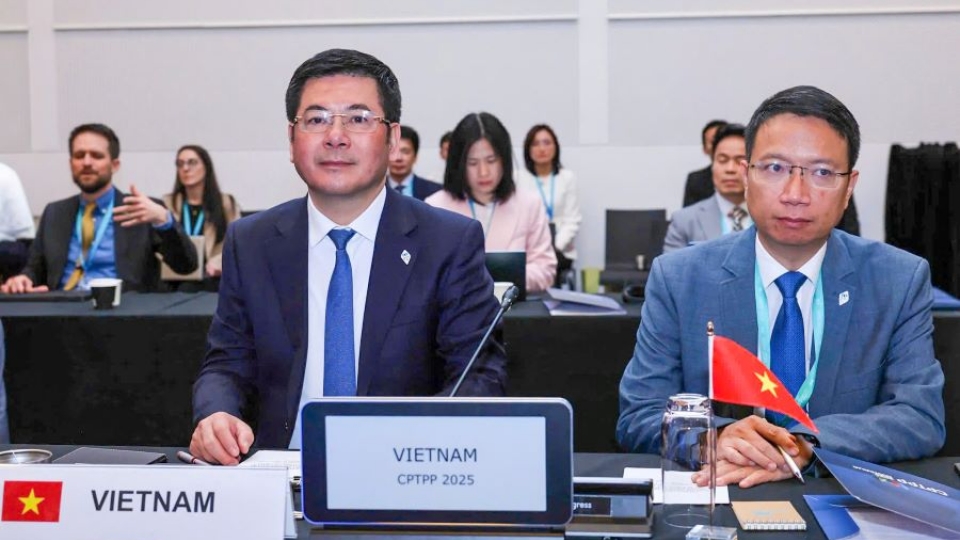
Vietnam proposes strengthening strategic cooperation at CPTPP–EU dialogue
VOV.VN - Vietnam’s Minister of Industry and Trade Nguyen Hong Dien put forward several strategic proposals to enhance trade cooperation, improve competitiveness, and support businesses in the region, at a CPTPP-EU Trade and Investment Dialogue held in Melbourne on November 20.