Coffee exports bring back US$430 million in first half of January

VOV.VN - Vietnam exported more than 89,000 tonnes of coffee during the first half of January, generating US$433.3 million, up 20.6% in volume and up 8.6% in value year on year, according to preliminary data from Vietnam Customs.
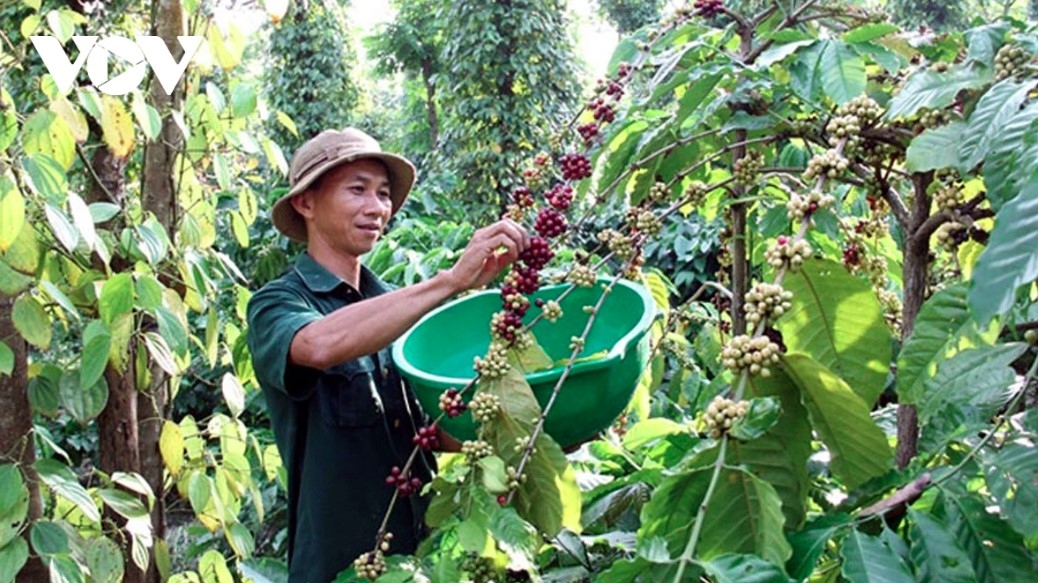
As a result, coffee has surpassed seafood exports, which totaled US$417 million, to become the second highest-value agricultural export, trailing only timber and wood products at US$657 million.
Last year, coffee exports surged to a record US$8.92 billion, marking a sharp year-on-year increase of 58.8%. This strong performance propelled coffee into the top three highest-value agricultural export items, only behind seafood, timber and wood products.
During the 2024–2025 crop year, Vietnam accounted for about 18% of global coffee exports but maintained its leading position in Robusta coffee, making up 43% of total global Robusta exports.
Meanwhile, the Central Highlands, Vietnam’s major coffee hub, is currently in peak harvest season. Green coffee beans are being purchased at around VND99,100 per kilogram. Although this is well below the peak price of VND135,400 per kilogram, farmers are still earning profits of VND50,000 - 60,000 per kilogram.
The Vietnam Coffee and Cocoa Association (VICOFA) estimates that coffee production in the 2025–2026 crop year will increase by 5-10% compared with the figure of 1.8 million tonnes in the 2024–2025 crop.
Beyond Vietnam, global coffee supply is also recovering as production rises in other major producing countries. The World Bank’s Commodity Market Outlook projects global coffee output to increase from 175.4 million bags in the 2024–2025 crop year to 179 million bags in the 2025–2026 harvest season.
Against this backdrop, the global coffee market is transitioning from sharp price increases to a phase of adjustment and rebalancing. However, VICOFA notes that prices remain influenced by climate change, rising production costs, tariffs, and stricter supply-chain transparency requirements.
More importantly, global coffee consumption continues to grow, particularly in the premium and specialty segments. Therefore, while coffee prices may decline in 2026, they are unlikely to return to previous lows.
The World Bank forecasts that Arabica prices will fall by 13% in 2026 and an additional 5% in 2027 due to production recovery in Colombia. Robusta prices are also expected to ease, though more gradually, declining by around 2% per year.
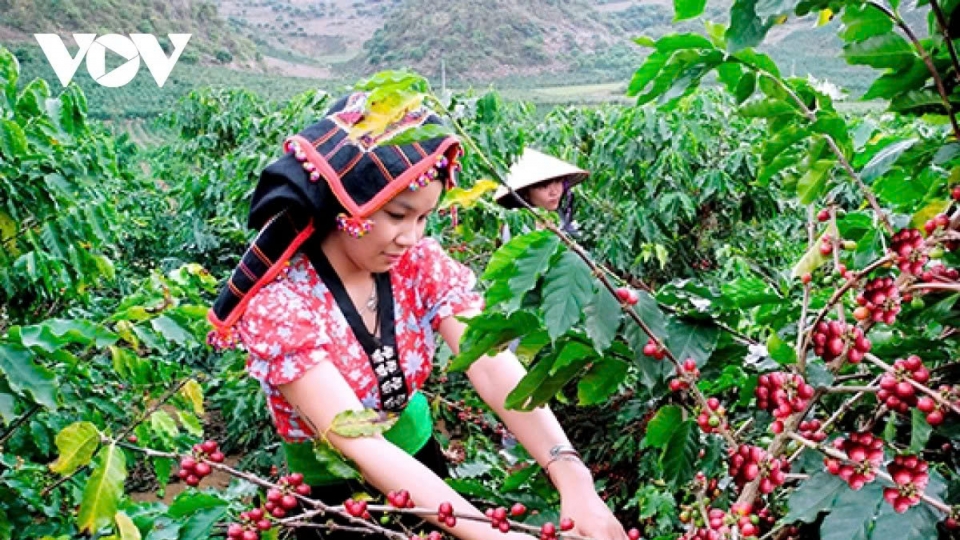
Coffee exports hit record US$8.4 billion in 2024–2025 crop year
VOV.VN - Vietnam exported more than 1.5 million tonnes of coffee worth over US$8.4 billion in the 2024–2025 crop year, setting a new record as both volume and value surged amid peak coffee prices.