An Giang tightens IUU control ahead of EC's fifth inspection

In preparation for the fifth inspection by the European Commission (EC), An Giang is stepping up efforts to address shortcomings in combating illegal, unreported and unregulated (IUU) fishing, thereby contributing to nationwide attempts to have the EC’s “yellow card” warning on Vietnamese seafood exports lifted.
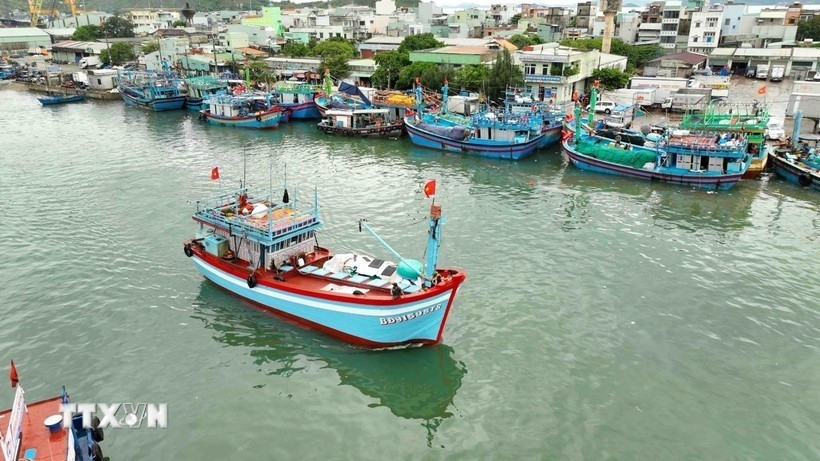
Vice Chairman of the provincial People’s Committee Ngo Cong Thuc described the upcoming inspection as an urgent and top-priority task. Authorities from provincial to grassroots levels have mobilised all available resources to implement comprehensive and decisive measures to resolve outstanding problems in IUU prevention and control, he said.
An Giang has identified five key groups of issues in line with the EC’s recommendations: improving the legal framework; strengthening fleet management; enhancing monitoring, control and surveillance; ensuring traceability of seafood products; and enforcing sanctions against violations. All related dossiers and data must be completed and fully aligned before March 9.
The objective, Thuc stressed, is not only to meet the EC's requirements and help remove the “yellow card”, but also to build a responsible and sustainable fisheries sector.
The province has set up 10 task forces to conduct inspections of IUU prevention efforts across localities, focusing on preventing any “three Nos” boats that lack proper registration certificates, fishing licences and inspection certifications.
Director of the provincial Department of Agriculture and Environment Le Huu Toan said authorities are conducting a comprehensive review and classification of all fishing vessels. Qualified vessels are granted licences and requested to display registration numbers properly, while those failing to meet conditions are placed at concentrated anchorage areas for strict management.
Commune- and ward-level authorities must be able to identify the location of each vessel upon request from the EC's inspection delegation, he said, adding that local leaders will be held accountable for violations arising from lax oversight.
The province is also deploying a digital management system for fishing vessels and fishermen on the VNeID platform integrated with the national population database. The Fishing Port Management Board and the Border Guard Command carry out daily cross-checks to ensure port departure records match official procedures.
Crucial political task
Colonel Doan Dinh Tranh, deputy political commissar of the provincial Border Guard Command, said combating IUU fishing is a crucial political task to ensure sustainable fisheries development. Border guards strictly verify documentation and equipment before allowing vessels to leave port, ensure vessel monitoring systems (VMS) remain connected to the national fisheries surveillance system, and enforce compliance with fishing logbook regulations.
He further stated that investigations and handling of IUU violations have been accelerated, alongside legal guidance for offending vessel owners and fishermen. From March 9 - 20, border guard and fisheries surveillance forces will intensify patrols to prevent unqualified vessels from operating at sea.
A peak communication campaign from March 1 - 25 will disseminate continuous warning messages to fishermen via mobile phones and display bilingual (Vietnamese–English) visual materials at border guard stations and fishing ports.
After nearly a decade of sustained efforts, An Giang has completed all 19 tasks assigned by the Prime Minister to combat IUU fishing. By late February, the province had 10,879 registered vessels, with all eligible vessels updated to the national VNFishbase database and equipped with VMS devices. More than 800 unqualified vessels have been barred from going to sea, and 411 “missing” vessels publicly listed for deregistration.
Digital transformation has also advanced with the rollout of an electronic catch documentation and traceability (eCDT) system, under which all vessels now complete entry, exit and seafood certification procedures, enhancing transparency and traceability in the fisheries sector.

Ho Chi Minh City steps up anti-IUU fishing efforts ahead of EC inspection
As a delegation from the European Commission (EC) is set to visit Vietnam to assess efforts against illegal, unreported and unregulated (IUU) fishing, HCM City is accelerating efforts to complete fleet management and compile dossiers and data in a bid to help remove the EC’s “yellow card” on Vietnamese seafood exports.