Agro-forestry-fishery exports poised to hit record high in 2025

Despite global economic uncertainties, Vietnam’s agro-forestry-fishery exports are set to hit a record of nearly US$70 billion in 2025, highlighting a decisive shift from volume-based growth to value-driven, higher-quality, and more resilient production across key export sectors.
According to Deputy Minister of Agriculture and Environment Phung Duc Tien, agro-forestry-aquatic exports totaled US$64.01 billion in the first 11 months of 2025.
If performance in the final month matches that of recent months, the figure could approach US$70 billion, far exceeding the US$65-billion target set for the year. This would mark not only a new record, but also see multiple product groups simultaneously setting all-time highs.
In 2025, strong growth was recorded across several key export commodities, including coffee, pepper, seafood, fruits and vegetables, and forestry products. Among them, coffee stood out with its export value breaking through US$8 billion for the first time, despite output of only about 1.5 million tonnes.
The average export price of coffee in 2025 surged by around 40% compared with 2024, reflecting a clear shift from volume-driven growth to quality- and value-based expansion, while reinforcing Vietnam’s position as one of the world’s key coffee supply hubs, Tien said.
The structure of coffee exports has also shifted toward higher value-added products, laying a more stable foundation for the industry and reflecting a strategy to move deeper into the value chain and enhance international competitiveness.
In major producing regions such as Dak Lak, Gia Lai, Lam Dong and Quang Ngai, smart coffee farming models are being rolled out to better productivity, quality and climate resilience. Farmers are shifting from experience-based practices to science-driven processes, combined with application of digital technologies for monitoring and original traceability, in response to increasingly stringent market requirements.
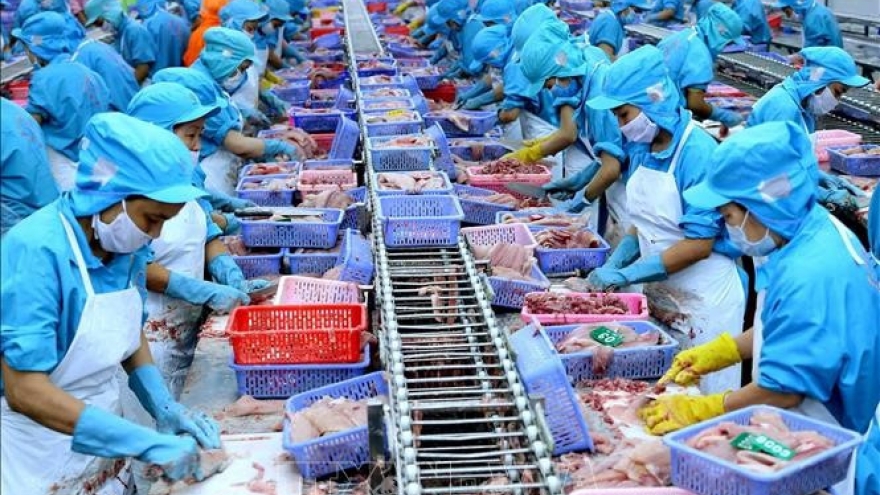
In the seafood sector, businesses capitalised on opportunities to accelerate shipments ahead of the US’s impose of new seafood import regulations and before final rulings on anti-dumping cases involving shrimp. In November 2025 alone, the country earned nearly US$990 million from exporting aquatic products, up 6.6% year-on-year.
The Vietnam Association of Seafood Exporters and Producers (VASEP) projects that aquatic product exports in 2025 will total around US$11.2–11.3 billion, marking a record high.
Notably, shrimp exports are expected to surpass US$4.6 billion, setting a new record; while tra fish exports are likely to exceed US$2.1 billion, driven by recovering demand in Asia; and tuna exports are predicted to top US$900 million, approaching the US$1 billion mark.
According to Le Hang, deputy general secretary of VASEP, the positive results of 2025 have helped the seafood sector further strengthen its position in major markets.
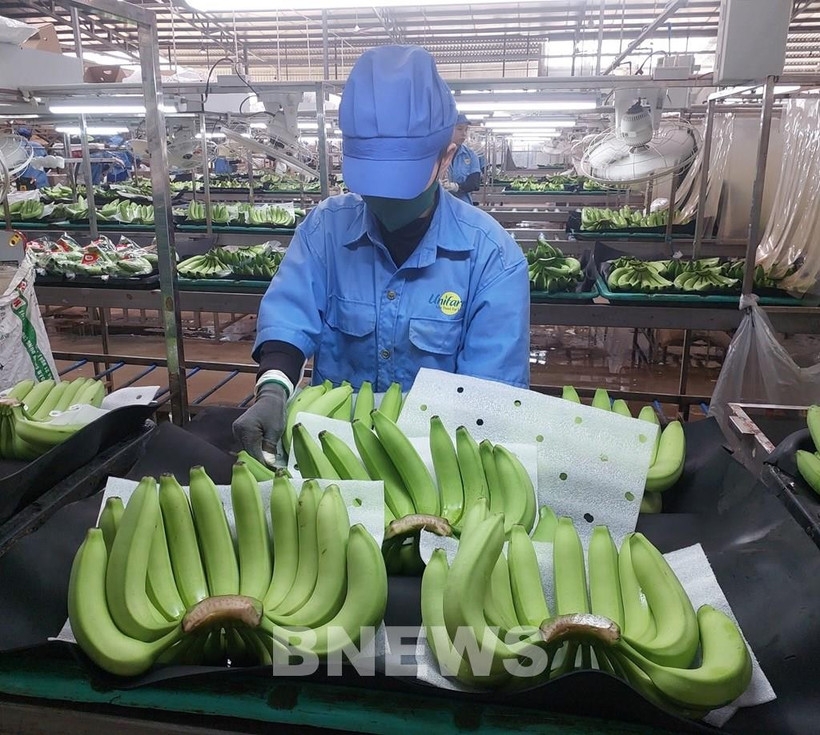
The fruit and vegetable sector is set to hit a record, with exports projected at around US$8.5 billion in 2025, far exceeding the US$5 billion target. Durian remains the “star” of the industry, seeing strong growth since official exports to China began, bringing significant income to farmers and businesses.
Dang Phuc Nguyen, general secretary of the Vietnam Fruit and Vegetable Association (VinaFruit), said fruit and vegetable exports faced difficulties in early 2025 due to China’s technical barriers on durian and the impact of US tariff policies. However, thanks to the government’s flexible measures and the adaptive efforts of businesses and farmers, fruit and vegetable exports are set to surpass US$8.5 billion for the first time. Nguyen expects exports to continue rising in 2026, targeting US$10 billion.
These results stem from market-opening policies and trade integration. In 2025, Vietnam and China signed five protocols for fruits. Huynh Tan Dat, Director of the Department of Crop Production and Plant Protection, emphasised that official exports of farm produce help farmers and the industry adopt proper practices for quarantine, food safety, and traceability.
Vietnam’s forestry sector aims to rake in US$25 billion in exports by 2030 through boosting competitiveness, building a national wood brand, and diversifying markets, products and distribution channels.
Nguyen Quoc Khanh, chairman of the Vietnam Timber and Forest Product Association, stressed the need for a self-reliant supply chain, investment in green technology and production, and workforce training, with the wood brand built on fout pillars of sustainability, quality, flexibility, and competitiveness, supported by transparent and standardised data system.
According to the Ministry of Agriculture and Environment, the sector will continue to promote domestic and export markets, proactively adapt to new tariff policies through measures on market development, science and technology, economic diplomacy, and supply chain linkages. Attention will be paid to supporting businesses in market access, trade promotion, and promoting exports.
Vietnam’s agricultural exports move beyond low-cost competition
VOV.VN - Vietnam’s fruit and vegetable industry is facing mounting pressure to restructure amid global market uncertainties, rising competition, and stricter import standards, according to the Vietnam Fruit and Vegetable Association (Vinafruit).