


Tran Dynasty artefacts unearthed during house construction in Ninh Binh

A group of household artefacts dating back to the Tran Dynasty (1225–1400) has been discovered during house construction at the Cua Bac 2 resettlement area in Ninh Nhat 3 residential quarter, Hoa Lu ward, Ninh Binh province, the provincial Department of Culture and Sports announced on October 13.
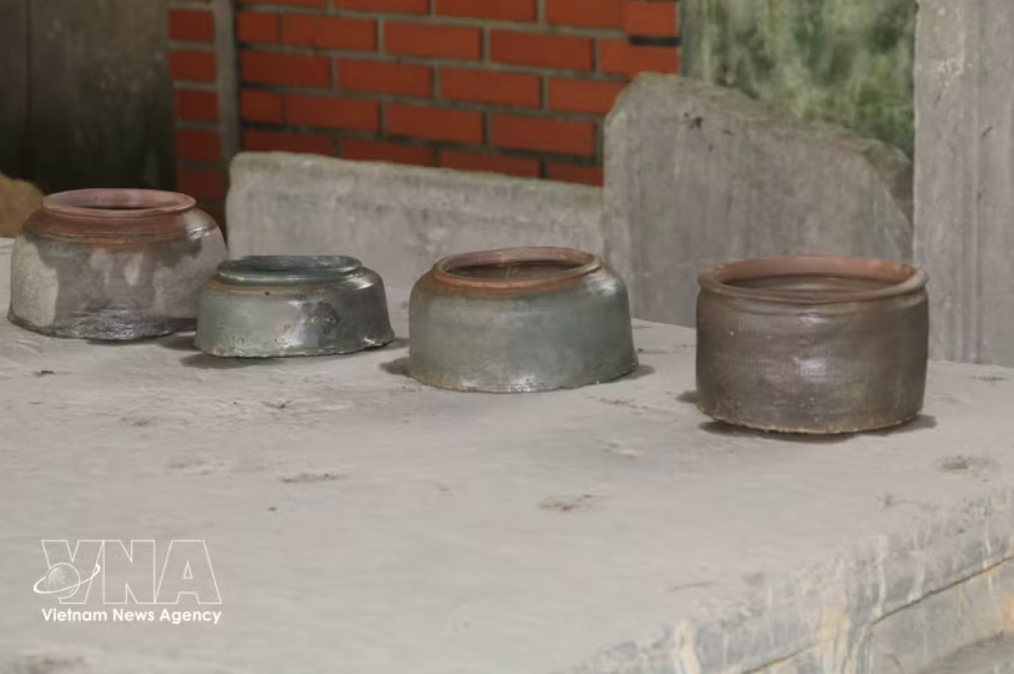
On October 11, the family of Do Van San discovered several earthenware jars stacked underground at a depth of around 30cm while digging to inspect the soil for house foundations. The family voluntarily suspended construction, carried out preliminary cleaning and promptly reported the discovery to local authorities and relevant agencies.
Following the report, the department instructed the provincial museum and its cultural heritage division to send specialists to the site. They recorded and took custody of six earthenware jars and several fragments. On October 12, the museum expanded its survey of the surrounding area.
Preliminary findings showed that the jars had been deliberately arranged in two East–West rows, stacked in three staggered layers across an area measuring 2.2 metres long and 0.45–0.5 metres wide. The artefacts comprise two main types: jars with straight sides and jars with rounded shoulders, made from fine stoneware fired at high temperatures.
The jars measure 14–20cm in mouth diameter, 19–21cm in base diameter and 7–11cm in height. Some feature incised lines and combed patterns. Only soil was found inside the jars, with no other artefacts or architectural remains identified.
Experts initially assessed that the jars were household items used by people during the Tran Dynasty and may have been buried or stored. As the artefacts were found above natural soil and no associated archaeological remains were detected, the site does not currently meet the conditions for a proposal for an emergency archaeological excavation.
Notably, the discovery site is relatively close to major historical sites from the Tran Dynasty, including A Nau Pagoda, around 2km away, and Duc Thanh Ca Temple, approximately 1km away.
Vu Thanh Lich, Deputy Director of the provincial Department of Culture and Sports, said the department has proposed that the provincial People’s Committee allow the family to resume house construction at the resettlement area to ensure progress on the residential project while safeguarding cultural heritage.
The department has also assigned the provincial museum to closely monitor construction and prepare to coordinate further action in accordance with the Law on Cultural Heritage if additional artefacts are discovered. It will also propose an appropriate commendation for San’s family for protecting the artefacts and promptly handing them over to the State.
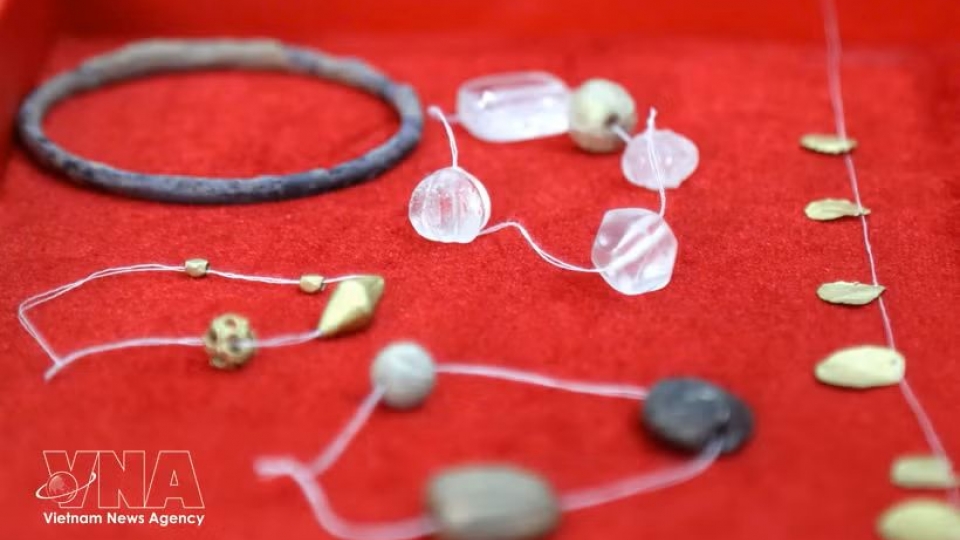
Archaeologists uncover artefacts in two 1,500-year-old tombs
Two brick tombs dating from the 4th to 6th centuries have been uncovered during a recent emergency excavation at the Ru But archaeological site in Kim Lien commune, Nghe An province.

