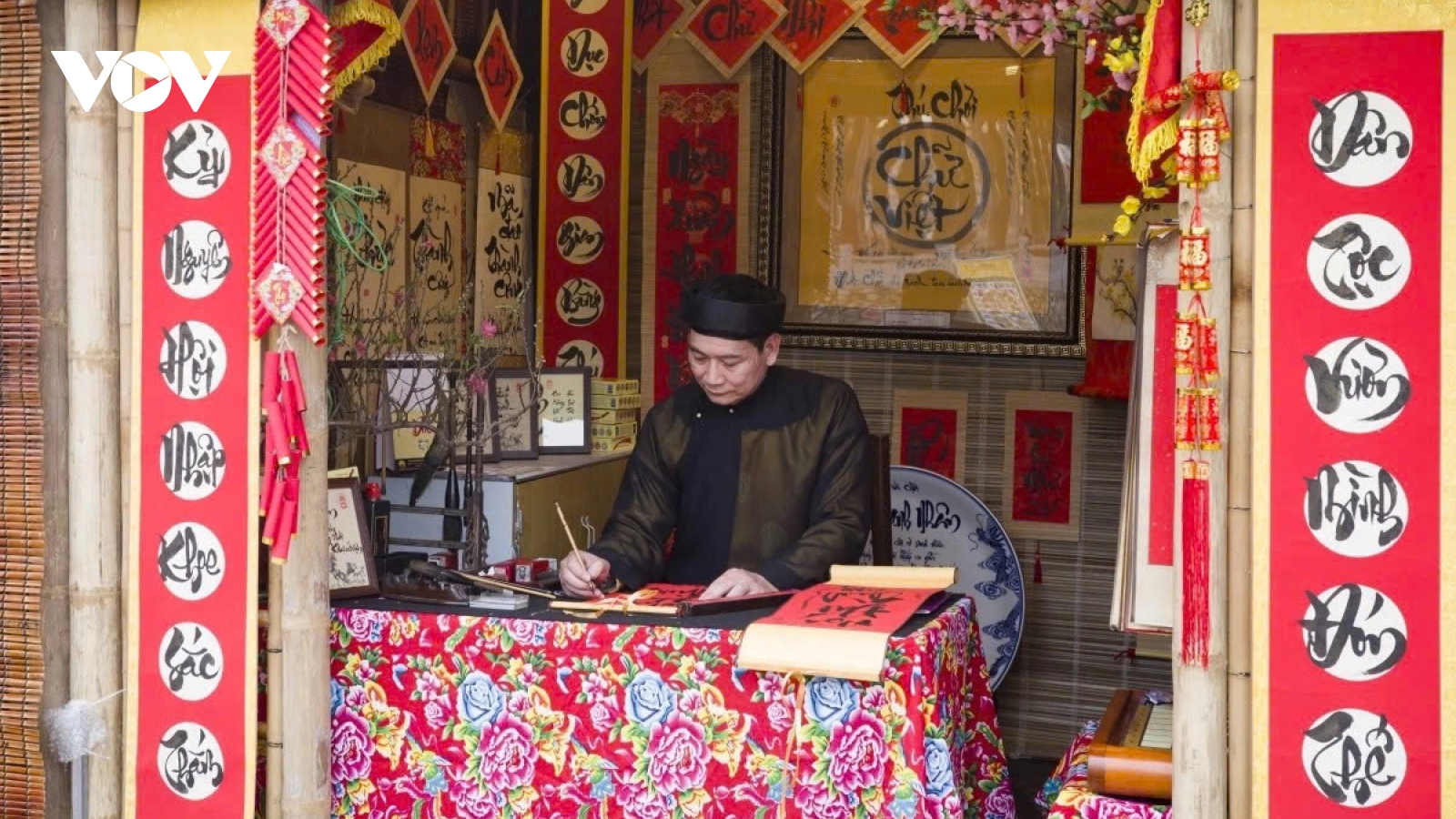
Seeking calligraphy at Lunar New Year: Spring aspirations

VOV.VN - For generations, seeking calligraphy at Lunar New Year (Tet) has been a cherished Vietnamese custom, through which people express aspirations for the year ahead and reaffirm respect for learning and moral values passed down across generations.
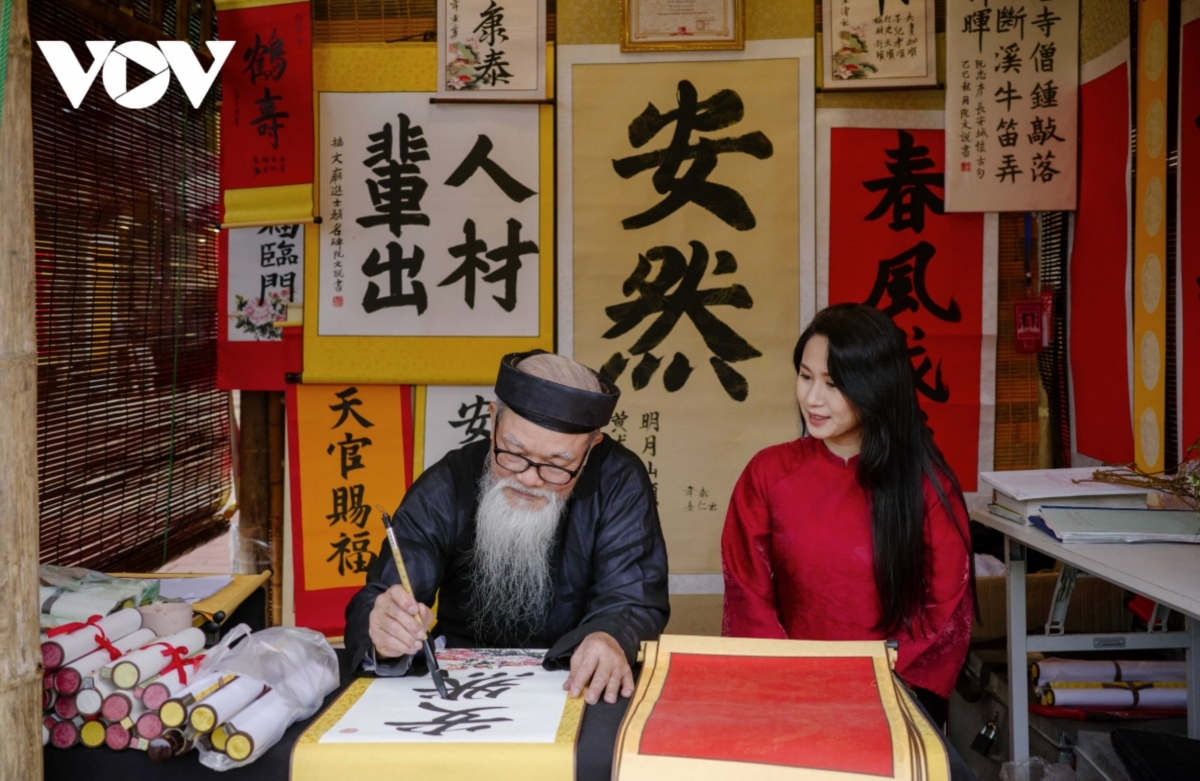
As Spring approaches and nature shifts after a full cycle of time, people tend to return to quieter spiritual values, seeking peace and hope at the beginning of a new year. Within the flow of Vietnamese traditional culture, the custom of seeking calligraphy at the start of the new year is not merely a refined practice but a meaningful symbol, formed from a long-standing reverence for learning, moral values, and the aspiration toward goodness that has endured across generations.
Symbol of a tradition honouring knowledge
At its core, the practice of seeking calligraphy reflects the Vietnamese tradition of valuing learning in cultural life. Since ancient times, written characters have not only served as a means of communication but also as a measure of education, character, and moral standing. Learning has long been regarded as a way to cultivate character and lay a foundation for society.
For that reason, at the beginning of each spring, visiting those well versed in letters to request a calligraphic character carries profound symbolic meaning. The act demonstrates respect for knowledge, while conveying the wish to nurture enduring spiritual values for the new year and for one’s broader journey through life.
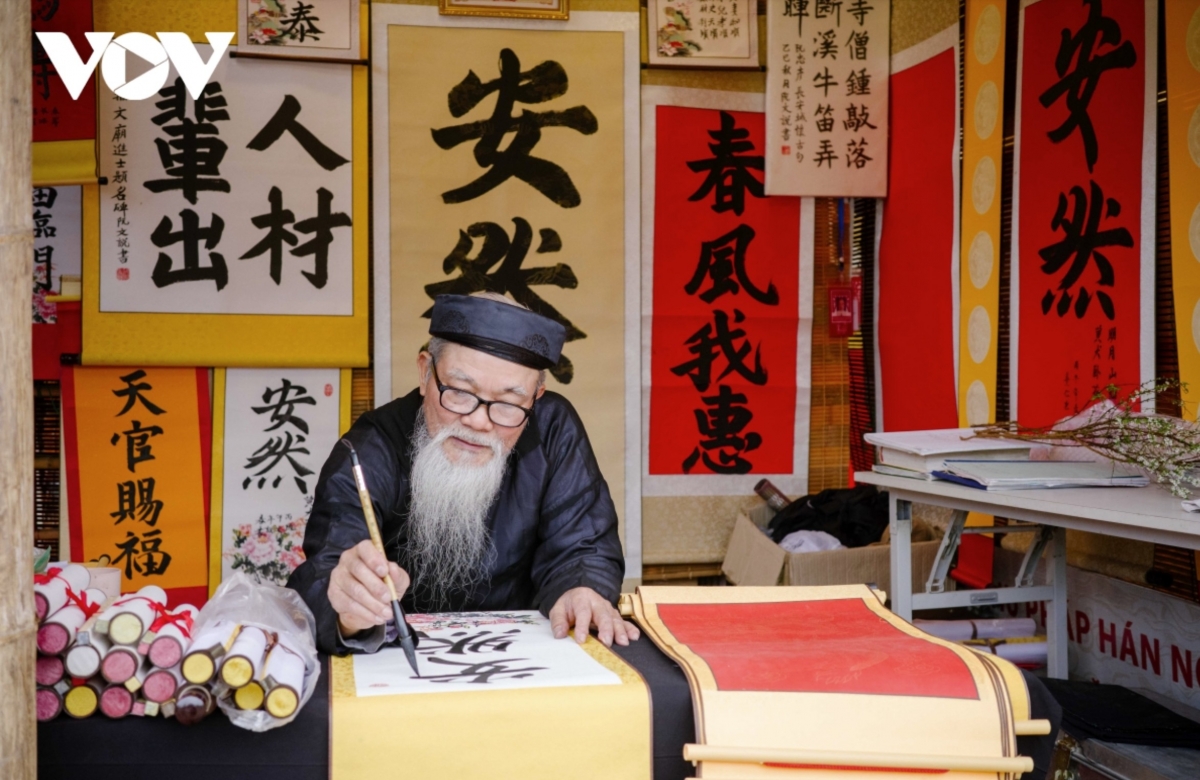
The appeal of this custom also lies in its richly symbolic cultural setting. The red hue of the paper evokes good fortune and auspicious beginnings, while the deep tone of black ink seems to preserve the weight of time and accumulated wisdom. The image of the calligrapher quietly seated by the inkstone, each deliberate stroke appearing in calm succession, is not merely an act of artistic creation but a cultural ritual imbued with reverence.
In that moment, the calligrapher does more than write characters on paper. What is conveyed is the spirit of learning and life philosophies distilled from a long literary tradition. The recipient, therefore, does not simply receive an artwork, but also a spiritual value, a blessing, and a reminder for the path ahead.
Characters as messages of human philosophy
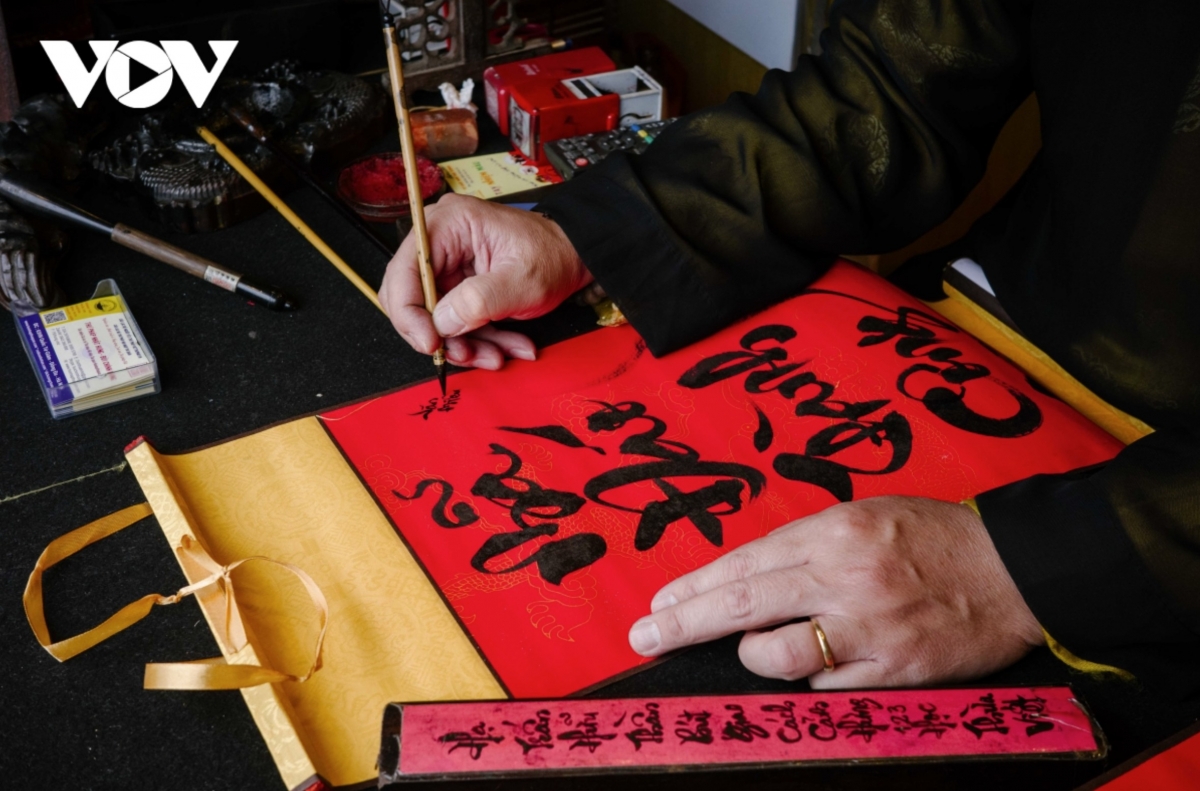
From a spiritual perspective, the custom shows the desire to orient life toward positive values. Characters such as “Phuc” (Blessing), “Loc” (Prosperity), “Tho” (Longevity), and “An” (Peace) express aspirations for a life of abundance and calm. Others, including “Tri” (Wisdom), “Nhan” (Forbearance), “Tam” (Integrity), and “Hieu” (Filial piety), carry life philosophies, reminding individuals to preserve character and fulfil responsibilities to family and society.
Each character thus becomes a moral message and a cultural symbol. When displayed in the home, calligraphy enhances the festive atmosphere of Tet while serving as a spiritual anchor that encourages reflection and guides conduct throughout the year.
The practice also holds particular relevance in contemporary life. As society develops rapidly and daily rhythms grow increasingly hurried, people increasingly seek moments of stillness to balance their inner lives. Standing before the calligrapher, following each gentle stroke of the brush, and sensing the fresh scent of ink in the spring air allows individuals to slow down and listen to themselves.
The interaction between the calligrapher and the seeker is not simply an exchange of art, but a form of cultural connection through which traditional values are passed on in a natural and enduring manner.
A bridge preserving the heritage of calligraphy
From the perspective of cultural preservation, the custom contributes to sustaining the art of calligraphy, a discipline that combines technique, emotion, and Eastern philosophy. Calligraphy embodies the visual beauty of written form alongside the historical depth, cultural memory, and worldview of the nation.
Maintaining the practice of seeking calligraphy has enabled this art form to be transmitted across generations, creating a bridge between past and present. Notably, growing interest among younger people indicates that the tradition has not faded, but is being continued through new approaches aligned with modern life.
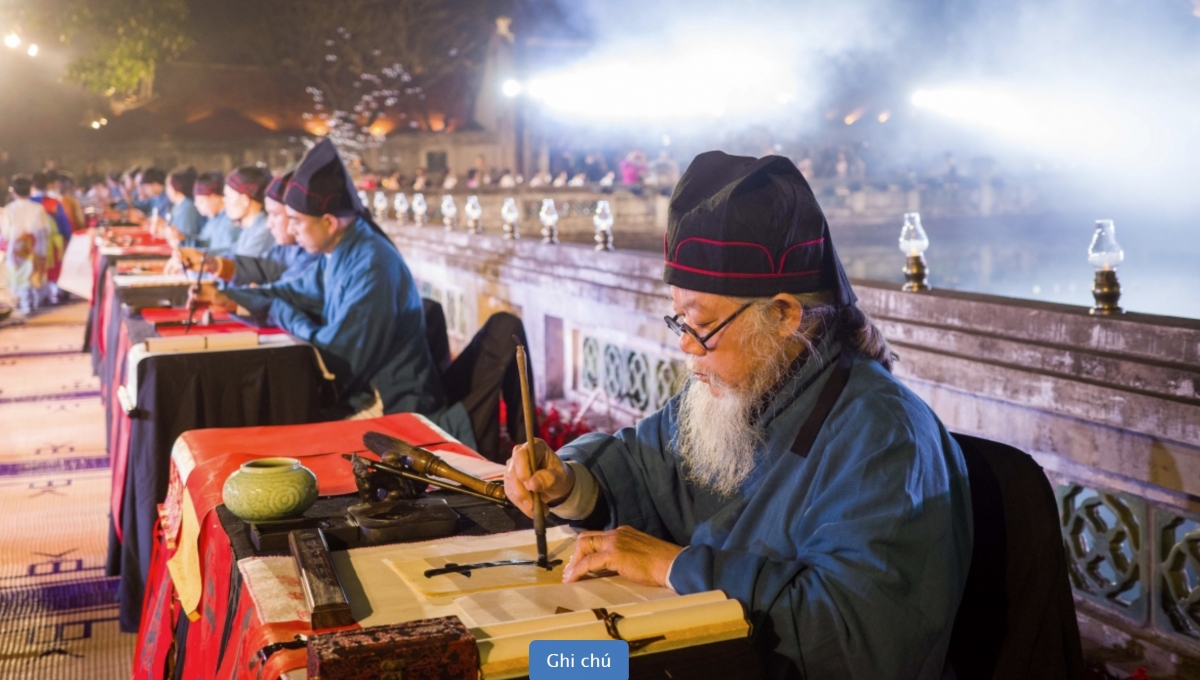
Alongside its positive values, the custom also raises the need to preserve its original meaning. If reduced to mere decoration or driven by commercial trends, it risks losing its inherent cultural depth. Enhancing artistic quality, respecting spiritual significance, and maintaining its educational role therefore remain essential for the practice to retain its place in social life.
When spring blooms in every character
Viewed more broadly, seeking calligraphy at the start of the year is not only a cultural activity but a symbol of a life philosophy that values knowledge, moral conduct, and personal refinement. Each red sheet hung in the home is not simply a Tet ornament, but a reminder of the responsibility to preserve tradition and nurture the inner self.
Amid the unceasing flow of time, the calligraphic strokes of early spring quietly safeguard the spirit of the Vietnamese New Year. These soft characters, seemingly delicate on paper, carry the strength to preserve cultural identity and spiritual life. From them, spring is not only present in nature, but also blossoms in the human soul, becoming a symbol of faith, hope, and the enduring humanistic values of Vietnamese culture.
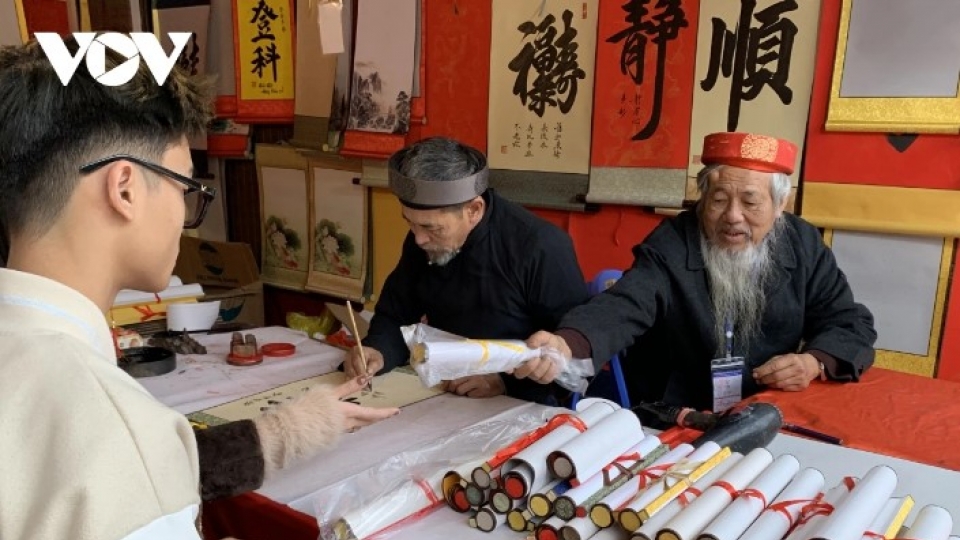
Calligraphy festival to run during Tet holiday in Hanoi
VOV.VN - The 2025 spring calligraphy festival, which honours the local tradition of writing, is scheduled to take place from January 23 to February 9 inside the Temple of Literature in Hanoi to celebrate the Lunar New Year 2025 (Tet).
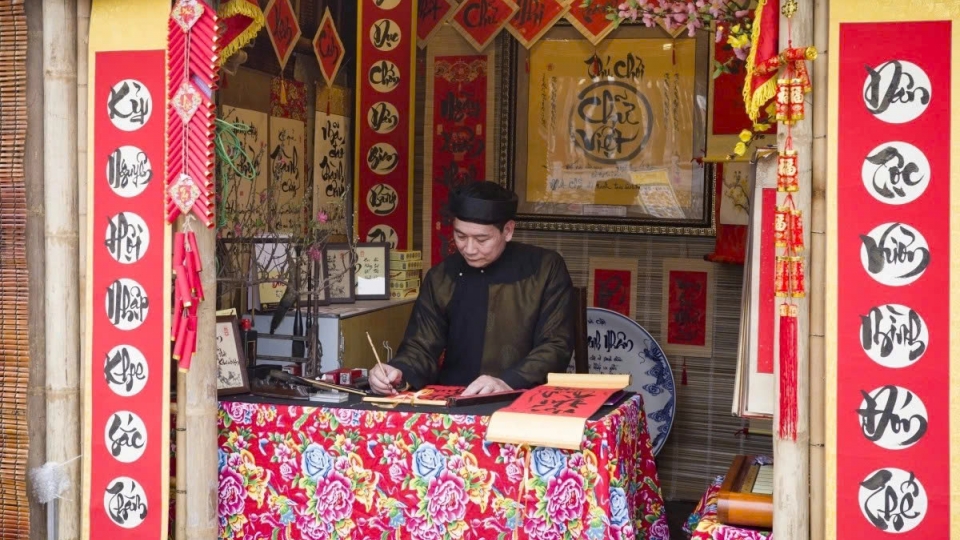
Spring calligraphy festival marks Tet 2026 at Temple of Literature
VOV.VN - The annual spring calligraphy festival will return to Ho Van area, within the Van Mieu - Quoc Tu Giam Special National Relic, Hanoi, on February 11 to kick-start a series of cultural activities in celebration of the Lunar New Year of the Horse 2026.