RoK to invest US$250 million into K-Vietnam Valley Zone project

VOV.VN - The Republic of Korea (Ro)K) will invest KRW347.6 billion (about US$250 million) to partly develop the K-Vietnam Valley Zone project in Bonghwa County, using the historical legacy of Prince Ly Long Tuong and the Hwasan Lee clan to promote tourism, regional development and cultural exchanges with Vietnam.
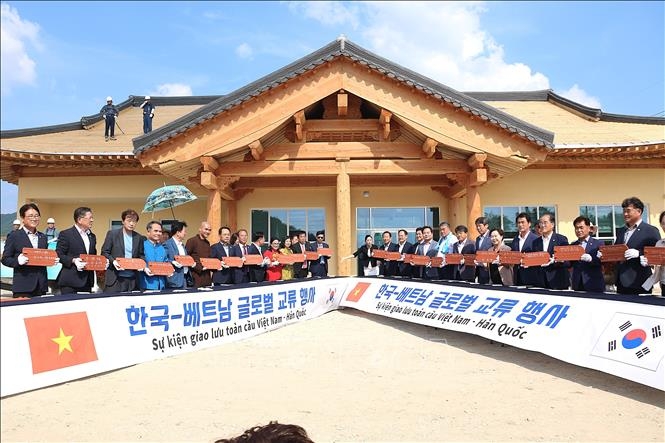
The Ministry of SMEs and Startups on August 6 designated Bonghwa County in North Gyeongsang Province as a Specialised Development Zone under the country's regional development programme.
Under the 2026-2030 plan, local authorities will implement eight projects with a combined investment of KRW347.6 billion, including the development of K-Vietnam Valley Zone, the Changpyeong Reservoir tourism area, smart agriculture projects and wellness tourism facilities.
To accelerate progress, the project will benefit from special mechanisms regarding immigration, land-use planning, and housing regulations, aimed at facilitating infrastructure development and attracting investment.
A distinctive feature of the project is its focus on the historical legacy of Prince Ly Long Tuong, later known in Korea as Yi Yong-sang. He was a member of Vietnam's Ly Dynasty who settled on the Korean Peninsula in the 13th century, and his descendants of the Hwasan Lee clan.
According to The Asia Business Daily website, the newly designated 'Bonghwa K-Vietnam Valley Zone' is a project that leverages the 800-year history of exchanges between the RoK and Vietnam.
Bonghwa is home to several historical sites associated with the family, including Chunghyodang, the clan's ancestral shrine, which is regarded as an enduring symbol of the historical ties between Vietnam and the RoK.
The RoK’s officials expected that the project would contribute to local economic development while fostering cultural and historical exchanges between the RoK and Vietnam.
K-Vietnam Valley Zone is expected not only to boost the local economy and tourism but also to preserve the shared historical and cultural heritage of the two countries, strengthen people-to-people exchanges and deepen bilateral friendship.
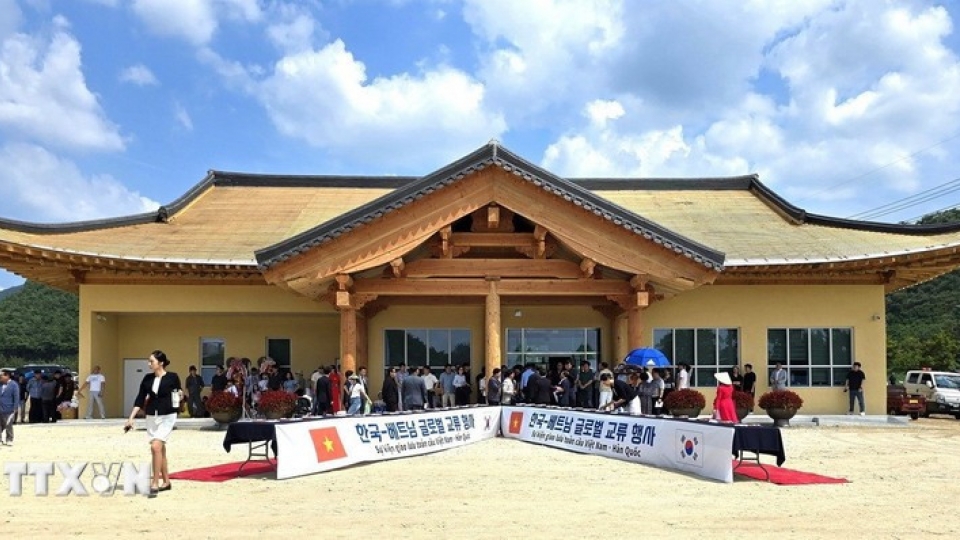
RoK locality hastens Vietnam Valley project
Bonghwa county in the Republic of Korea’s North Gyeongsang province convened a public hearing on February 10 to gather feedback on a proposal to designate the planned K-Vietnam Valley, also known as Vietnam Village, as a Special Local Development Zone.