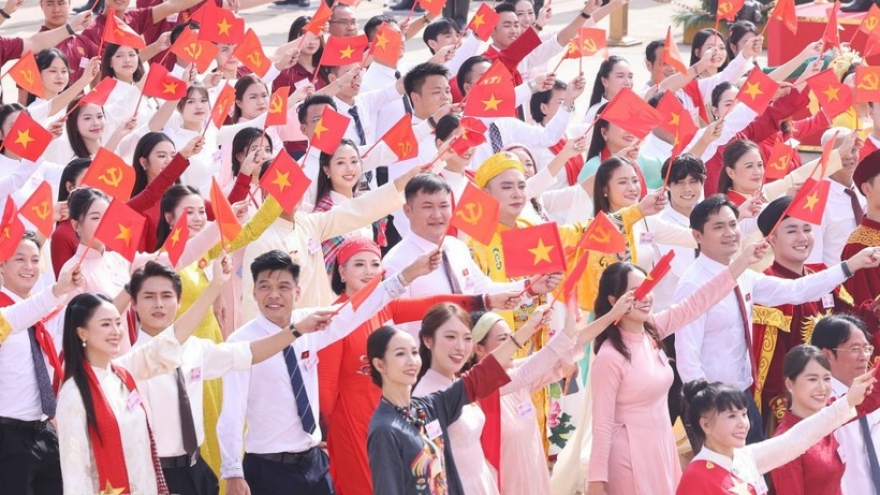
Resolution 80 seeks to embed social sciences knowledge in cultural life

Experts have outlined solutions to bring social sciences knowledge directly into the process of implementing Resolution No. 80-NQ/TW, issued by the Politburo on January 7, 2026, on the development of Vietnamese culture.
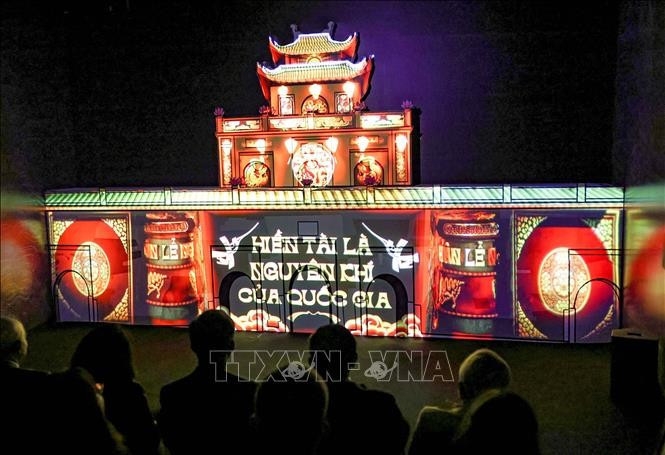
According to Assoc. Prof. Dr. Pham Minh Phuc, Editor-in-Chief of the Social Sciences Publishing House under the Vietnam Academy of Social Sciences, the issuance of Resolution 80 places renewed and pressing demands on innovation in publishing activities in the new period.
Each academic work should no longer be published solely as a single, linear publication, but instead be organised as a source of original knowledge that can be layered and disseminated to different audiences, ranging from researchers, policymakers and educators to the wider public interested in socio-cultural issues, Phuc told Vietnam News Agency reporters.
Studies on communities, ethnic groups, cultural heritage, beliefs, religion and family, if appropriately structured in terms of content, language and presentation and combined with digital technology, could become cultural products with long-term practical value for society, he noted.
Phuc stressed that implementing Resolution 80 in the field of social sciences publishing is the direct responsibility of the Social Sciences Publishing House. The overarching goal is to build a sustainable bridge between academic research and social life, and between the preservation of traditional values and cultural creativity in the context of ongoing digital transformation.
Meanwhile, Nguyen Thi Hue, a researcher at the Institute of Cultural Studies under the Vietnam Academy of Social Sciences, said the most fundamental and long-lasting significance of the resolution lies in its affirmation of culture as the central pillar of the national development strategy.
This is not merely an ideological orientation, but a strategic choice aimed at creating a solid spiritual foundation for the country’s development in the new period, she noted.
Hue added that defining culture as an “endogenous strength” reflects an important shift in the Party’s leadership thinking on cultural development, from viewing culture as a supporting field to recognising it as one of the key pillars of sustainable development.
She stressed that culture does not exist only within institutions or traditional spaces, but must first be expressed in development thinking, in the organisation of social life, and in the everyday behaviour of individuals. Embedding culture deeply across all aspects of life is essential for Resolution 80 to be implemented substantively, rather than remaining at the level of slogans or formality.
The researcher expressed confidence that if the resolution is implemented in a coordinated, consistent manner and closely linked to social life, Vietnamese culture will continue to be strengthened and nurtured, becoming a major spiritual resource contributing to the realisation of national development goals in the new phase.

Vietnamese culture makes its mark on global music map
Through impressive performances and innovative musical creations, many Vietnamese artists are steadily asserting the presence of traditional music on the world stage, opening new opportunities for cultural integration rooted in national identity.