Nearly 2,000-year-old tomb discovered in northern Vietnam

VOV.VN - A large ancient tomb dating back nearly 2,000 years has been discovered in Vietnam’s northern province of Quang Ninh, providing new evidence of early cultural and historical activity in the Bach Dang River estuary during the early Common Era.
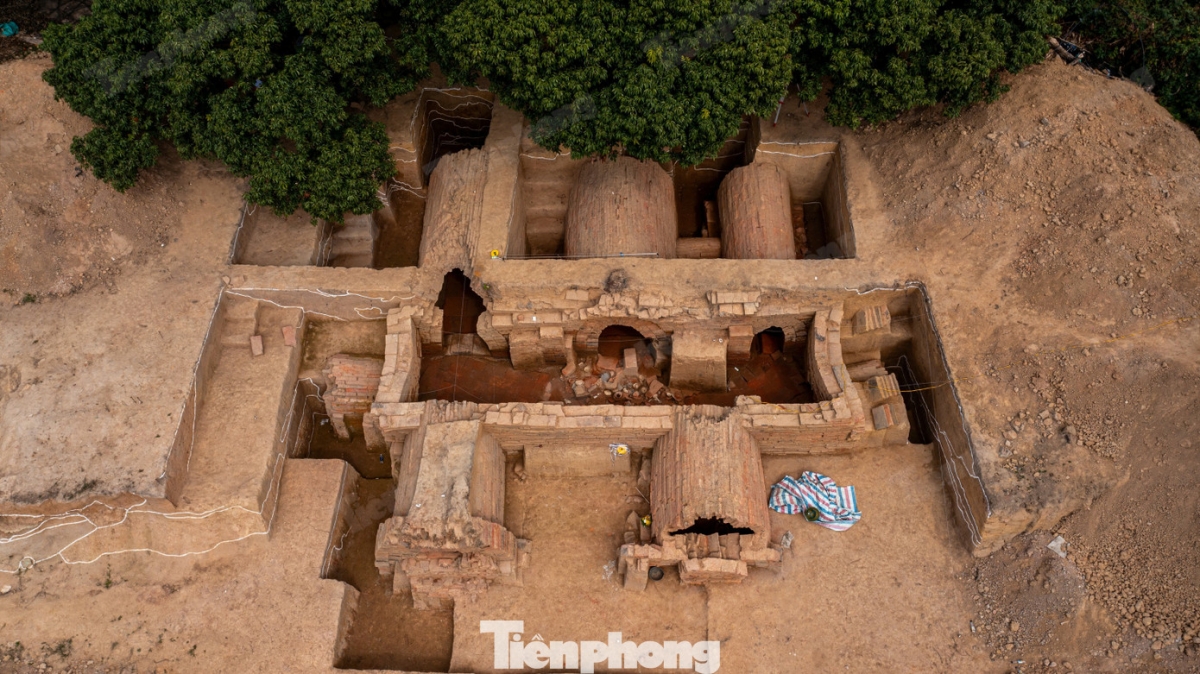
The tomb was uncovered accidentally while a local resident was levelling land in a garden in Chap Khe area, Vang Danh ward. The site covers an estimated area of around 150 square metres.
According to initial observations, the tomb lay beneath a mound of earth more than two metres high, on land that had long been used as a lychee orchard. When heavy machinery was used to reduce the height of the mound, ancient brick structures were exposed. Recognising the unusual features, the landowner promptly informed local authorities.
Following the report, authorities in Vang Danh ward quickly cordoned off the site to prevent damage or disturbance. The Quang Ninh Provincial Museum and Library then coordinated with an archaeological team led by Nguyen Van Anh, head of the History Faculty at the University of Social Sciences and Humanities under Vietnam National University, Hanoi, to conduct excavation, surveying and documentation from December 2025.
Preliminary excavation results indicate that the structure is a Chap Khe–type brick tomb, located adjacent to Chap Khe parish church. The tomb features a complex architectural structure, with multiple layers of carefully laid bricks, reflecting advanced construction techniques and burial practices of ancient inhabitants.
Artifacts recovered from the site fall into three main categories: architectural materials such as rectangular bricks and petal-shaped bricks; unglazed pottery including house models and cooking vessels; and glazed ceramics such as jars, vases and lamp stands.
Based on the tomb’s structural characteristics and decorative motifs on the artifacts, researchers have dated the burial to the first or second century AD, nearly 2,000 years ago.
Experts said similar brick tombs have been found widely across the Bach Dang River basin, including areas of Quang Ninh such as Quang Yen, Uong Bi and Dong Trieu, as well as neighbouring localities in former Thuy Nguyen district of Hai Phong city and former Kinh Mon district of former Hai Duong province.
The findings underscore the strategic importance of the Bach Dang River estuary as an early centre of settlement, cultural exchange and trade in northern Vietnam during the early Common Era, archaeologists said.
Based on the excavation results, researchers, the provincial Department of Culture, Sports and Tourism, and local authorities have agreed to continue in-depth studies of the tomb’s structure, scale and historical value.
Authorities also plan to compile a scientific dossier to propose official heritage designation, preserve the tomb in situ, and develop the area into an archaeological park for heritage education linked to local cultural and tourism development.
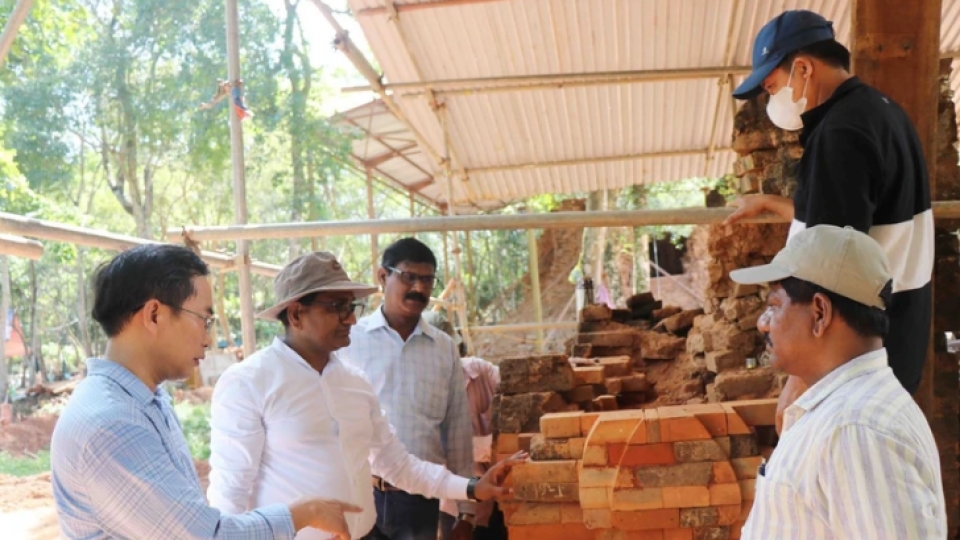
Novel discoveries found during excavations at My Son Temple Complex
Initial findings show that Tower Group L at the My Son Temple Complex, a special national monument in the central province of Quang Nam, features a structure and design significantly different not only from other tower groups at the site but also from other Cham temples and towers across Vietnam.