Music in step with the nation

VOV.VN - Vietnam has a rich tradition of folk music that, for centuries, has bound its people to their homeland and helped forge a spirit that contributed to defeating invading forces.
The legend of Saint Giong tells of a child raised on his mother’s lullabies who grew into a hero, rode an iron horse and wielded an iron staff against the enemy. When the staff broke, he uprooted bamboo to drive out the An invaders before bowing in gratitude to his mother from a mountaintop.
Carrying forward the nation’s patriotic tradition, President Ho Chi Minh affirmed shortly after independence in 1945 that in rebuilding the country four aspects must be given equal importance: politics, economics, culture and social affairs. In a meeting with artists and writers, he said: “Culture and the arts are also a front. You are soldiers on that front.”
Alongside artists in general, composers are proud to have followed that teaching since the 1930s. One example is the song Cung nhau di Hong binh (Marching Together as Red Soldiers):
“Cung nhau di Hong binh,
Dong tam ta deu buoc,
Ta quyet chi hy sinh…
Dong tam ta deu buoc,
Cho the gioi dai dong,
Tien len quan Hong!”
(“Together we march as Red soldiers,
United in every step,
Resolved to sacrifice…
United in every step,
For a world in common harmony,
Forward, Red troops!”)
A political programme was voiced through a march filled with fervour as early as 1930. It remains an enduring source of pride for composers. Since then, countless music awards have been presented nationwide.
One distinction is particularly significant: UNESCO has included Hoang Van in its list of world composers, meaning he stands on a par with composers from the classical to modern periods whose works are taught in music schools.
Musicians understand that a written musical work has two dimensions: horizontal and vertical. The horizontal dimension is melody, with lyrics added in vocal music; the vertical dimension comprises harmony and chord structures.
In many countries, particularly in Europe, these two dimensions are taught as a unified whole through textbooks on harmony and form. In Asia, including Vietnam, that level has not always been reached.
Hoang Van was an exception. In both vocal and instrumental works, he achieved unity between melody and harmony, creating a complete musical language, a contribution recognised by UNESCO.
I learned a great deal from Hoang Van. Beyond the completeness of his musical language, he had a gift for conveying emotion. In Bai ca xay dung (Song of Construction), which praises builders, he wrote in the closing lines: “Amid bomb smoke, beneath moonlight, through all four seasons we keep building. Joyful songs for us, joyful songs for you. For today, for tomorrow, for generations to come.”
In Quang Binh que ta oi (Oh Our Quang Binh), he asked gently: “If someone asks why our homeland has so many new roofs, it is because only after bitterness comes sweetness. If someone asks why our homeland’s rice fields are so green, remember the dark and hardship-filled days of the past…” Without grand rhetoric, the words are soft and restrained, yet they linger in the listener’s heart.
During wartime, the “front line” meant a place where life and death stood side by side. There were roads to the front, to factories and back to the countryside, yet all led toward the front line in shared determination to defeat the enemy.
Hoang Van wrote: “Roads to the factory, roads back to the countryside… Oh the roads we cherish… All roads lead to the front line.” His language bears a distinct Hoang Van imprint, earning admiration at home and abroad.
From ancient times to the present, music has accompanied the Vietnamese nation and will continue to do so.
As the country enters a new era, heart, intellect, strength and creativity must continue to be strengthened. At the same time, strong support from the State is essential, including additional modern performance venues such as the Ho Guom Opera House and more exchanges with leading international art troupes. These efforts aim to help Vietnamese literature and the arts in general, and Vietnamese music in particular, move forward with confidence in this new era of the nation’s rise.
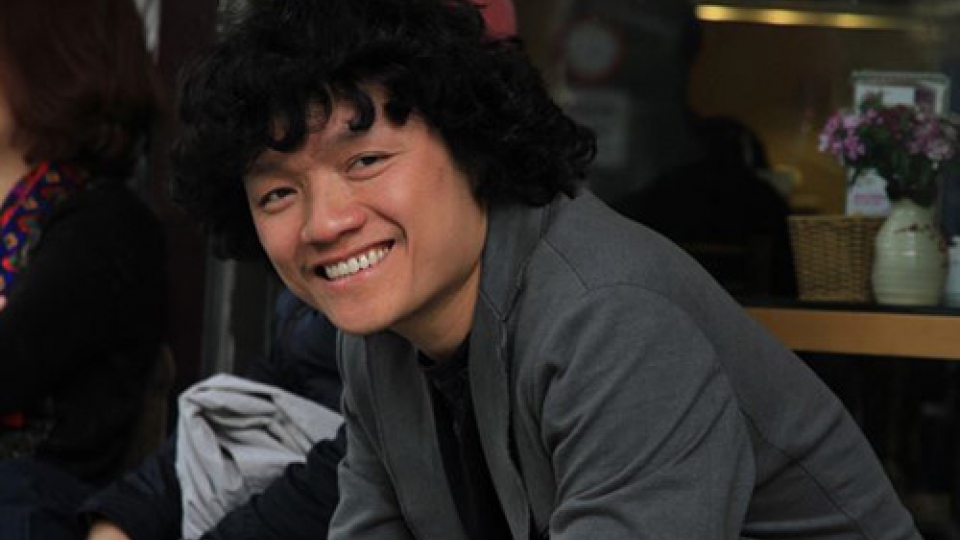
Ngo Hong Quang – the man behind fusion of contemporary and folk music
VOV.VN - A fusion concert featuring traditional music and beatboxing by artist Ngo Hong Quang took place at the French Cultural Center in Hanoi on the last day of June to debut his album “Nam Nhi” (Macho).