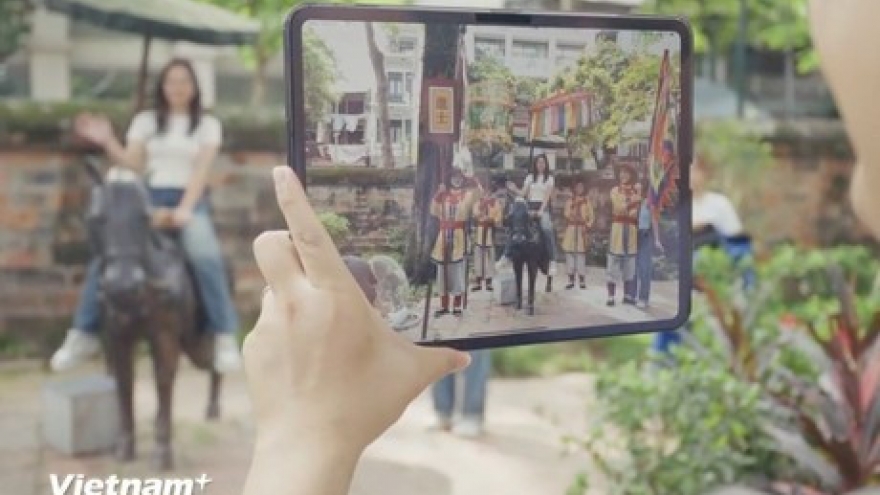
Hanoi launches digital heritage tourism trails

VOV.VN - The capital city of Hanoi has introduced four innovative digital heritage tourism trails, offering visitors interactive ways to explore the city’s tangible, intangible, and digital heritage.
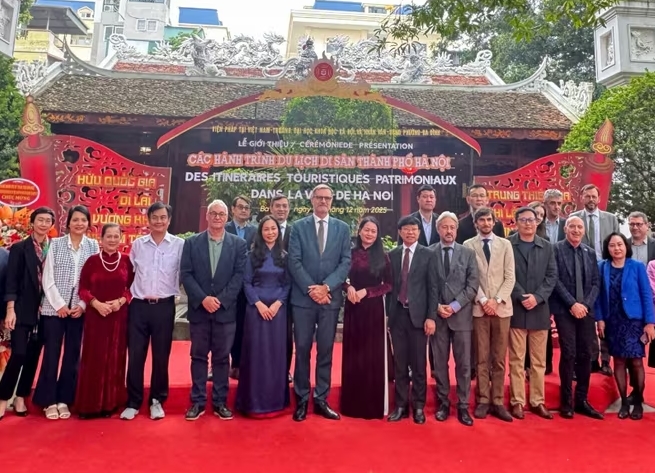
The initiative is part of the FEF-R Patrimoin project, funded by the French Ministry for Europe and Foreign Affairs and implemented in cooperation with the University of Social Sciences and Humanities (Vietnam National University, Hanoi), the French School of the Far East (EFEO), and the Agence Universitaire de la Francophonie (AUF).
It has been designed to make Hanoi’s rich cultural heritage more accessible to both residents and tourists through interactive maps, the H-Heritage mobile app, and QR code systems at key historical sites in the city centre.
Addressing the event, French Ambassador to Vietnam Olivier Brochet noted that Hanoi possesses an exceptionally rich heritage treasure, yet access to it, especially for younger generations, has long been neither convenient nor cohesive.
He explained that the project is meant not only for tourists but also for Hanoi residents themselves.
Residents and youth will now be able to experience the city’s history as they walk through streets, encounter ancient temples, French villas, or historic sites, with instant information about their era and significance, he said.
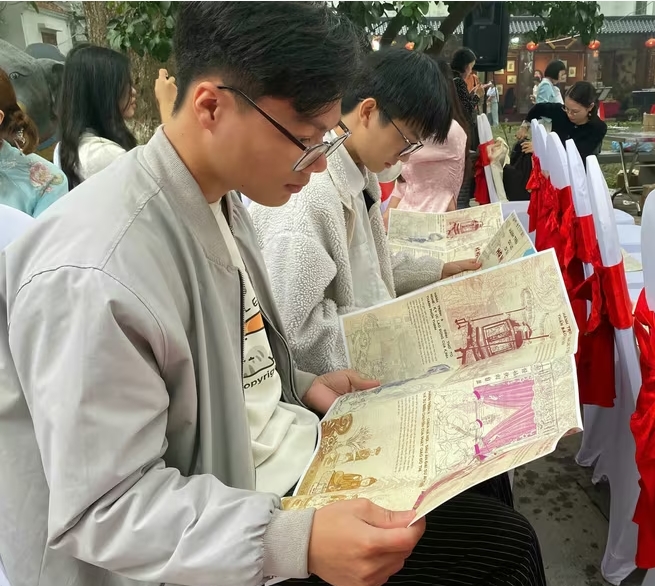
The ambassador emphasised that with the use of digital technology, particularly QR codes and interactive maps, Hanoi is gradually positioning itself as one of Asia’s pioneering cities in digitising heritage data, making information more accessible, vivid, and intuitive.
Project lead and international technical expert Nguyen Thi Hiep shared that more than 100 heritage sites were surveyed, drawing from extensive archival resources in French, Han-Nom, and Vietnamese.
A vast body of archival materials in French, Han–Nom, and Vietnamese was brought back to life from storage, forming the foundation for vividly reconstructing each monument through comprehensive scientific dossiers, she recalled.
She noted that the project selected 28 representative sites to form four heritage tourism routes, each associated with a traditional Vietnamese belief system. They include Thang Long’s Four Guardian Temples, Mother Goddess Worship Sites, Craft Ancestor Temples, and several Pagodas in Hanoi.
According to Hiep, each trail tells a story, allowing users with a smartphone to “touch history” and explore the depth of Thang Long – Hanoi’s culture visually and interactively.
She added that the project not only enhances cultural promotion and tourism experiences, but also provides valuable data for researchers, lecturers, specialists, and graduate students, supports cultural education in schools and community programs, and raises awareness among students about cultural heritage. Particularly, it also underscores the importance of French-Vietnamese cultural cooperation.

Festival Thang Long-Hanoi 2025 honours heritage and creativity
VOV.VN - Festival Thang Long-Hanoi 2025 officially opened at Van Mieu- Quoc Tu Giam (Temple of Literature) on the morning of November 1, with the ‘Converging heritage’ ceremony honouring the capital’s heritage and inspiring creativity across the community.