
Exhibition to trace the horse motif in Vietnamese art

VOV.VN - Sixty artworks spanning folk, applied, modern and contemporary art will go on display at a thematic exhibition titled “The Horse in Vietnamese Visual Art” at the Vietnam Fine Arts Museum in Hanoi.
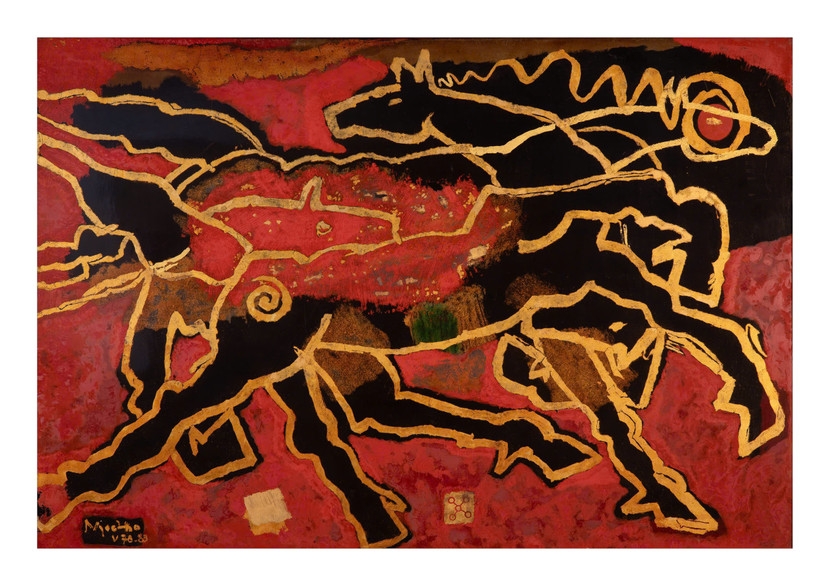
The exhibition is set to open on January 30 and run through March 1 at the museum’s main venue at 66 Nguyen Thai Hoc Street to welcome the Lunar Year of the Horse in 2026.
The works are selected from the museum’s collections and offer a panoramic view of how the image of the horse has evolved in Vietnamese art across different periods.
Throughout the history of Vietnamese art, the image of the horse has been closely associated with daily life and traditional culture. In folk art and applied art, horses are depicted simply and vividly, reflecting the image of a loyal animal close to humans. Entering modern visual arts, the horse has become a powerful source of inspiration, carrying many expressive nuances and symbolic meanings.
The motif is also closely associated with heroism and national resilience, most notably through representations of Saint Giong. Works by artists such as Nguyen Tu Nghiem, Ngo Manh Lan and Tran Khanh Chuong blend traditional values with modern visual language to highlight this legendary figure. In depictions of highland life, the horse appears as a trusted companion, vividly portrayed in works by To Ngoc Van, Nguyen Van Ty and Bui Xuan Phai.
During the years of resistance, images of horses alongside soldiers, particularly in scenes featuring President Ho Chi Minh, became symbols of strong humanistic value. Paintings by Duong Bich Lien, Nguyen Trong Kiem and Nguyen Thu portray the horse as part of the natural and austere life of wartime, underscoring Ho Chi Minh’s closeness to nature and the revolutionary struggle.
In contemporary life, the horse continues to be viewed as a symbol of strength, loyalty and aspiration, while also conveying wishes for good fortune and success.
Through the exhibition, the image of the horse is not only seen as a familiar and useful animal in labour and resistance war, but also as an artistic symbol evoking a wide range of emotions. The exhibition is expected to offer audiences a space that blends traditional values with the spirit of the times, capturing the cultural atmosphere of the early days of the Lunar New Year of the Horse in 2026.
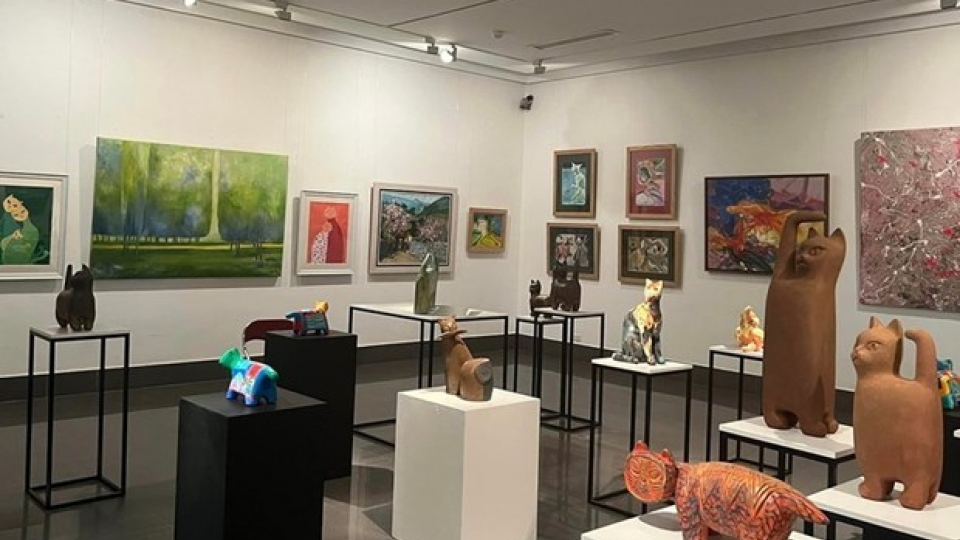
Exhibition features image of cat – zodiac animal for upcoming Lunar New Year
An exhibition featuring paintings and installations on the image of the cat, the zodiac animal for the upcoming Lunar New Year, is taking place at the Vietnam Fine Arts Museum in Hanoi.
