Bright spots in cultural preservation and development in Dak Lak

VOV.VN- Through practices suited to local realities and sustained by the commitment of the communities themselves, efforts to preserve and promote traditional cultural identities in villages across Dak Lak province, Vietnam’s Central Highlands, are being carried forward, creating bright spots in the province’s cultural preservation and development.
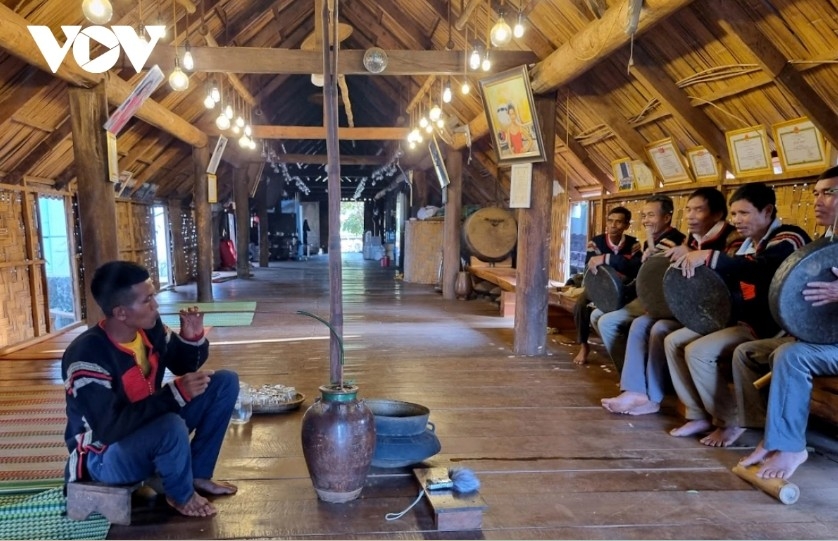
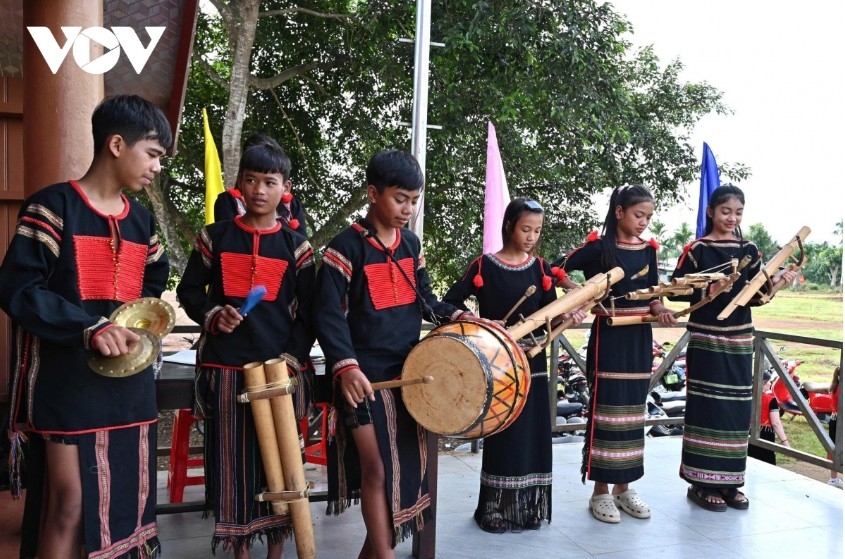
In recent years, the sound of gongs has once again echoed regularly through community gatherings in Sut M’dung village, Quang Phu commune. Making use of slack farming periods, the village’s folk performance group maintains regular practice sessions, alternating between gong performances, flute playing and the chanting of epic narratives.
The performances are staged for local residents as well as for visitors, and are also presented at cultural competitions.
According to H Riet Eban, head of Sut M’dung village, gongs today are no longer merely ceremonial instruments but have become a bond linking generations within the community.
“The spirit among the elder artisans and the younger members has become increasingly positive,” she said. “The village self-management board and the artisan group support one another, helping the children find joy in learning to play the gongs and creating a healthy, lively environment that makes it easier for them to engage.”
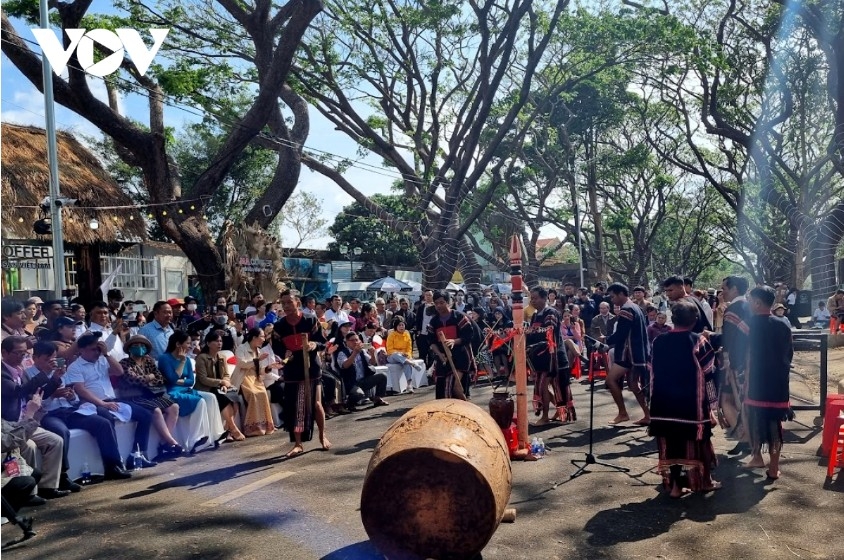
Alongside Sut M’dung, many villages across Dak Lak are gradually restoring traditional cultural spaces, from gong performances and indigenous musical instruments to the revival of festivals and community activities. Province-wide, numerous grassroots folk culture models are being maintained, with hundreds of artisans and cultural practitioners directly involved in passing on traditional knowledge to younger generations.
In Ea Sup commune, formerly part of the border district of Ea Sup, the Ea Sup village gong club has been operating for more than a decade. From an initial group of fewer than ten members, the club has expanded to attract broad participation from local residents, including a growing number of teenagers.
Artisan Nie Kham Ta, head of the club, said that with support from relevant agencies, training activities have become more regular and structured.
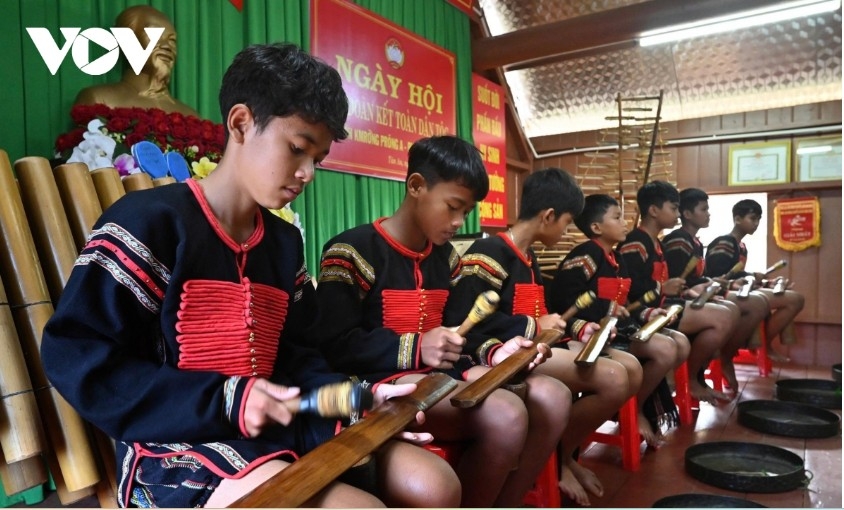
“Since 2024, the Department of Culture, together with the cultural division and local authorities, has organised training classes for children,” he said. “These young learners have since joined the club.
Membership has grown to 46 people, ranging from the oldest member born in 1949 to the youngest born in 2015. Notably, the club now has its own children’s gong ensemble, which regularly takes part in gong and cultural activities.”
In 2025, Dak Lak completed and submitted 46 nomination dossiers for the titles of People’s Artisan and Meritorious Artisan, reaffirming the role of core practitioners in safeguarding traditional culture.
The province also successfully hosted a range of major cultural events, including a festival of gong culture and traditional musical instruments of ethnic groups; the “Great Unity of Ethnic Groups – Vietnamese Cultural Heritage” week; and the first Muong ethnic culture festival. In addition, traditional rituals have been restored and reenacted, such as the Whale Worship Festival, new house ceremonies of the E De people, and longevity celebrations of the M’nong community.
Nguyen Le Vu, Deputy Director of the Dak Lak Department of Culture, Sports and Tourism, said such efforts help ensure that culture is preserved within people’s living spaces and daily practices, while also opening pathways for culture to serve as a development resource.
“These activities are maintained as regular annual practices, allowing artisans and younger successors to exchange experience and pass on the heritage of previous generations,” he said. “By recreating the cultural space of gong performances, teams can practise and present rituals, customs and gong-related activities within the communities where the artisans live.”
Through these efforts, cultural values continue to be passed on to younger generations in villages across the province. In the gong team of Blok village, Quang Phu commune, 11-year-old Y Ro Lang Krieng is among the youngest members. After school, he joins the artisans to practise instruments and gongs. For him, the sound of traditional instruments has been a passion from an early age.
“My father taught me to play the T’rung and bamboo gongs,” he said. “I love T’rung ensemble performances. I want to become a T’rung artisan, so I practise after school and keep learning with the older brothers.”
From village-based activities, cultural values are preserved and passed on naturally to younger generations. With strong community engagement, young people are finding pride in their traditional heritage and continuing to carry these values forward. This forms a foundation for the sustainable preservation and development of ethnic cultures in Dak Lak and the Central Highlands.
Livelihood and cultural preservation of Ha Long floating villages
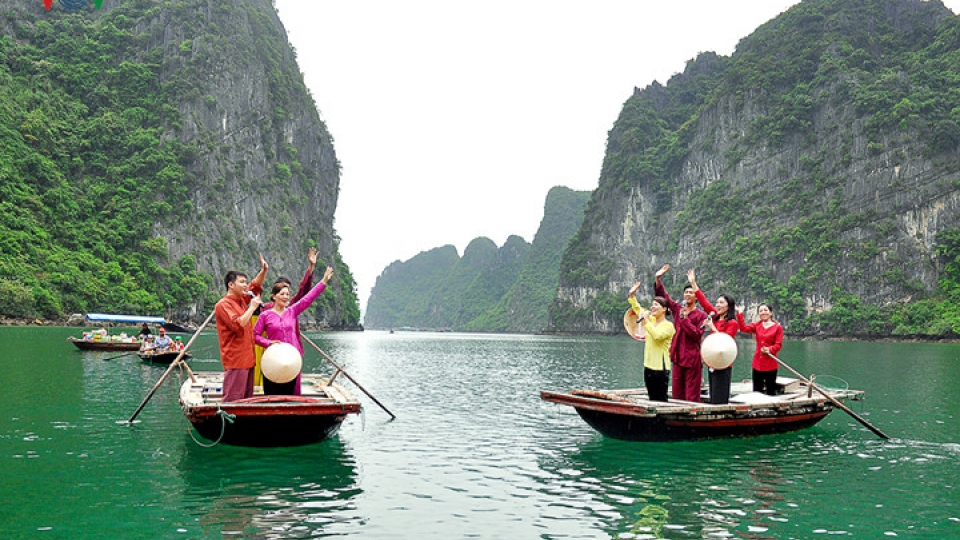
VOV.VN - Floating villages have existed for hundreds of years on Ha Long Bay, in Quang Ninh province. Preserving the culture of these floating villages has been given equal importance with ensuring a stable livelihood for their inhabitants.