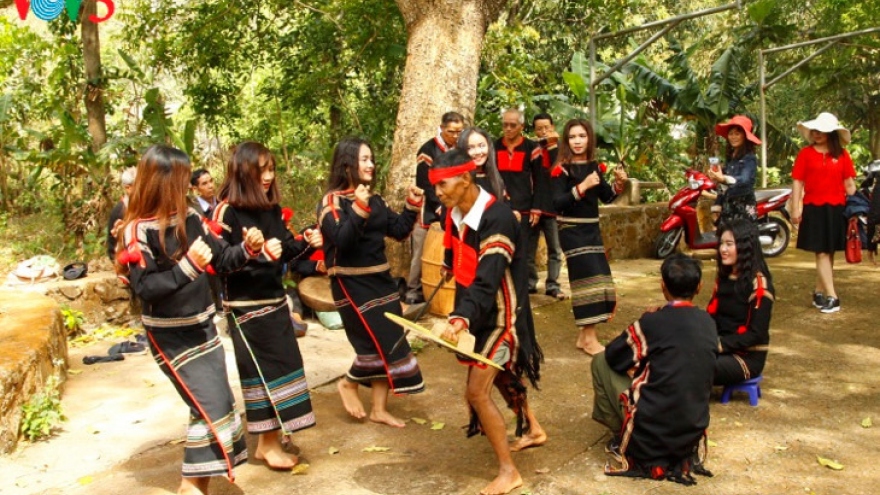
E De people preserve Kut, a soulful folk singing genre

VOV.VN - Among the various folk singing genres of the E De ethnic group, Kut singing stands out for its poetic, metaphor-rich verses that express people’s inner feelings, much like heartfelt confessions.
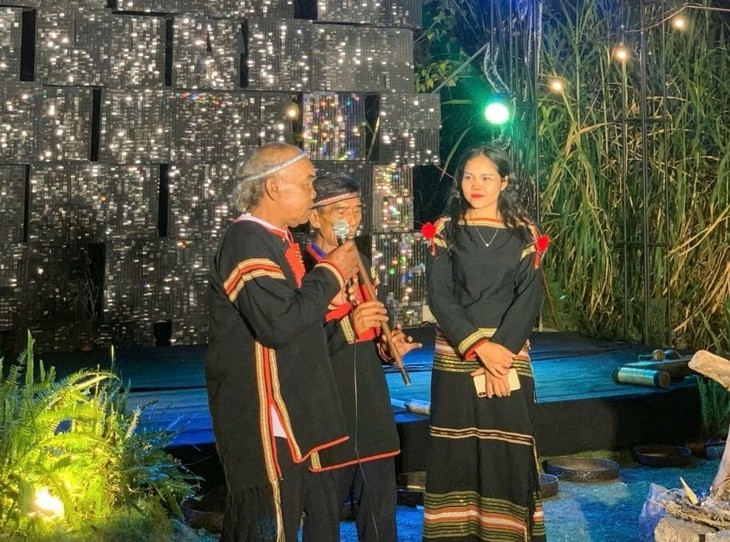
In villages and community-based tourist sites across Dak Lak province, the Kut melodies of the E De have always captivated visitors.
Kut is a contemplative form of singing. While Eirei singing is lively and festive and performed by artists in a proper setting at the proper time, Kut singing is close to daily life due to its highly improvisational nature. Kut is a type of narrative singing that anyone can perform to express their emotions through melody without a fixed rhythm. At funerals, Kut singing conveys a heartwarming message to the deceased, while during joyful events, it is like a conversation reminding people to stay united, work hard, and live well. Ede boys and girls sing Kut to express love between couples.
A Kut singer is often accompanied by a musician playing the dinh buat flute, or the singer may play it between verses. There is a difference between daily-life singing and narrative singing.
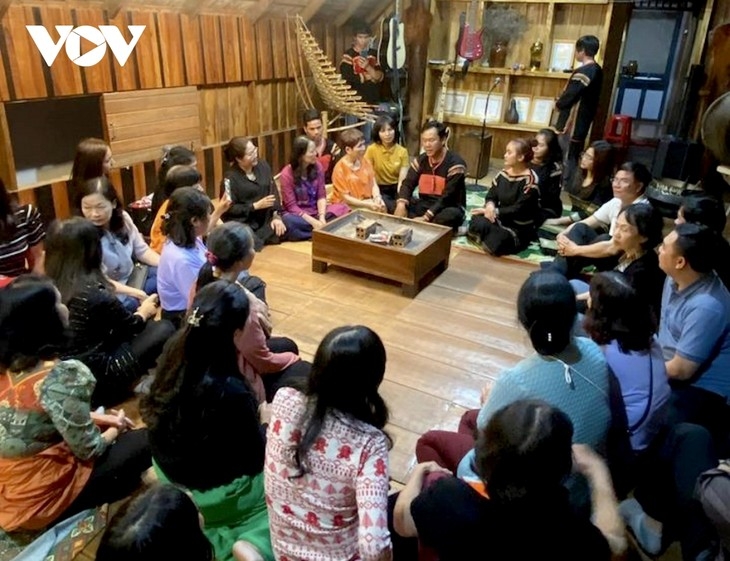
Artisan Y-Dhin Nie of Tria village, Ea Tul commune, explained that everyday Kut singing is spontaneously improvised in particular situations, using metaphors about natural phenomena, plants, and flowers. Narrative singing involves performing a set piece and the singer cannot freely rearrange verses.
Meanwhile, artist Y-Bhi Ayun of Kna village, Cu M’Gar commune, noted that elderly artists are the keepers of the Ede folk melodies. “In the past, artists often sang Kut during celebrations. Nowadays few young people can sing Kut, and even if they do, their presentation is not as coherent as the senior artists.
"I hope skilled Kut singers will record their songs and teach younger people,” Ayun added.
Young E De people in all villages are encouraged to learn folk melodies. Dak Lak province now has about 300 artists who can perform poetry recitations and folk singing. To preserve the melodies, local authorities have been teaching Kut singing in schools and organizing classes in the villages.
“The cultural management authorities will organize activities to preserve and promote Ede folk singing. We have been organizing annual events to popularize the singing among young people,” says Y Mang, Deputy Director of Quang Phu commune’s Center for Communication, Culture, and Sports.
According to Linh Nga Nie Kdam, a researcher of Central Highlands folk culture, the space for performing folk singing is limited, and there are few people to teach the young people.
“In the past, people sang Kut and Eirei whenever they met. Young people learned it naturally by watching, listening, and singing along. If Yang or the Heaven God granted you the ability, you could sing. If you couldn’t, it meant Yang didn’t give the talent to you. No one formally taught Kut or Eirei. Rituals and gatherings were filled with singing", she revelaed.
"Today these activities are rare, making it very hard for young people to learn. That’s why, in the primary school music curriculum, I suggested teaching the folk song Buon Dur Kman to children,” Linh Nga Nie Kdam concluded.
Today, with multiple State preservation initiatives and community-based tourism, folk genres and traditional culture of the Ede are being preserved and promoted.
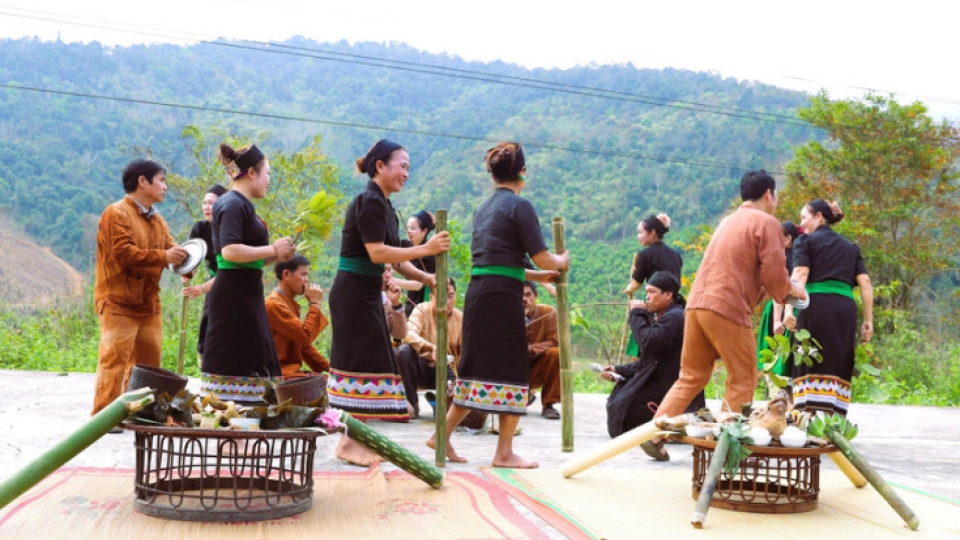
Cultural identity of O Du ethnic people honoured
The O Du ethnic people's ceremony to welcome the first thunder of the year has been listed as national intangible cultural heritage, in the category of social customs and beliefs.