


Young people set to shape the future of Vietnam-Russia friendship

VOV.VN - Young people from Vietnam and Russia have highlighted their role in carrying forward the two countries’ longstanding friendship and developing new forms of cooperation, proposing joint research projects, language exchanges and youth initiatives at a recent forum Saint Petersburg, Russia.
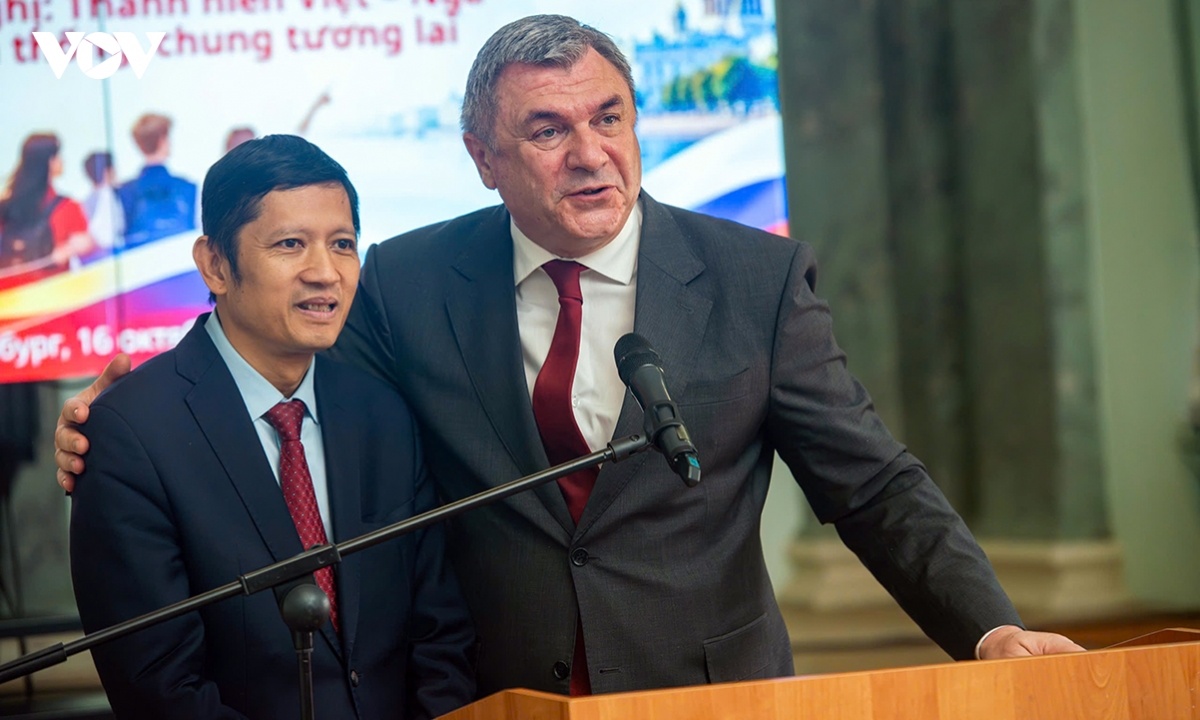
The proposals emerged during a discussion entitled “Keeping the Flame of Friendship Alive: Vietnamese and Russian Youth, Shared Traditions and a Common Future”, held at the Herzen State Pedagogical University of Russia, on October 16 as part of the second Russia-Vietnam People-to-People Diplomacy Forum.
Vyacheslav Kalganov, acting chairman of the Committee for External Relations of Saint Petersburg, emphasised that young people are both inheritors of the friendship built by previous generations and active contributors to the future of bilateral relations. He said the city has proposed working with Vietnamese partners to organise a Russia-Vietnam Youth Forum in 2027, providing a platform for young people to meet, exchange ideas and develop joint projects.
Mai Nguyen Tuyet Hoa, first secretary at the Vietnamese Embassy in Russia and representative of Vietnam’s Ministry of Education and Training in Russia, highlighted science and technology, innovation and human resource development as important drivers of bilateral relations. She encouraged young people to turn meetings and exchanges into practical initiatives, including Vietnamese-Russian language clubs, joint research groups and student projects.
The embassy, she said, stands ready to connect partners and support such initiatives.
Nguyen Ngoc Hung, vice president of the Vietnam Union of Friendship Organisations, and other participants also stressed the importance of engaging younger generations in people-to-people diplomacy to strengthen mutual understanding and trust between the two peoples.
Education and language as bridges between generations
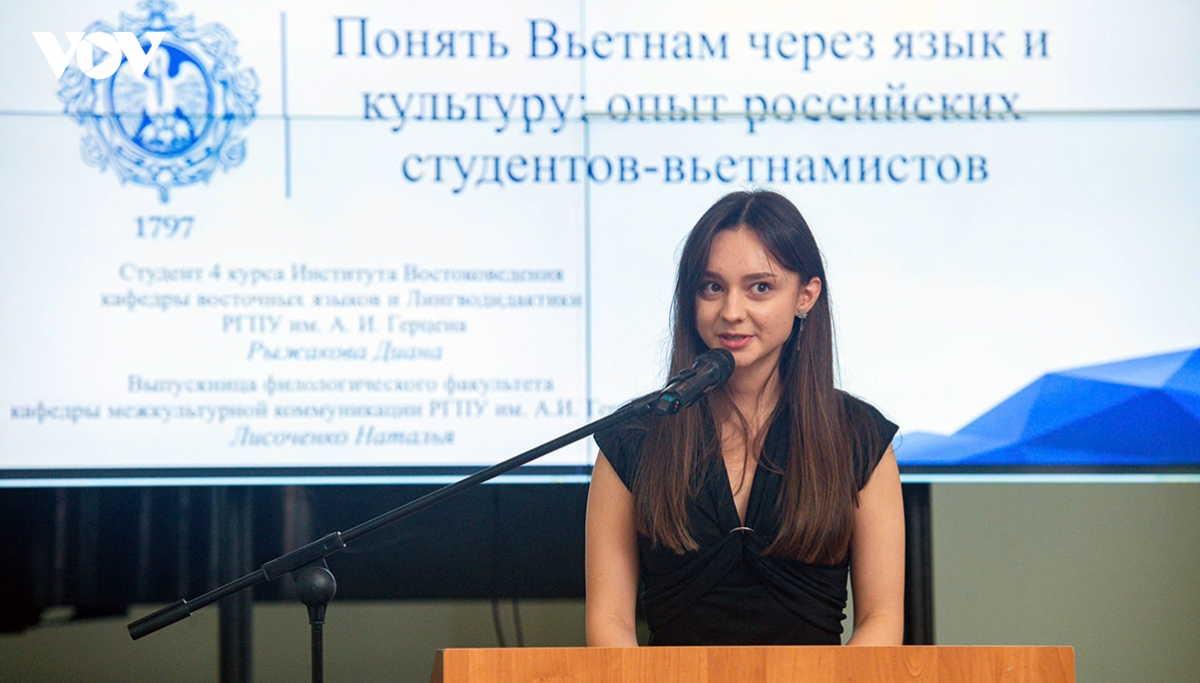
Presentations at the discussion highlighted education and language exchange as enduring links between Vietnamese and Russian youth.
Lyudmila Aladyshkina, a lecturer at Herzen University, shared her experience teaching Vietnamese students, noting that friendships were forged not only in classrooms but also through cultural activities, festivals and community life. She outlined Russian-language teaching programmes in Hanoi, Ho Chi Minh City and Da Nang, and proposed a Russia-Vietnam pedagogical forum and more joint research projects in education.
Two young representatives of Herzen University illustrated how language learning could bring people closer. Student Diana Ryzhakova introduced the university’s Vietnamese-language programme, which involves native-speaking lecturers, classes on Vietnamese culture and student placements in Ho Chi Minh City and Da Nang.
Natalia Lisochenko, a former student of the university’s Faculty of Philology, recounted spending five weeks teaching Russian to Grade 10 students at a boarding school in Dien Bien Province. For the pupils, their first Russian phrases opened a window onto a new language and culture. For Lisochenko, the experience offered a firsthand lesson in how language can connect people across thousands of kilometres.
From the Vietnamese student perspective, Tran Mai Tuan Phong of the Moscow State Institute of International Relations (MGIMO) said Vietnamese students in Russia needed to understand the host country’s culture, history and people, as well as master the Russian language, to serve as bridges of friendship. He called for more regular exchanges and closer coordination among students, universities and diplomatic missions, stressing that students should be recognised as active contributors to bilateral relations.
Turning dialogue into practical youth cooperation
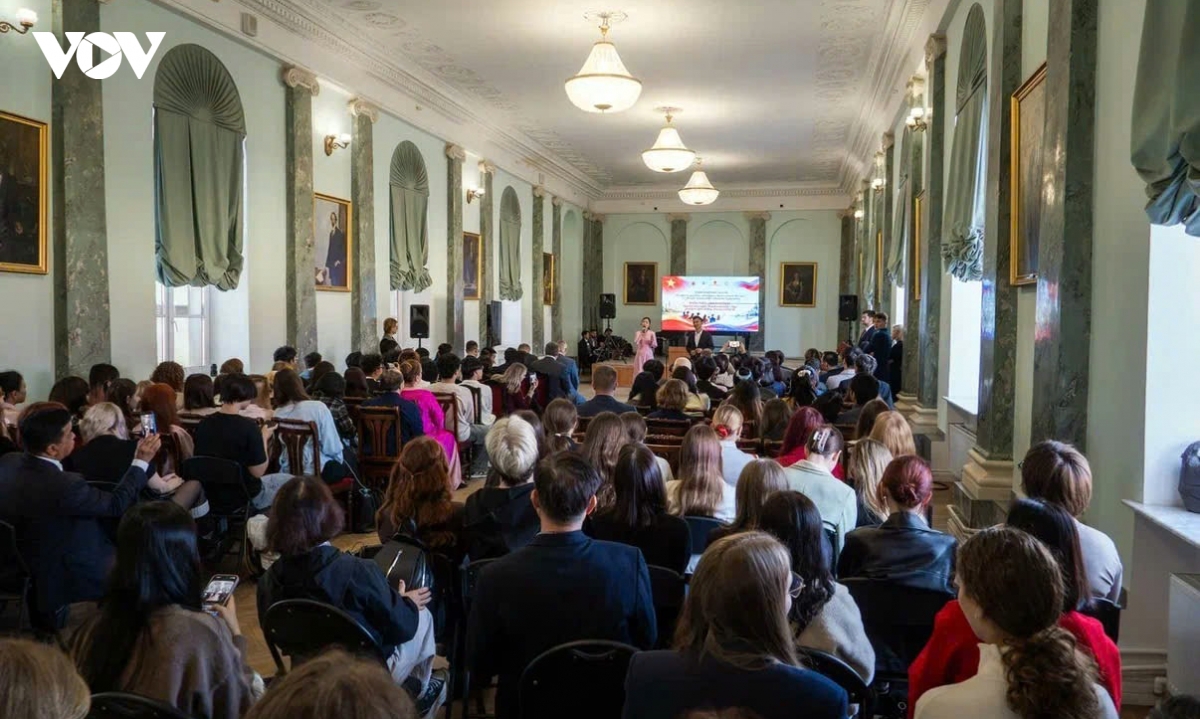
Ho Thanh Binh, deputy head of the Educational Policy Research Division at the Institute of Educational Policy and Strategy, proposed practical cooperation programmes, including Vietnam-Russia youth laboratories, joint project-based semesters, start-up incubators and a mentoring network involving former students who had studied in the partner country.
He also suggested piloting a Vietnam-Russia Youth Cooperation Action Programme for 2027–2029, with specific criteria for assessing its results.
During the open discussion, participants suggested forming Vietnamese-Russian student research groups to work on joint projects, organising a Russia-Vietnam Youth Festival and holding a Science and Technology Day as part of Vietnam Week in Saint Petersburg.
The proposals underscored the potential for young people to do more than inherit the traditional friendship between Vietnam and Russia. Through education, research, cultural exchange and joint initiatives, they can help develop new channels of cooperation and contribute to the countries’ comprehensive strategic partnership.
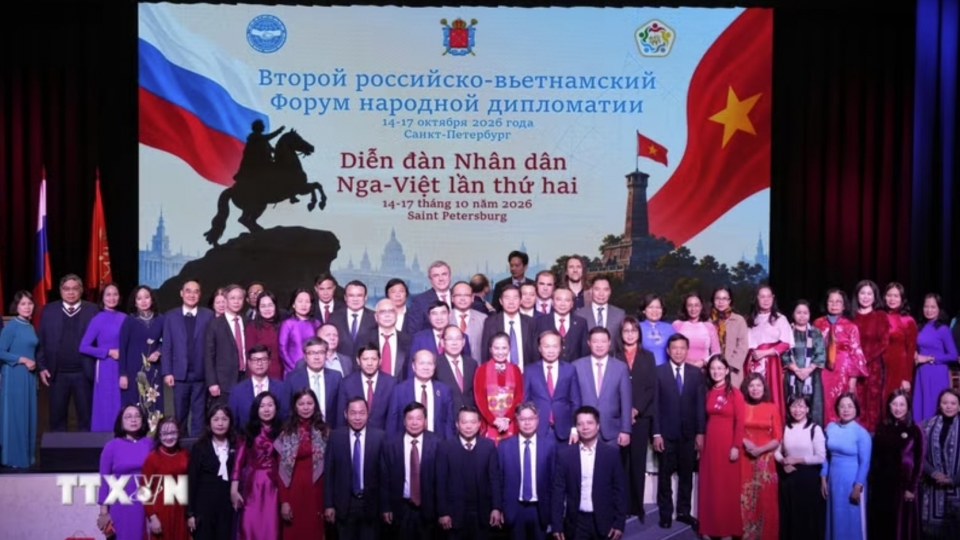
2nd Russia-Vietnam People's Diplomacy Forum boosts substantive ties
VOV.VN - The 2nd Russia-Vietnam People's Diplomacy Forum opened at the "Festival" International Youth Cultural Center in Vyborgsky District, Saint Petersburg, Russia, on October 14, marking a new step in deepening friendship and enhance broad cooperation between both nations.


