WIPO: Vietnam’s innovation model inspire the world

VOV.VN - The 2026 Global Innovation Index (GII) report, recently published by the World Intellectual Property Organization (WIPO), ranks Vietnam 43rd out of 139 countries and economies. Commenting on this result, a WIPO expert affirmed that Vietnam has not only achieved a positive ranking but also serves as a leading model in turning the GII into a practical action tool.
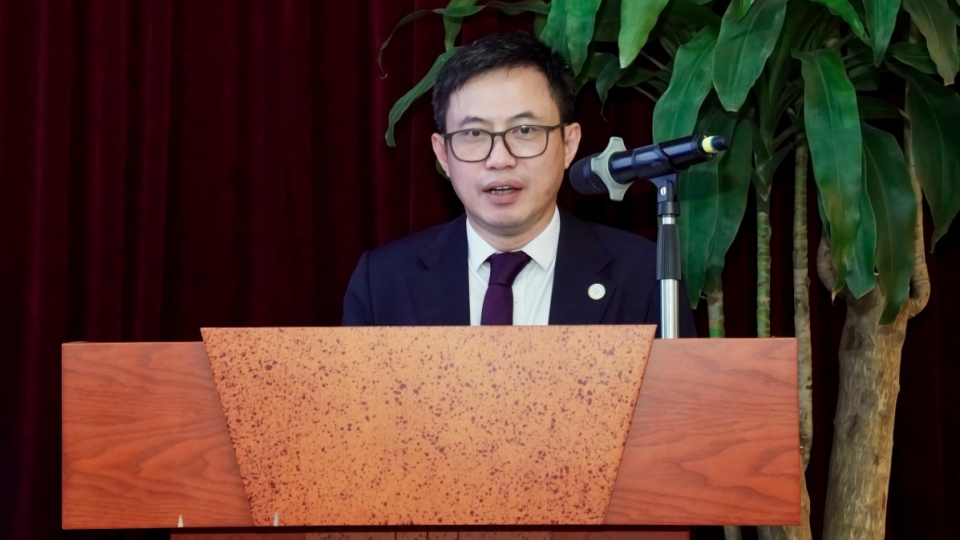
Speaking to the press in Switzerland, Sacha Wunsch-Vincent, Head of the Economic and Statistics Division and co-editor of the GII report at WIPO, elaborated on this year's theme, which focuses on empowering entrepreneurs at the frontline of science.
He emphasized that the theme underscores the importance of translating scientific breakthroughs into startups and technology commercialization firms. To achieve this, nations must converge three core factors. First is a robust research system, comprising universities and scientists empowered to register patents and establish businesses from their inventions. Second is long-term capital, featuring a sustainable financial chain, especially late-stage venture capital spanning 10 to 15 years to support everything from prototype fabrication to industrial-scale production. Finally, dynamic enterprises must prioritize investment in research and development (R&D) to bring products to market.
Wunsch-Vincent noted that the GII is no longer a mere ranking table but has become a policy diagnostic tool for roughly 70% of WIPO member states (nearly 100 countries).
He said that Vietnam has earned high marks across all three criteria for effectively leveraging the GII. First is in-depth research: the country works closely with WIPO to thoroughly analyze its strengths, weaknesses, and developmental trends over time. Second is comprehensive mobilization, marked by the establishment of a dedicated GII working group connecting the central level to localities, setting ambitious targets, notably raising R&D expenditure to 2% of GDP.
Third is system monitoring and local-level innovation, reflected in the continuous annual tracking of outcomes. In particular, Vietnam's initiative to self-develop the Local Innovation Index (PII) has enhanced capabilities across provinces and cities.
Wunsch-Vincent assessed that how Vietnam embraces the GII and collaborates with government agencies at both central and local levels is a valuable lesson that many other countries are learning and seeking to apply in their own systems.
Consequently, Vietnam has greatly advanced capacity building and cooperation in science and technology. In particular, Vietnam's initiative to build the Local Innovation Index has inspired many other WIPO member states to adopt a similar model.
Regarding future prospects, the WIPO representative praised the sound bilateral cooperative ties, which extend far beyond the framework of the GII report. WIPO pledged continued support for Vietnam in making effective use of the intellectual property system, including patents, trademarks, and industrial designs, to help domestic enterprises add value and elevate their standing in the global supply chain.
Additionally, the two sides will intensify cooperation in strategic fields, including promoting technology transfer from research institutes and universities to businesses, and expanding financial channels based on intellectual property assets, such as patent-backed financing, thus laying a solid foundation for Vietnam's breakthrough development in the coming years.
WIPO identifies potential technology priorities for Vietnam
The World Intellectual Property Organisation (WIPO) has identified five potential technology areas for further analysis in Vietnam as the country seeks to strengthen its strategic technology capabilities.

WIPO and Vietnam push for youth-driven intellectual property ecosystem
Director General of the World Intellectual Property Organisation (WIPO) Daren Tang met with Vietnamese youth for a dialogue at the Posts and Telecommunications Institute of Technology in Hanoi on September 26 to chart a path for building an innovation-friendly intellectual property (IP) ecosystem.