Why Northern and Central Vietnam are experiencing record-breaking heat

VOV.VN - The Northern and Central regions of Vietnam are experiencing one of the most intense heatwaves since the beginning of the summer of 2026, with temperatures in many areas exceeding 40°C and breaking historical records documented over recent decades.
Meteorologists said the extreme weather is being driven by a combination of a western low-pressure hot zone, strong foehn wind effects, and urban heat island conditions that are making temperatures feel even harsher in major cities such as Hanoi.

Mai Van Khiem, director of the National Centre for Hydro-Meteorological Forecasting, said the widespread heatwave has affected northern and central provinces from May 22 to 27.
According to the official, from May 24 onward, northern midland and delta areas, including Hanoi, along with central provinces stretching from Thanh Hoa to Hue, experienced severe and exceptionally severe heat with daily maximum temperatures ranging from 38 to 40°C, while some locations exceeded 40°C.
Several weather stations recorded temperatures surpassing previous May records. On May 25, the Uong Bi station in Quang Ninh province logged 38°C, exceeding the previous May record of 37.5°C set in 2013. Other stations in Bac Ninh, Bac Giang, and Hai Duong also matched or surpassed historical temperature records documented in recent years.
Hanoi has emerged as one of the epicenters of the current heatwave, with daytime temperatures frequently reaching 39–40°C. At the Ha Dong monitoring station, Hanoi reported 41.1°C on May 26, the second-highest temperature ever observed there in May. The all-time May record at the station remains 41.3°C, set in 2019.
Hanoi’s extreme heat is not only caused by hot low-pressure systems and foehn winds but is also intensified by the urban heat island effect, Khiem said.
Due to dense urbanisation and extensive concrete infrastructure, temperatures recorded in Hanoi are often 1–2°C higher than surrounding areas.

Forecasts show that on May 27, severe heat will continue across the Red River Delta, Phu Tho province, and central localities from Thanh Hoa to Hue, with temperatures ranging from 38 to 40°C and some places exceeding 40°C.
Khiem noted that actual outdoor temperatures can feel 2–4°C higher than official forecasts, especially in areas with asphalt roads and dense concrete surfaces.
Humidity levels are also expected to remain very low, increasing discomfort and heat stress.
From May 28, a weak mass of cooler air moving southward from China is expected to weaken the western hot low-pressure system, causing temperatures in northern Vietnam to gradually decline.
By May 29, widespread heat conditions in Northern Vietnam are forecast to end, while the heatwave in Central Vietnam is expected to gradually ease.
Meteorological experts warned that prolonged extreme heat combined with low humidity significantly increases the risks of fires, explosions, and forest fires due to rising electricity demand and dry conditions.
They also warned of health risks such as dehydration and heatstroke for people exposed to high temperatures for long periods.
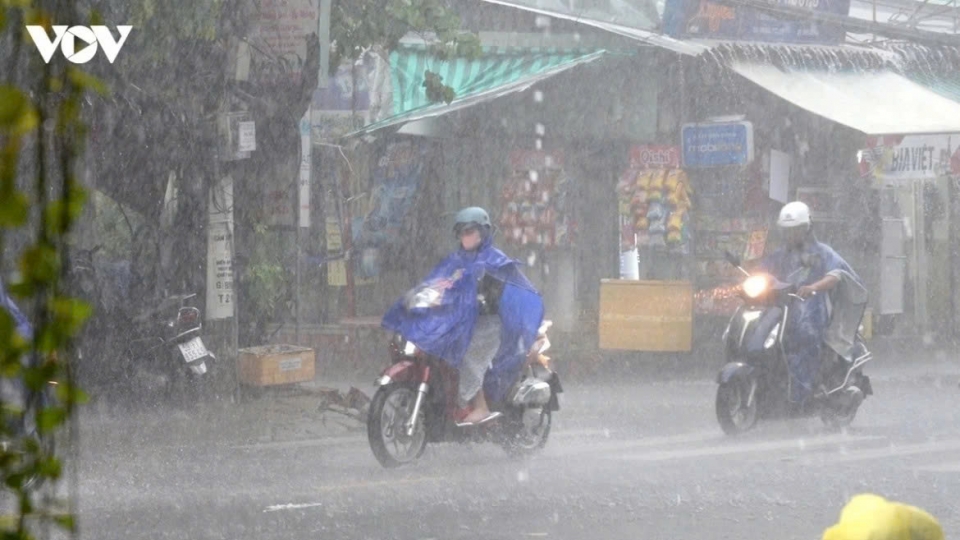
Thunderstorms expected to end severe heatwave in Northern Vietnam
VOV.VN - Scattered showers and thunderstorms are expected to return to Northern Vietnam, including Hanoi, from the evening of May 27, helping ease the intense heatwave after several days of temperatures exceeding 40°C, according to the National Centre for Hydro-Meteorological Forecasting.