
Vietnam reinforces commitment to human rights in digital age

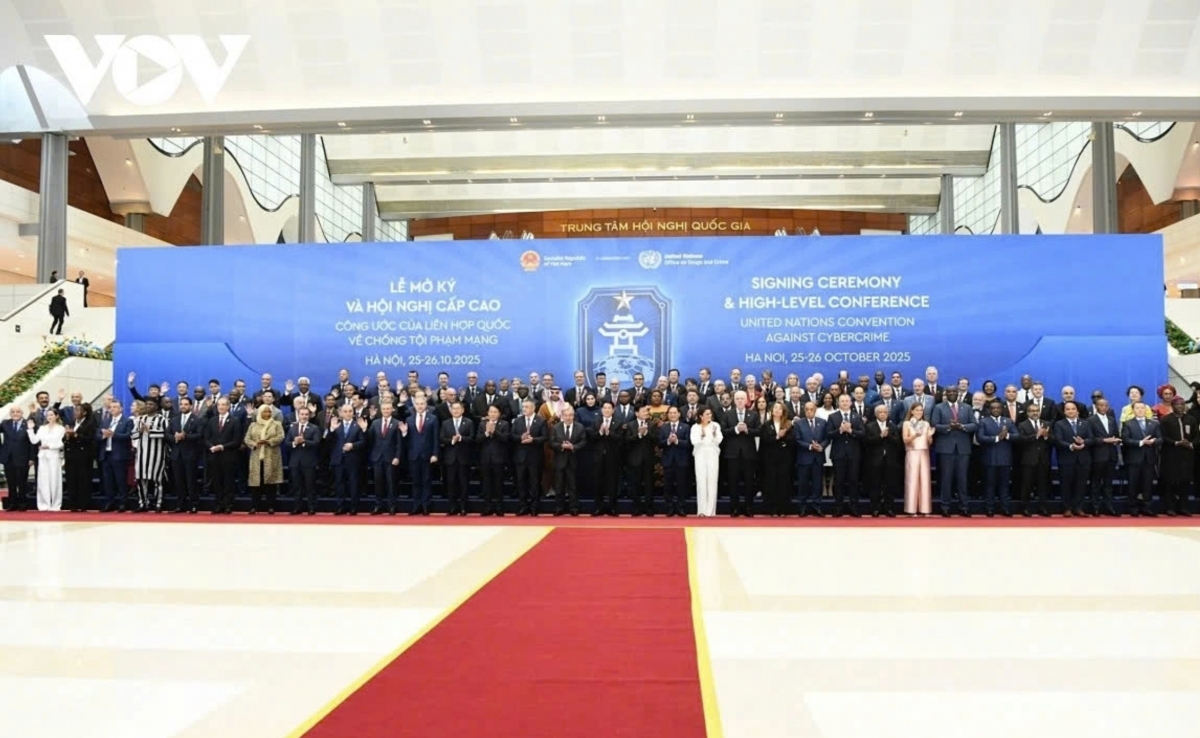
VOV.VN- Vietnam has underscored its commitment to protecting human rights in the digital era by hosting the signing ceremony of the United Nations Convention against Cybercrime, known as the “Hanoi Convention,” and securing re-election to the UN Human Rights Council with the highest number of votes in the Asia-Pacific.
Marking the 77th anniversary of Human Rights Day (Deceber 10, 1948-December 10, 2025), the United Nations has selected the 2025 theme: “Human Rights: Our Everyday Essentials.”
In Vietnam, this message has been underscored through two notable milestones: the opening for signature of the United Nations Convention against Cybercrime (the “Hanoi Convention”) and Vietnam’s re-election to the UN Human Rights Council with an exceptionally high number of votes. Both developments highlight the country’s sustained efforts to safeguard human dignity amid the new challenges of the digital age.
Upholding human rights as “the breath of life”
This year’s Human Rights Day theme stresses that human rights are fundamental to daily life, akin to “the breath of life.” In Vietnam, this spirit has been reflected through comprehensive development policies backed by practical outcomes, aimed at ensuring wellbeing, democracy, security and safety for the nearly 100 million people, while maximizing human potential.
According to the 2025 Human Development Report (HDR), Vietnam remains among countries with a high level of human development, with its Human Development Index (HDI) reaching 0.766 in 2023, ranking 93rd among 193 countries and territories. Over more than three decades (1990-2023), the HDI increased by 53.5%, demonstrating persistent progress in health care, education and income growth.
In the area of children’s rights, Vietnam was the first Asian country to ratify the Convention on the Rights of the Child (CRC). After 35 years of implementation, the under-five mortality rate fell from 58 per 1,000 live births in 1990 to 16.9 per 1,000 in 2024.
These achievements translate the Party and State’s commitments into concrete action, ensuring essential needs are met so that “no one is left behind” on the nation’s development path, while strengthening Vietnam’s international standing.
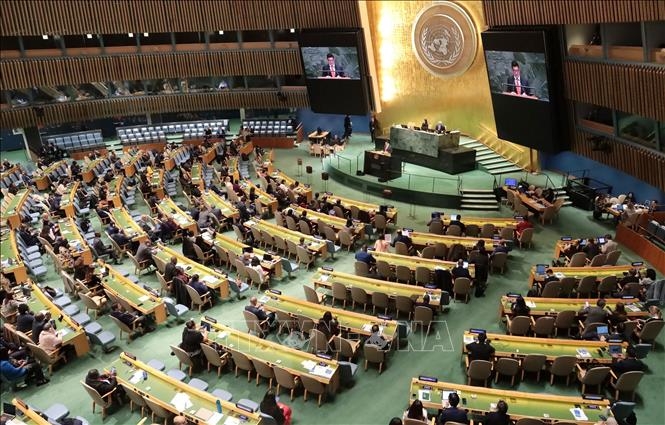
This was further affirmed by Vietnam’s re-election to the UN Human Rights Council for the 2026-2028 term, securing the highest number of votes within the Asia–Pacific Group.
Deputy Minister of Foreign Affairs Dang Hoang Giang stated that this result represents “the highest recognition by the international community of the sound policies and directions of the Party and State, particularly in ensuring human rights.”
Ensuring safety: an essential right in digital era
The space for protecting human rights has expanded from the physical world into the digital sphere, where 78.8% of Vietnam’s population now has Internet access and more than 95% use social media, ranking the country 12th globally. Alongside opportunities, new legal and ethical challenges have emerged.
Associate Professor-Doctor Tuong Duy Kien, Director of the Institute for Human Rights at the Ho Chi Minh National Academy of Politics, observed that digital technologies have blurred the boundary between privacy and the public sphere. Privacy rights are now intrinsically linked to “digital data,” where personal information risks being collected and analysed with “almost no discernible limits.”
Another challenge lies in the imbalance between rapid technological advances and existing legal frameworks. Questions continue to be raised: Should “the right to Internet access” be recognized as a constitutional right? How can the “right to be forgotten” be enforced when online information can exist indefinitely? And how should “voluntary consent” be addressed when users must often agree to data sharing simply to access online services?
There have also been warnings that artificial intelligence (AI) may help narrow these gaps but could equally widen them if not properly governed. The guiding principle remains that AI must serve people, not the other way around.
A particularly urgent concern is children’s safety online. In 2024, Vietnam’s Department of Cybersecurity and High-Tech Crime Prevention (A05) under the Ministry of Public Security recorded 381 cases of child abuse via cyberspace. Meanwhile, international data from the US-based National Center for Missing and Exploited Children (NCMEC) reported that AI-generated child sexual abuse content increased by 1,325% compared with 2023.
In response, Vietnam has taken proactive steps to establish a robust legal framework. On June 17, 2025, the Prime Minister issued Decision No. 1172, approving the Master Plan for implementing the recommendations accepted by Vietnam under the fourth cycle of the Universal Periodic Review (UPR) of the UN Human Rights Council.
This strategic document outlines six key task groups, prioritising improvements in human-rights legislation and enhanced protection for vulnerable groups in digital environments. The “Not Alone” campaign, involving multiple ministries, agencies and cross-border digital platforms, has also contributed to creating a “protective shield” for children against online risks.
At the international level, Vietnam’s hosting of the opening for signature of the Hanoi Convention, the first global UN legal instrument against cybercrime, marked a historic milestone.
State President Luong Cuong affirmed that “the ultimate goal of all efforts is for the people, ensuring that technology serves daily life, development brings opportunities for all, and no one is left behind in the global digital transformation.”
During its membership term on the UN Human Rights Council for 2026-2028, Vietnam will advance eight priority areas aimed at enhancing the Council’s effectiveness, including the protection of human rights in the contexts of climate change and digital transformation. This strategic choice aligns national interests with broader global progress.
Kanni Wignaraja, UN Assistant Secretary-General and UNDP Regional Director for Asia and the Pacific, said that
Vietnam’s most valuable asset is its people. Continued investment in human capital, she said, will enable the country to achieve further breakthroughs.
Safeguarding human rights in the digital era has become a mission of vital importance. From the Hanoi Convention to Vietnam’s renewed role on the UN Human Rights Council, the country continues to assert its standing as a peace-loving nation that pursues scientific and technological development along a human-centred path, dedicated to the wellbeing and happiness of all its people.

Hanoi Convention: Protecting human rights, citizens’ rights in digital era
Protecting human rights and citizens’ rights in cyberspace is a vital foundation for building a safe, inclusive and people-centred digital future, heard at a high-level discussion held on October 25 in Hanoi.
