Vietnam ranks among top 5 globally in Human Capital Index Plus 2026

VOV.VN - Vietnam has been recognised among the world’s top five performers in the Human Capital Index Plus (HCI+) 2026 by the World Bank, highlighting the country’s strong outcomes in education, healthcare and workforce development.
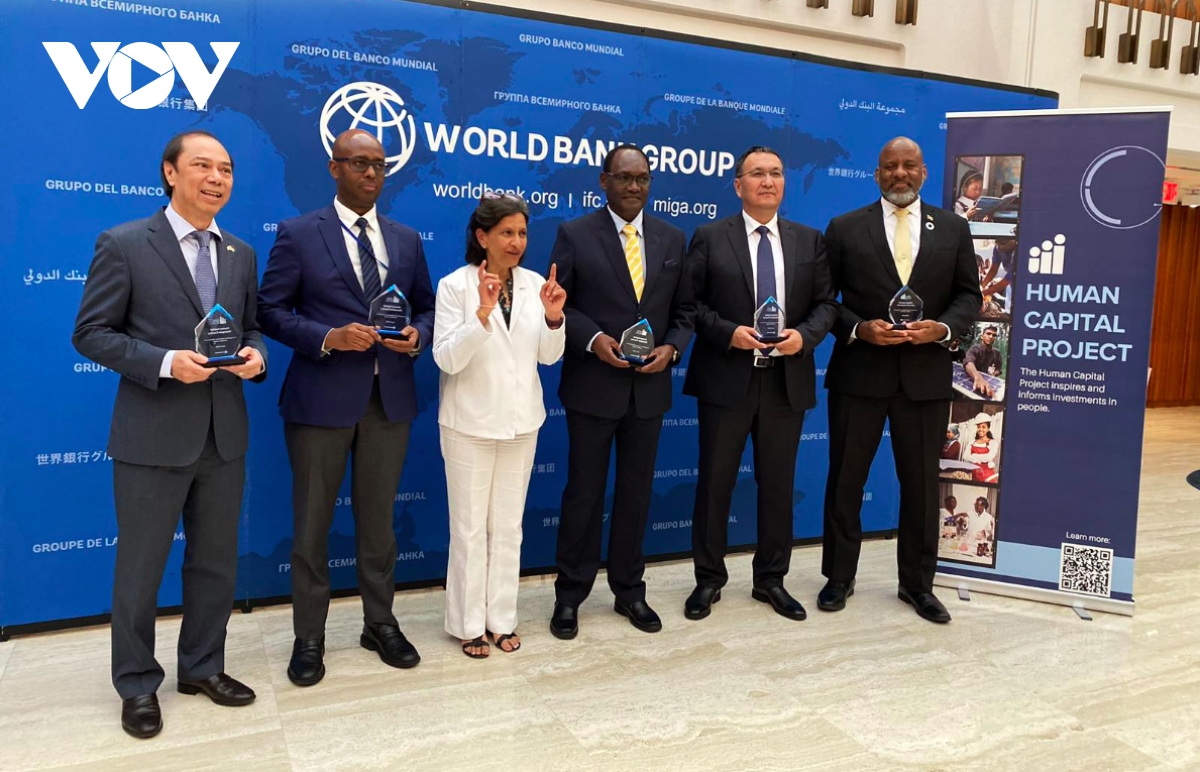
The recognition was announced on April 16 in Washington D.C., during the Spring Meetings of the World Bank and the International Monetary Fund, where countries demonstrating outstanding progress in human capital development were honoured.
Vietnamese Ambassador to the United States Nguyen Quoc Dung received the honour on behalf of the country, alongside representatives from other top performers within its income group. Other recognised countries were Jamaica, Kenya, Kyrgyzstan and Rwanda.
The HCI+ is an expanded version of the Human Capital Index, designed to provide a more comprehensive assessment of how effectively countries invest in their people. In addition to education and health outcomes, the index evaluates how human potential is translated into tangible economic results, particularly in terms of employment and income.
According to the World Bank, Vietnam continues to stand out among economies at similar income levels, supported by consistently strong education outcomes and solid performance in international assessments.
The country’s labour market has also shown notable improvement, with a rising share of wage employment, an indicator of a gradual shift from informal work to more productive sectors.
Another key strength is Vietnam’s efficiency in utilising human capital. The HCI+ report indicates that the country performs above the average of its income peers in converting investments in education and health care into real economic growth.
Within Southeast Asia, Vietnam is one of the economies with competitive human capital quality, particularly as it transitions towards a growth model driven by skills, innovation and productivity.
The recognition in HCI+ 2026 underscores Vietnam’s ongoing efforts to place people at the centre of its development strategy. It is also expected to provide further impetus for reforms in education, health care and the labour market, aimed at enhancing workforce quality and strengthening national competitiveness in the years ahead.
Vietnam to showcase education system, seek partnerships at APAIE 2026
VOV.VN - Vietnam will take part in the Asia-Pacific Association for International Education (APAIE) 2026 Conference and Exhibition, one of the world’s largest international education forums later this month, according to the Ministry of Education and Training (MOET).