Vietnam Education Forum highlights quality, skills and internationalisation

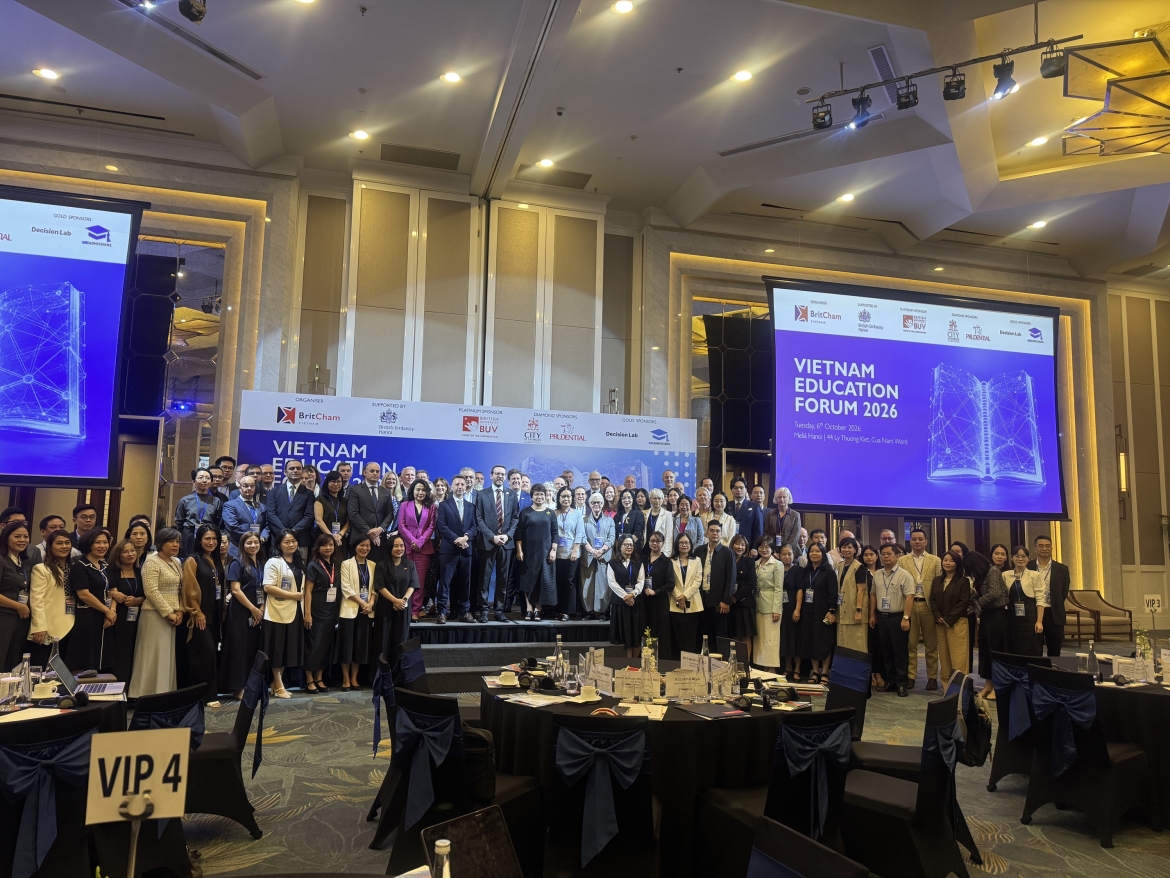
VOV.VN - Nearly 200 policymakers, educators, and industry executives from Vietnam and the UK gathered in Hanoi on October 6 for the Vietnam Education Forum 2026, focusing on education quality, internationalization, and workforce readiness amid ongoing economic reforms.
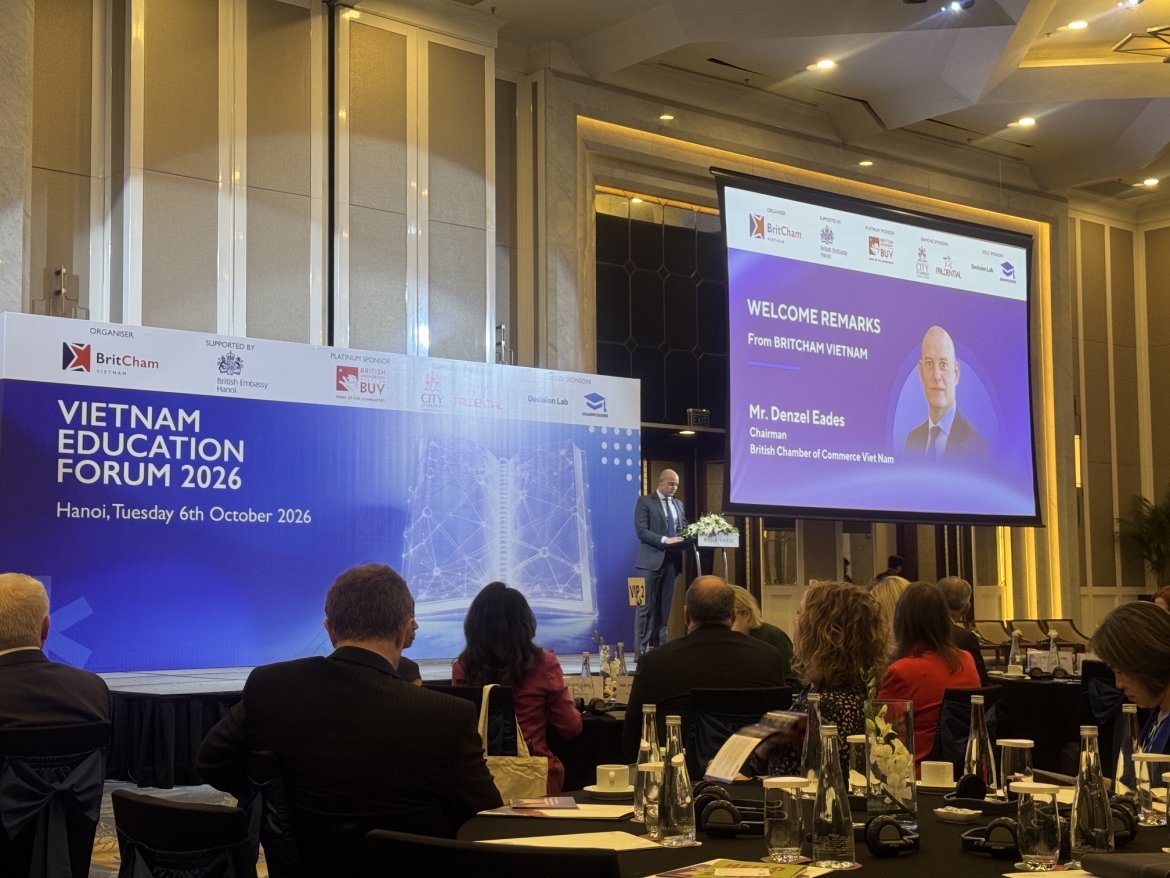
Building on the inaugural forum held in 2025, this year’s event was held under the theme “Quality & the Future of Education”, at a pivotal time as Vietnam accelerates education reform, raises quality accreditation standards and places greater emphasis on workforce upskilling as a foundation for the future economy, including the development of international financial centres.
Drawing on the UK’s strengths in financial and professional services, academic excellence and internationally recognised accreditation standards, the forum highlighted opportunities for deeper cooperation with Vietnam in improving teaching quality, expanding transnational education programmes and strengthening university-industry partnerships.
VEF 2026 also provided market insights, high-level panel discussions and practical frameworks aimed at developing a highly skilled workforce capable of meeting the demands of international financial centres and other value-added service sectors.
In his opening remarks, Denzel Eades, Chairman of BritCham Vietnam, said education had become one of the strongest pillars of the relationship between the UK and Vietnam.
“Every year, thousands of Vietnamese students pursue British qualifications, while growing partnerships between universities, schools, professional bodies and businesses continue to strengthen the ties between our two countries,” he said.
“These educational links do more than develop knowledge and skills. They build lasting relationships, deepen mutual understanding and create opportunities for future cooperation across trade, investment, research and innovation.”
Eades said education had long been a cornerstone of economic development and that, as Vietnam continued its transition towards a knowledge-based and innovation-driven economy, the importance of high-quality education, international collaboration and workforce readiness could not be overstated. He highlighted three themes as central to the forum: quality, internationalisation and employability.
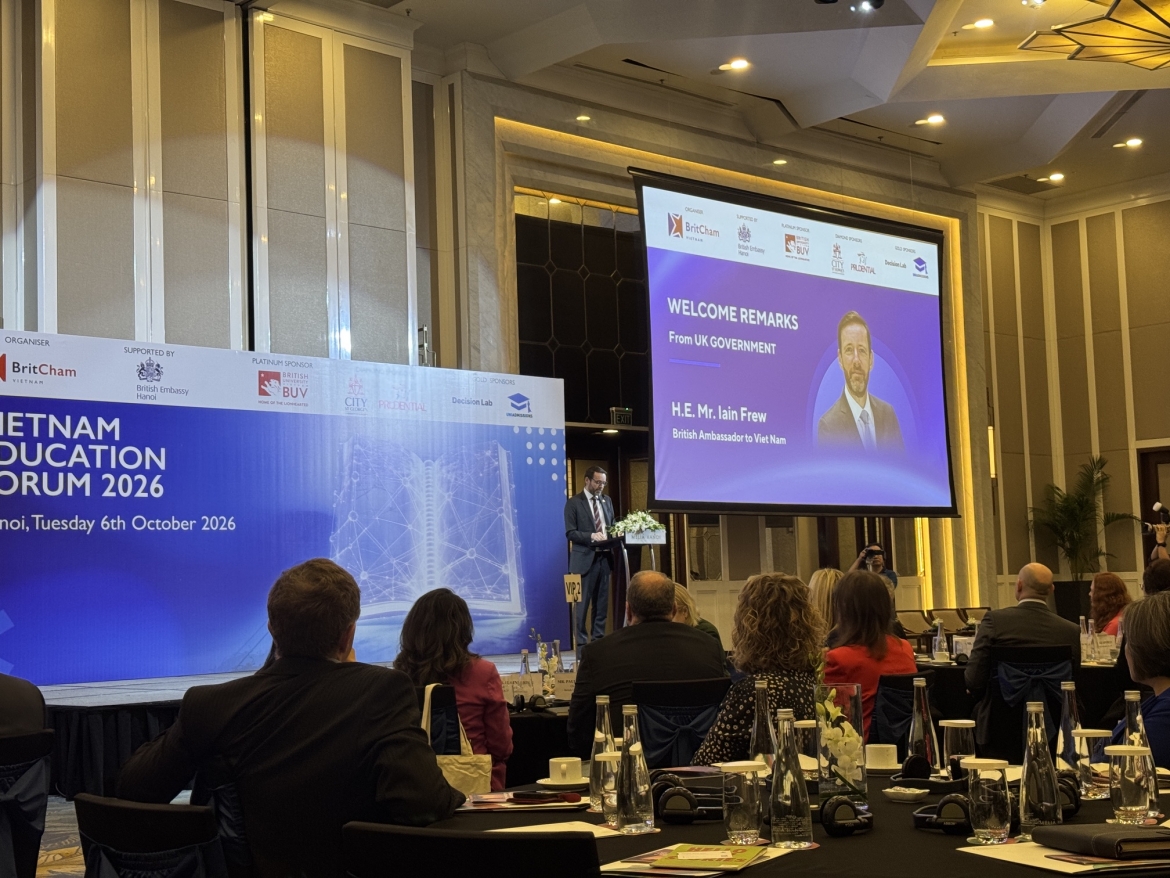
British Ambassador to Vietnam Iain Frew similarly underscored the importance of education to bilateral ties.“Education has always been at the heart of our partnership. Together, we have expanded English language learning, strengthened higher education links, developed transnational education programmes, enhanced skills and vocational training, and supported research and innovation partnerships,” he said.
“As Vietnam advances towards becoming a high-income, innovation-driven economy, education will play a critical role in developing talent for sectors such as semiconductors, artificial intelligence, advanced manufacturing, digital technology, green energy, healthcare, and financial services.”
“The UK stands ready to support Vietnam on this journey. Through world-class institutions, expertise in quality assurance, research excellence, and international collaboration, we are committed to helping learners, educators, and institutions thrive in the future economy,” he added.
Representing the Ministry of Education and Training, Assoc. Prof. Dr. Nguyen Thu Thuy, Director of the Department of International Cooperation, pointed out that the Strategic Partnership between Vietnam and the UK was entering a period of strong and constructive development, with education and training continuing to serve as a key, strategic and sustainable pillar.
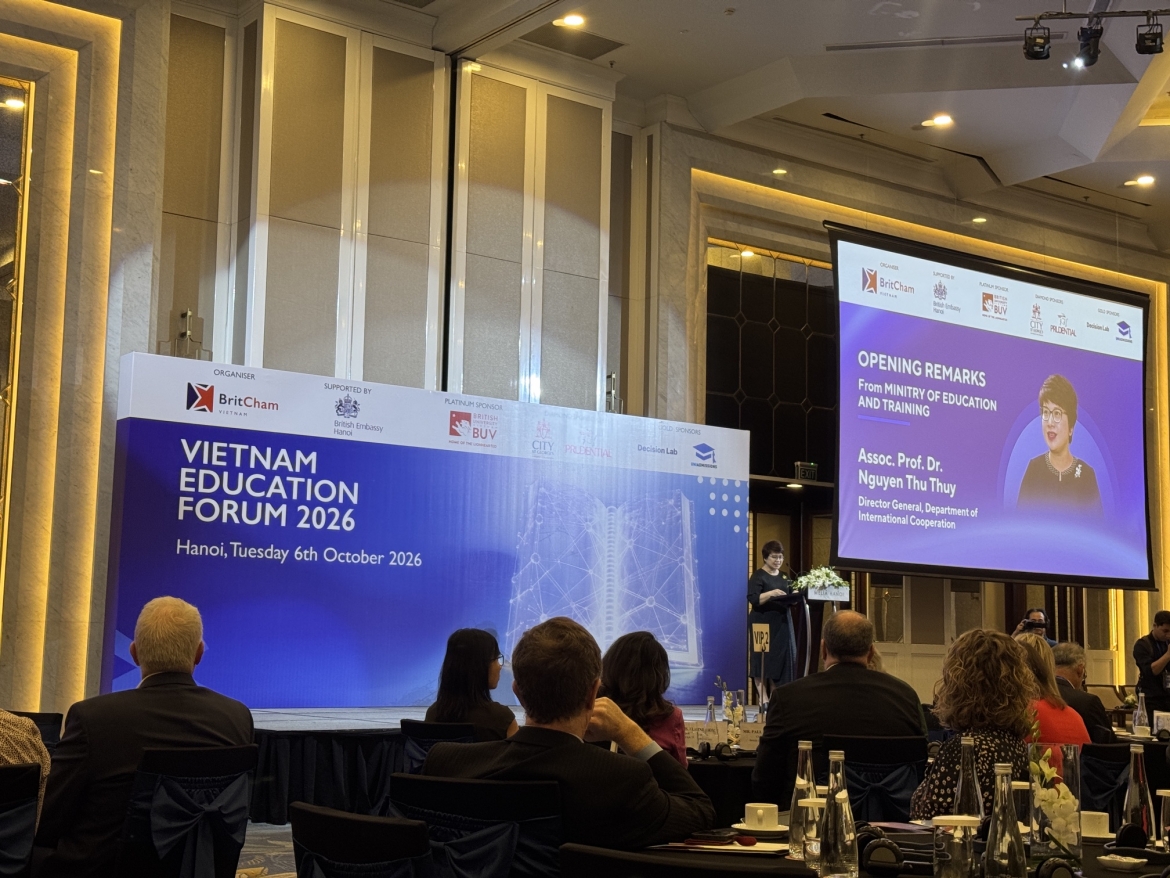
She described VEF 2026 as a testament to the commitment and proactive efforts of both countries’ business communities and educational institutions.
“Going forward, educational cooperation between Vietnam and the United Kingdom is not only an exchange of knowledge. It represents a bilateral relationship aimed at cultivating shared benefits based on mutual complementarity,” she said.
Thuy laid stress on the scale and potential of Vietnam’s education market. “We offer a large, dynamic, and highly promising education market that consistently attracts strong interest from British partners. Vietnam currently has more than 25 million pupils and students across nearly 55,000 educational institutions. This includes more than 2 million university and college students. With a golden population structure, robust economic growth, and a deep-rooted cultural valuation of educational investment, Vietnam represents an extraordinarily compelling educational market for international partners in general, and the UK in particular”.
She added that strong demand for international-standard education programmes, particularly those delivered in English, was creating opportunities for advanced and mutually beneficial models of educational cooperation.
The UK, she noted, has a long-established and highly regarded education system, supported by institutions with extensive international experience. It is currently Vietnam’s leading partner in transnational education, with Vietnamese students participating in joint-degree programmes, internationally recognised professional certifications and leading international programmes delivered in Vietnam.
The Ministry of Education and Training values continued UK support in applying technology and AI in education, developing talent for priority sectors, and strengthening quality assurance and hands-on skills, she emphasized.
The forum covers a plenary session and a series of strategic panel discussions, alongside the official launch of the Vietnam Education Market Report, which provides market analysis and examines emerging structural trends across Vietnam’s education sector.
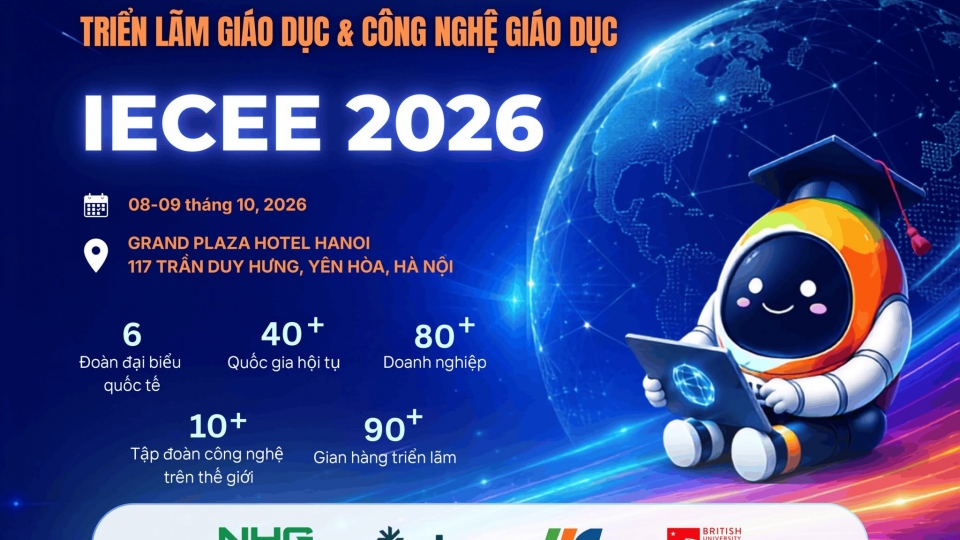
800 delegates from 40 countries to attend education conference in Hanoi
VOV.VN - Around 800 delegates from 40 countries and territories are expected to attend an international education cooperation conference in Hanoi in October, where policymakers, educational institutions and businesses will discuss policy, technology and new models of collaboration.