
US$3.37 billion earmarked for public health care, population quality improvement

Under Resolution No. 262/2025/QH15 approving the investment policy for the National Target Programme on health care, population and development for the 2026–2035 period, the National Assembly (NA) has decided to allocate a total of VND88.63 trillion (US$3.37 billion) for implementation in the 2026–2030 period.
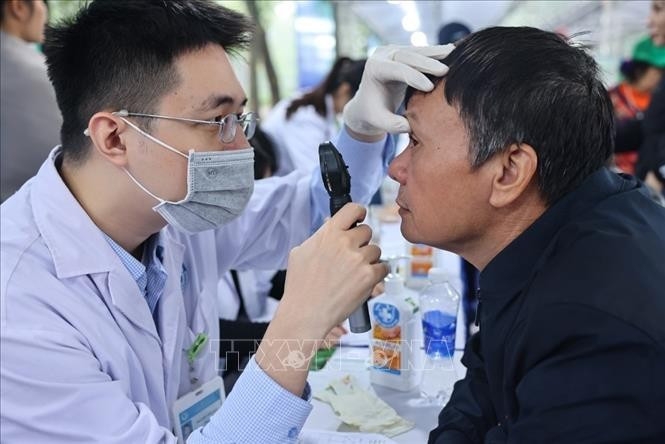
Of the total, central budget funding amounts to VND68 trillion, including VND39.2 trillion in public investment capital and VND28.8 trillion in recurrent expenditure. Local budgets will contribute VND20.041 trillion, comprising VND8.49 trillion in public investment capital and VND11.54 trillion in recurrent spending. Other sources are estimated at VND594 billion.
Based on the implementation results of the programme during 2026–2030, the Government will submit to the NA for decision the funding allocation for the 2031–2035 phase.
The programme’s overarching goal is to ensure that all people receive primary healthcare management and early, preventive care delivered close to home, thereby reducing disease burden; to increase the total fertility rate and strive for a balanced sex ratio at birth; to adapt to population ageing while improving population quality; to improve care for vulnerable groups; and to contribute to improvements in physical and mental health, stature, life expectancy and overall quality of life, towards building a healthier Vietnam.
Specific targets include contributing to the goal that 90% of communes, wards and special zones meet the national criteria for commune-level health care by 2030, rising to 95% by 2035.
The programme aims for 100% of the population to have electronic health records and life-course health management from 2030. By 2030, all provincial- and municipal-level Centres for Disease Control (CDCs) are expected to have full capacity for testing pathogens, antigens and antibodies related to dangerous infectious diseases, as well as for monitoring clean water quality and school sanitation in line with Ministry of Health's regulations.
All commune-, ward- and special-zone-level health stations are to implement the prevention, management and treatment of selected non-communicable diseases by 2030, with this level maintained through 2035. The rate of stunting among children under five is hoped to fall below 15% by 2030 and below 13% by 2035.

Vietnam emphasises disease prevention in public health care strategy
VOV.VN - A Vietnamese official has affirmed that disease prevention is the top priority in its national health care strategy, aiming to effectively respond to emerging infectious diseases and improve public health.
